
Clinics GRP Balance & Falls
Balance for the life you want to live
Balance changes can affect where you go, what you do and how confidently you move through everyday life. We look beyond a single balance score to understand what has changed, what matters to you and what may be contributing.
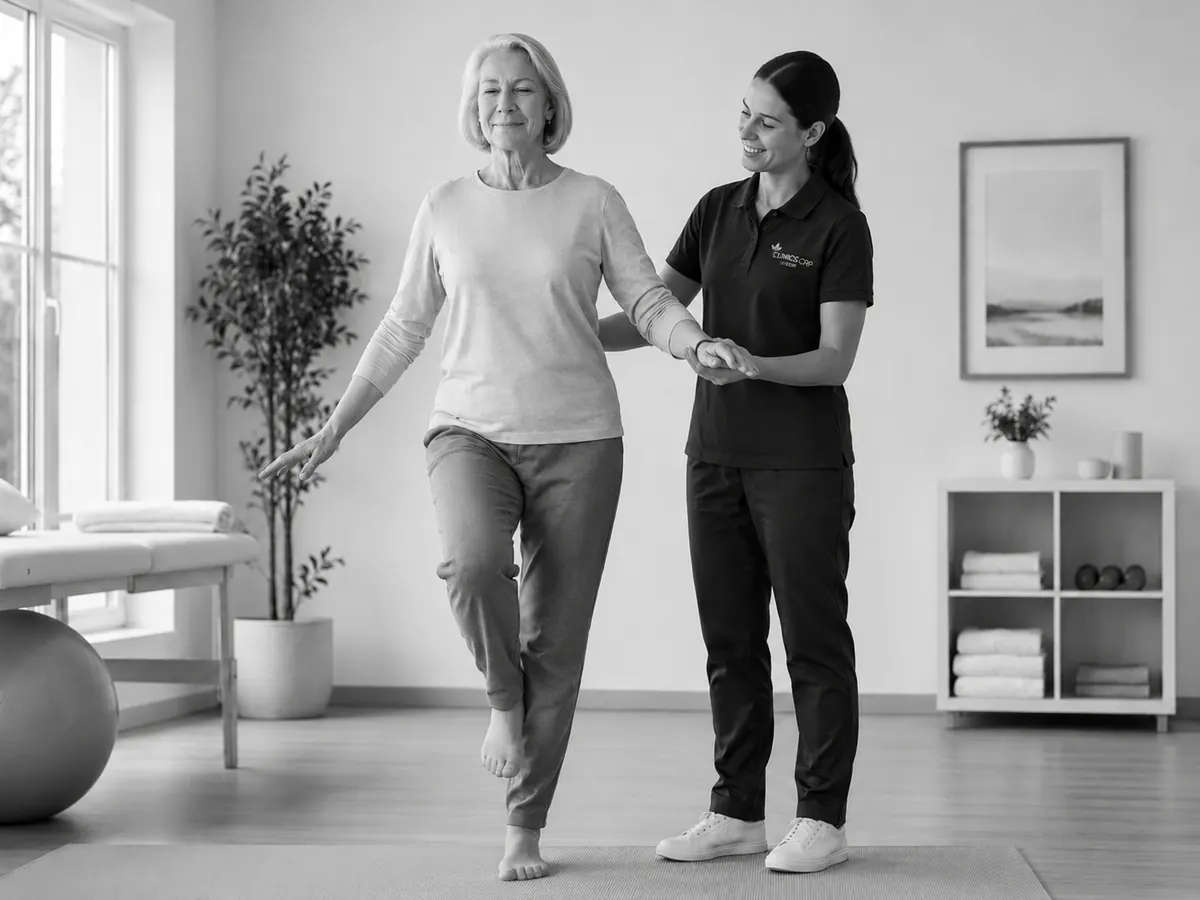
Start with the person, not the test
Balance care begins with what has changed and what you want to retain, regain or approach with greater confidence. Age is relevant context, but it is not a complete explanation.
A clinical measure is useful when interpreted against your real-life needs. The aim is not simply a better balance score. It is to understand whether care is helping create more useful options in everyday life.
Explore the Clinics GRP approach to careWhat affects balance?
Balance draws on information from your senses, how your nervous system processes it, movement capacity, learned strategies, attention and confidence. The activity, surroundings and available support change the demands. Select a part of the map to explore it.
What are you trying to do?
Your intended activity connects every part of the picture.
PersonHealth, recent changes and confidence
Health, fatigue, confidence, cognition and attention can affect how you approach an activity. Recent illness or a change in routine may be relevant too.
Movement capabilityStrength, power and movement control
Strength, power, mobility, movement control, reactive stepping and endurance work together to help you move and recover your stability.
Sensory informationVision, inner-ear and body information
Vision, vestibular information from the inner ear and proprioception (your sense of body position) help your nervous system work out where you are and how to respond.
TaskThe activity you want to do
Standing, turning, reaching, stairs, walking, carrying, getting from the floor or walking while talking place different demands on balance.
Environment and supportYour surroundings and available help
Surfaces, lighting, footwear, walking aids, home layout, community environments and support from others can change what is possible.
Good balance is more than standing still
Balance may involve stepping, turning, changing speed, navigating uneven ground, adapting to changes in sensory information, walking while doing another task or recovering when stability is disturbed.
Assessment determines which challenges are relevant and safe for the individual. You do not need to attempt these challenges yourself before seeking care.
Not every cautious strategy is a problem
A slower turn may be useful. A handrail may preserve access. A walking aid or assistance can create more options. Support is a valid part of participation.
Does the strategy help you participate?
Care distinguishes useful adaptation from avoidable restriction. The question is whether your current strategy helps you participate or restricts you more than necessary. Moving without assistance is not everyone's goal.
A balance assessment looks beyond the fall
Understand what has changed
A fall or near-fall, unsteadiness, avoiding an activity, difficulty turning or walking on uneven ground, or a change after illness or hospitalisation.
Understand what matters
Start with activities you want to retain, regain or approach with confidence: gardening, showering, stairs, shopping, visiting friends, caring roles or returning to exercise.
Investigate relevant contributors
Assessment may explore walking and movement, strength and power, balance reactions, vision, vestibular function, body-position sense, attention, confidence, the environment and relevant health factors. Tests are selected according to the person and the question we are trying to answer.
Form a practical plan
Agree what is worth addressing first and which combination of rehabilitation, training, adaptation, support or further assessment makes sense. Set a review point together.
Review what changed
Return to clinical findings and meaningful activity. Decide what to continue, progress, adapt, stop or refer for further assessment.
Balance & Falls or Vestibular care?
If the best starting point is unclear, Clinics GRP intake can help guide the next step. Not all dizziness is vestibular.
Balance & Falls
A starting point for falls, near-falls, general unsteadiness, loss of confidence, changing gait or difficulty with everyday balance.
Vestibular
Consider vestibular assessment when the main concern is vertigo, spinning, dizziness linked to head movement or specific vestibular symptoms.
One assessment can lead to different pathways
Your priorities and clinical findings guide the next step. These pathways can work together; the Balance Program is one possible response.
Individual physiotherapy
Assessment-led rehabilitation when one-to-one treatment or progression is appropriate.
Vestibular rehabilitation
A targeted pathway when vestibular assessment identifies a relevant contributor.
Balance Program
Clinician-guided group balance training when it fits the person's goals, capability and safety needs.
Therapeutic Exercise
Broader strength, conditioning and functional exercise needs.
Home-based care
Assessment and care in the environment where everyday challenges occur, subject to coverage and clinical suitability.
Adaptation and support
Equipment, environmental changes or assistance that help preserve participation.
Referral or escalation
Coordinated medical, nursing or allied-health assessment when another clinical issue needs attention.
We measure more than a balance score
What matters to the person
A chosen activity, confidence and participation: can you do something meaningful with the support that works for you?
What the person can do
Walking, transfers, turning, stairs and other relevant everyday tasks.
Clinical capability
Gait, balance, strength and power, dynamic control and other targeted measures selected for your needs.
Safety and change over time
Falls, near-falls, injury, assistance required and changing support needs remain part of the review.
A test result is interpreted alongside what has changed in everyday life and what decision should follow. Together we decide whether to continue, progress, adapt, add support or seek another assessment.
Care in the setting that matters
Balance assessment and falls-prevention care for older adults across Brisbane, guided by clinical need, coverage and clinician availability.
Digital supports information, access and coordination. Intake confirms the appropriate clinical delivery setting and funding eligibility.
- Funding and rebates depend on the service, eligibility, referral or plan requirements, provider arrangements and current policy. Intake confirms the applicable pathway before care begins.
Sometimes a sudden change needs medical assessment first
Call Triple Zero (000) for a life-threatening situation. Sudden new stroke-like symptoms, loss of consciousness or serious injury need emergency medical attention. Do not wait for a routine website enquiry.
Head impact, acute severe dizziness, rapidly changing function, unexplained recurrent falls or acute illness may need prompt medical assessment before balance training. If symptoms are serious or urgent, seek emergency care.
Healthdirect: when to call Triple ZeroFor help choosing a routine care pathway, contact intake if you are unsure where to start.
Contact intakeEvidence informing our approach
Australian community-care guidance supports early falls-risk assessment and tailored prevention. High-certainty systematic-review evidence supports balance and functional exercise for reducing falls in community-dwelling older people.
Clinical sources
References used on this page
- Australian Commission on Safety and Quality in Health Care (2025). Preventing Falls and Harm from Falls in Older People: Best Practice Guidelines for Community Care in Australia
- Sherrington C, Fairhall N, Wallbank G, et al. (2020). Exercise for preventing falls in older people living in the community: an abridged Cochrane systematic review
How to read this evidence
Evidence guides care but does not establish that a service is suitable for every person or guarantee an outcome. Assessment, goals, health conditions, functional capacity, consent and identified risks shape individual care.
Reviewed by: Clinics GRP Clinical Review Team, Clinical review and governance
Last reviewed: 2026-08-15
Evidence informs the components of care
Evidence for balance and functional exercise helps guide appropriate care. It does not establish that the Clinics GRP branded programme or integrated approach has independently demonstrated a particular reduction in falls. Outcomes vary and falls prevention is not guaranteed.
Common questions about balance care
Do I need to have fallen before I seek assessment?
No. Near-falls, feeling unsteady, avoiding activities or losing confidence can be reasons to seek assessment before a fall happens.
What happens during a balance assessment?
We discuss what has changed and what matters to you, then select relevant assessments of movement, balance, health and your environment. Together we agree on a practical plan and how to review it. Not everyone needs every test.
Is balance only about leg strength?
No. Movement capacity, sensory information, nervous-system processing, learned strategies, attention, confidence, the task, environment and available support all contribute. Strength can matter without being the whole explanation.
How is Balance & Falls different from Vestibular care?
Balance & Falls is a starting point for falls, near-falls, general unsteadiness or changing walking confidence. Vestibular assessment may be relevant for vertigo, spinning or dizziness linked to head movement. Not all dizziness is vestibular; intake can help guide the next step.
Can assessment happen at home?
Home assessment may be appropriate when the person's usual surroundings matter to assessment or care. Intake checks clinical suitability, coverage and clinician availability.
What if I already use a walking aid?
A walking aid, handrail or assistance can help you participate. Assessment considers whether your current strategy is useful, whether the equipment suits you and whether anything is restricting you more than necessary.
Does everyone need the Balance Program?
No. Individual physiotherapy, vestibular care, therapeutic exercise, home-based care, adaptation, support or another clinical referral may be more appropriate. A group programme is one possible part of a wider plan.
How do you measure whether care is helping?
We review meaningful activities and confidence alongside everyday function, selected clinical measures, falls or near-falls and support needs. Results guide the next decision; no single score defines success and improvement is not guaranteed.
Private Care · Direct clinical access
Arrange care directly with our clinical team
Explore self-funded care in our clinics, at home and across appropriate care settings. You do not need a Support at Home plan. Clinical suitability, availability and any applicable rebate requirements are confirmed before care begins.