
Clinical notes
Clinical notes from our team are shared with the provider within 48 hours of each visit.
Clinics GRP Physiotherapy
Assessment-led physiotherapy for mobility, strength, balance, pain, recovery, and day-to-day function across clinic, home, and care settings.
Available care settings
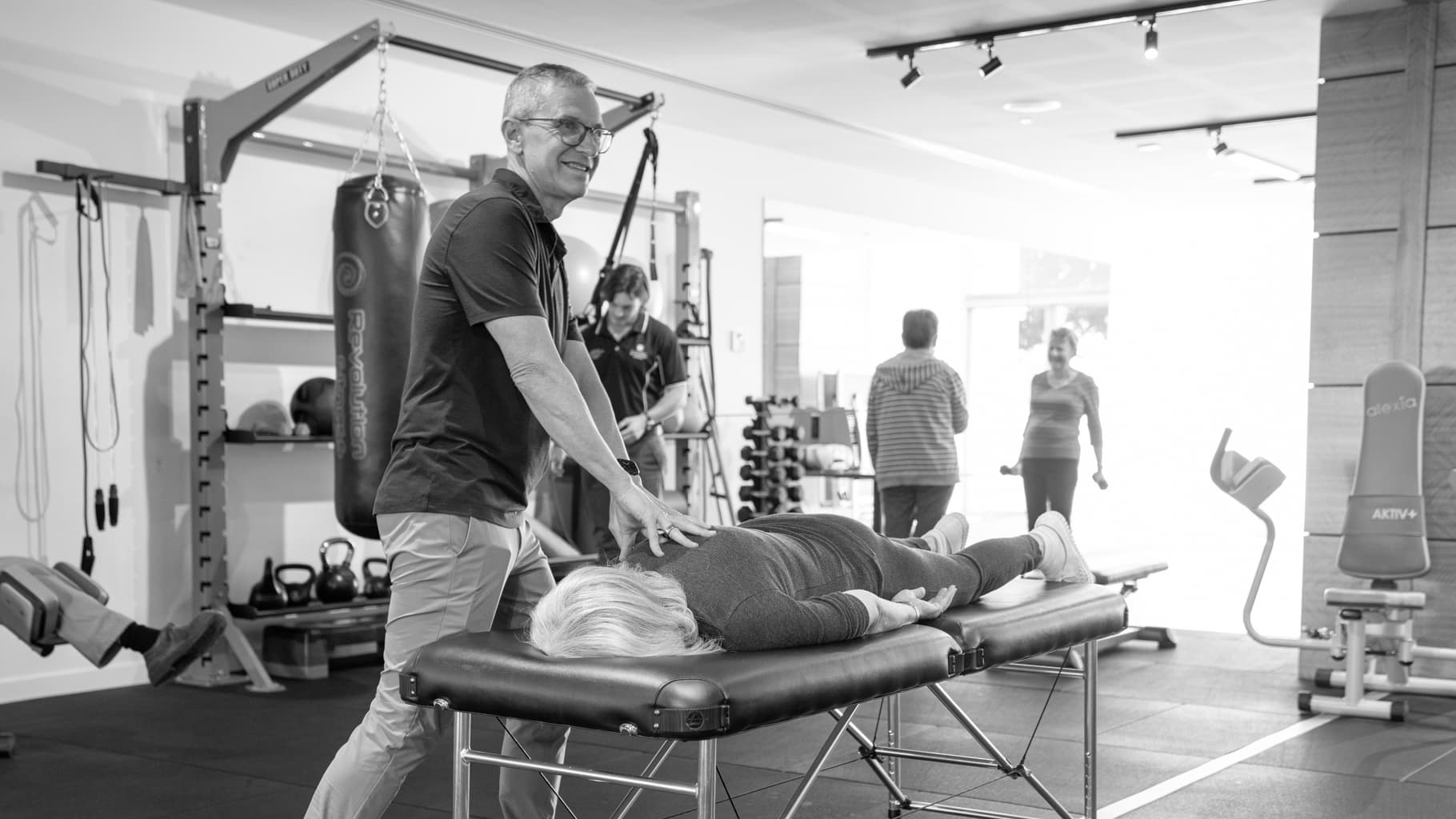
Physiotherapy starts with how pain, weakness, balance or recovery is affecting everyday life, then builds a plan around the person’s priorities.
Clinical approach
Understand what has changed. Set meaningful goals. Progress care at the right pace.
See our approach to careWho it suits
How care is delivered
For provider-coordinated care, our team shares clinical updates and reports with consent, so your provider understands progress, changes and the next steps.
Clinical notes from our team are shared with the provider within 48 hours of each visit.
A progress report is shared with the provider within 48 hours of completing the treatment cycle.
A discharge report is shared with the provider within 48 hours of discharge.
With consent, we communicate escalation or de-escalation, the reason for the change and agreed next steps clearly with the provider. Urgent concerns are communicated promptly without waiting for a routine report.
Care may begin in clinic, at home or in supported care depending on mobility, safety, treatment needs and what will be practical to continue.
Where care happens
Continuity
Care can move between settings as mobility, confidence or support needs change.
Funding and access
Reviewing progress
We compare movement, function, confidence and symptom interference with the starting point. If progress is not carrying into daily life, the plan is reviewed rather than simply repeated.
Common concerns
People often seek physiotherapy when movement, pain, balance or recovery begins limiting confidence and day-to-day activity.
First appointment
The first appointment clarifies the concern, assesses current function and establishes a realistic starting plan.
Select a step to explore the detail.
A physiotherapist reviews the main concern, health history, movement, function, and goals.
The first plan usually includes assessment-led treatment, advice, and a clear next step for care or review.
Care service
Rehabilitation for post-hospital recovery, post-surgical recovery, reconditioning, complex mobility decline, and return-to-function goals.
View serviceCare service
Assessment and rehabilitation for balance changes, unsteadiness, falls and reduced walking confidence, shaped around everyday function and participation.
View serviceCare service
Assessment and rehabilitation for dizziness, vertigo, and balance-related vestibular concerns in a calm, structured pathway.
View serviceCare service
Clinician-guided exercise for older adults focused on strength, conditioning, mobility and day-to-day function.
View serviceClinics GRP's assessment-led, goal-based approach is consistent with rehabilitation guidance that focuses on function, independence, meaningful goals and review. Evidence for individual techniques varies by condition, so manual therapy and exercise should be described as options selected after assessment rather than universal treatments.
Clinical sources
How to read this evidence
Evidence guides care but does not establish that a service is suitable for every person or guarantee an outcome. Assessment, goals, health conditions, functional capacity, consent and identified risks shape individual care.
Reviewed by: Clinics GRP Clinical Review Team, Clinical review and governance
Last reviewed: 2026-08-15
It usually starts with assessment, movement review, discussion of goals, and a treatment plan matched to the person’s current function.
Yes. Home visits are available where home-based care is the better fit clinically and geographically.
Yes. Physiotherapy is often part of the first rehabilitation step after discharge, especially when mobility and confidence have dropped.
Private Care · Direct clinical access
Explore self-funded care in our clinics, at home and across appropriate care settings. You do not need a Support at Home plan. Clinical suitability, availability and any applicable rebate requirements are confirmed before care begins.
Home Physiotherapy: Movement and Recovery at Home
When might home physiotherapy be useful? Explore the role of everyday tasks, travel, clinical needs and personal goals when choosing home or clinic care.
7 min read
Read insight →Home Physiotherapy: Movement and Recovery at Home
Explore what a home physiotherapy assessment can reveal about everyday movement, furniture, routines and support, and where other clinical input may help.
7 min read
Read insight →Ageing and wellbeing
Age matters in clinical care, but a person's years cannot tell us everything about their health, everyday abilities or priorities.
9 min read
Read insight →