
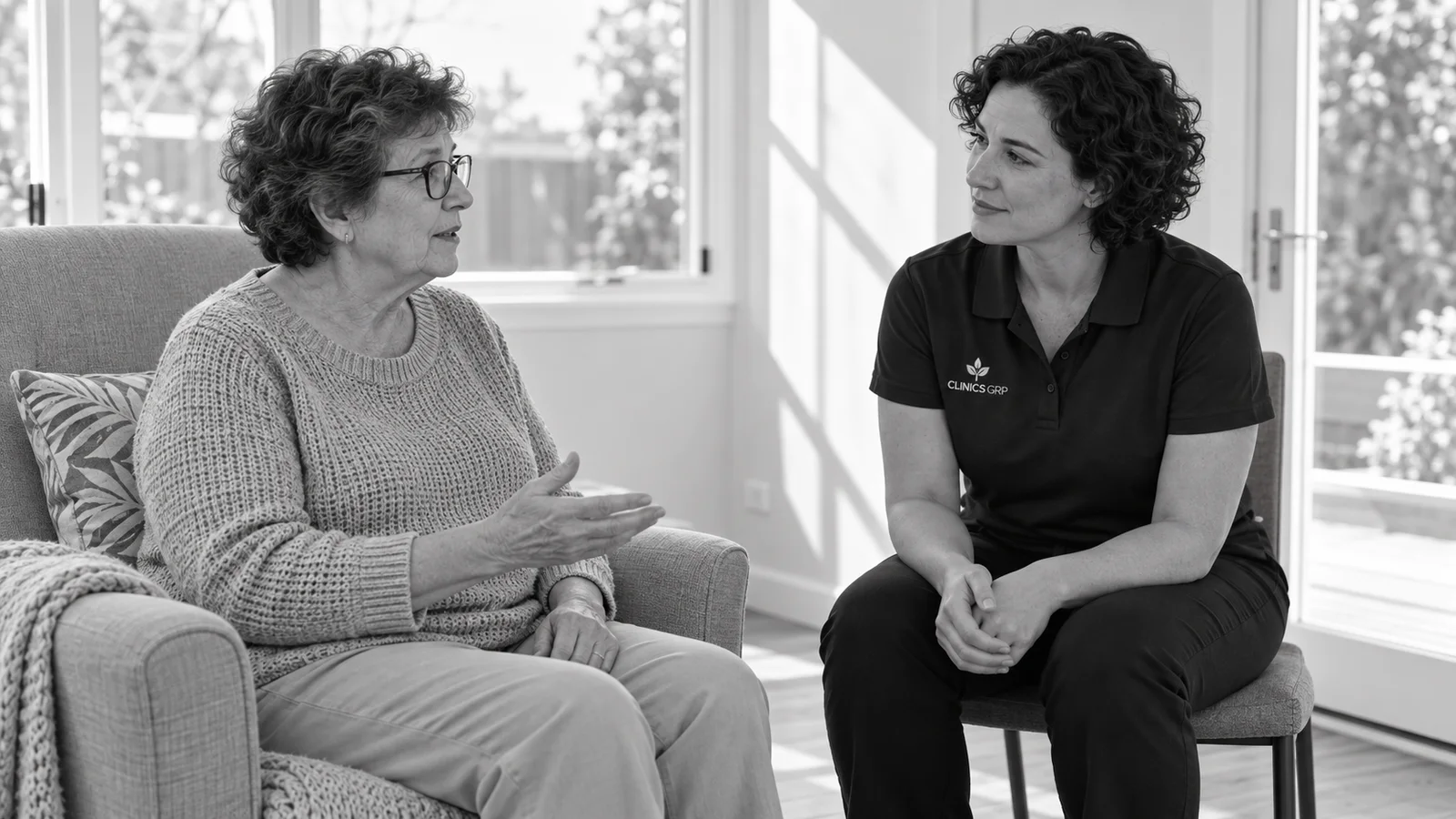
After a fall, the first question is whether the person needs urgent medical help. Once immediate needs have been addressed, another question often remains: what should happen before they return to the activities that now feel difficult or uncertain?
Physiotherapy may contribute to that next stage by assessing movement, balance, walking and the practical demands of home. It is not a substitute for checking injuries or investigating a possible medical cause. A useful response connects the circumstances of the fall with the person's health, current abilities and priorities, without assuming that the fall has one simple explanation.
Key points
- Attend to injury and acute illness first. A serious fall or medical emergency needs urgent care.
- Physiotherapy may help when walking, balance, transfers or confidence have changed after a fall.
- Falls can involve several contributors; medical, medicines, vision or home-safety assessment may also be needed.
- The plan should support meaningful activity with appropriate safeguards, not automatically restrict everything the person values.
- Falls-prevention research supports selected interventions in relevant populations. It cannot guarantee that an individual will not fall again.
Safety comes before rehabilitation
Healthdirect advises emergency care after a severe fall.1 If the person appears seriously injured, is unconscious or acutely unwell, call 000. Do not attempt an unsafe lift or ask them to demonstrate that they can walk to avoid seeking help.
A person may need medical assessment even when they initially say they feel all right. If there was a head injury, a possible loss of consciousness, significant pain or another concerning change, seek prompt health advice. Tell the clinician about medicines and relevant health conditions rather than deciding for yourself that they cannot matter.
This article cannot determine whether a particular fall is safe to manage at home. Follow urgent-care advice and existing clinical instructions. Physiotherapy can contribute once the timing and activities are appropriate for the person's condition.
Understand what is different now
The fall itself is one event; its effect on daily life may continue. Someone may move more cautiously, avoid the bathroom route, need help from a chair or stop going outside. They may also report pain, tiredness or uncertainty that was not present before.
Describe these changes to the treating team. A person who can still walk a short distance may nevertheless have an important new difficulty. Equally, a wish for reassurance should not automatically lead to a standard package of visits without assessment.
Ask the person what has become hardest and what they most want help with. Their priority may differ from what others first notice. Being able to reach a preferred sitting area or take part in a family routine can be a meaningful starting point.
Discuss the circumstances without assigning blame
Useful information may include where the fall happened, what the person was doing, what they remember and whether any symptoms occurred beforehand. Note whether a walking aid or assistance was normally used and whether anything about the routine was different.
The aim is understanding, not proving that somebody was careless. People may be reluctant to describe a fall if they fear losing choices or being told to stop moving. A respectful conversation makes it easier to discuss both the event and the worries that followed.
Do not ask someone to recreate the fall or repeat an unsafe activity. A description and review of relevant information can guide the next step. If the cause remains uncertain, that uncertainty should be recognised rather than replaced with a confident explanation based only on the room layout.
What physiotherapy may contribute
When appropriate, a physiotherapist may assess changes in walking, balance, movement relevant to transfers and the activities affected by the fall. The assessment can consider symptoms, confidence, existing aids and the assistance available.
The findings should inform an individual plan. That might involve tailored rehabilitation, supervised activity, advice about movement or aid use, or coordination with another clinician. It should explain which concern each part addresses and what will be reviewed.
Australian community guidance supports tailored exercise and assessment of multiple contributors where relevant.2 That is different from giving everyone the same balance exercises after every fall. What is suitable depends on health status, findings, preferences and the support needed to participate safely.
The home may need a different kind of assessment
The home environment can be relevant, but physiotherapy should not be presented as the only profession involved in understanding it. An occupational therapist may be needed to assess home safety, equipment or modifications in relation to the person's activities.
The 2025 Australian guidelines recommend occupational-therapy-delivered tailored home-safety interventions for older people at increased falls risk.2 A physiotherapist can identify a reason for that referral and coordinate movement-related care without implying that every environmental concern falls within one service's scope.
A rug, step or poorly positioned item may be worth discussing. It is still important not to infer that removing one visible hazard will resolve all risk. The person's health, habits, movement and support arrangements may also require attention.
What does the evidence support?
A 2023 Cochrane review found that home fall-hazard interventions reduced falls when directed to people at higher risk. It did not find the same benefit in populations not selected for falls risk.3 These were defined interventions in research settings, not evidence that any home visit prevents falls.
The distinction matters. An assessment identifies possible next steps; its value depends partly on what happens afterwards. Recommendations need to be appropriate, understood and feasible. Further care may involve several contributors rather than a single appointment.
No clinician can promise a fall-free future. Evidence can inform decisions, but it does not remove individual uncertainty. A sound explanation includes expected benefits, practical demands and limits so that the person can participate in choosing the plan.
Rebuild participation without forcing confidence
After a frightening event, reassurance alone may not be enough. The person may need a clearer understanding of the activity, the help available and what can reasonably be attempted now. They should not be pressured to prove confidence by trying something before it has been assessed as appropriate.
At the same time, a blanket instruction to avoid all activity can remove valued parts of life. Discuss the person's priorities and the support or adaptations that may make participation possible. The aim is an agreed approach to risk, not an unrealistic promise that risk can disappear.
Sometimes the immediate goal is using suitable assistance reliably. Sometimes it is rebuilding a particular activity over time. Neither requires the person to treat needing help as a personal failure.
A hypothetical example: the hallway is now avoided
Imagine a person whose injuries have been assessed after a fall near the bathroom. They are now avoiding the hallway and calling for help whenever they need to leave their bedroom. Their family is unsure whether to encourage walking or take over every transfer.
The next assessment might consider current symptoms, movement, the route and the person's concerns. It may lead to physiotherapy, an occupational therapy referral, different assistance or further medical clarification. The appropriate response cannot be decided from the location of the fall alone.
This is a hypothetical situation. It demonstrates the need for a coordinated plan, not a particular treatment or predicted recovery.
Make follow-up responsibilities clear
Before the next stage of care begins, ask who is responsible for each recommendation and when it will be reviewed. If new symptoms appear or the person becomes less able to manage, the plan may need earlier attention.
The review should return to the activities that matter. Is the agreed help available? Is the person participating as intended? Has confidence changed, and are there new concerns? Keeping those questions visible prevents the appointment schedule from becoming the only measure of care.
Explore Clinics GRP, balance and falls care and home physiotherapy. For people using a government programme, Support at Home explains a separate access pathway. Funding arrangements do not determine the cause of a fall or replace individual assessment.