
For clients and families
Helping a parent or spouse access the right care
Clarify what is changing, which service may fit, where care should occur, and which funding or referral pathway may apply.
For emergency symptoms or immediate safety risks, use emergency services first.
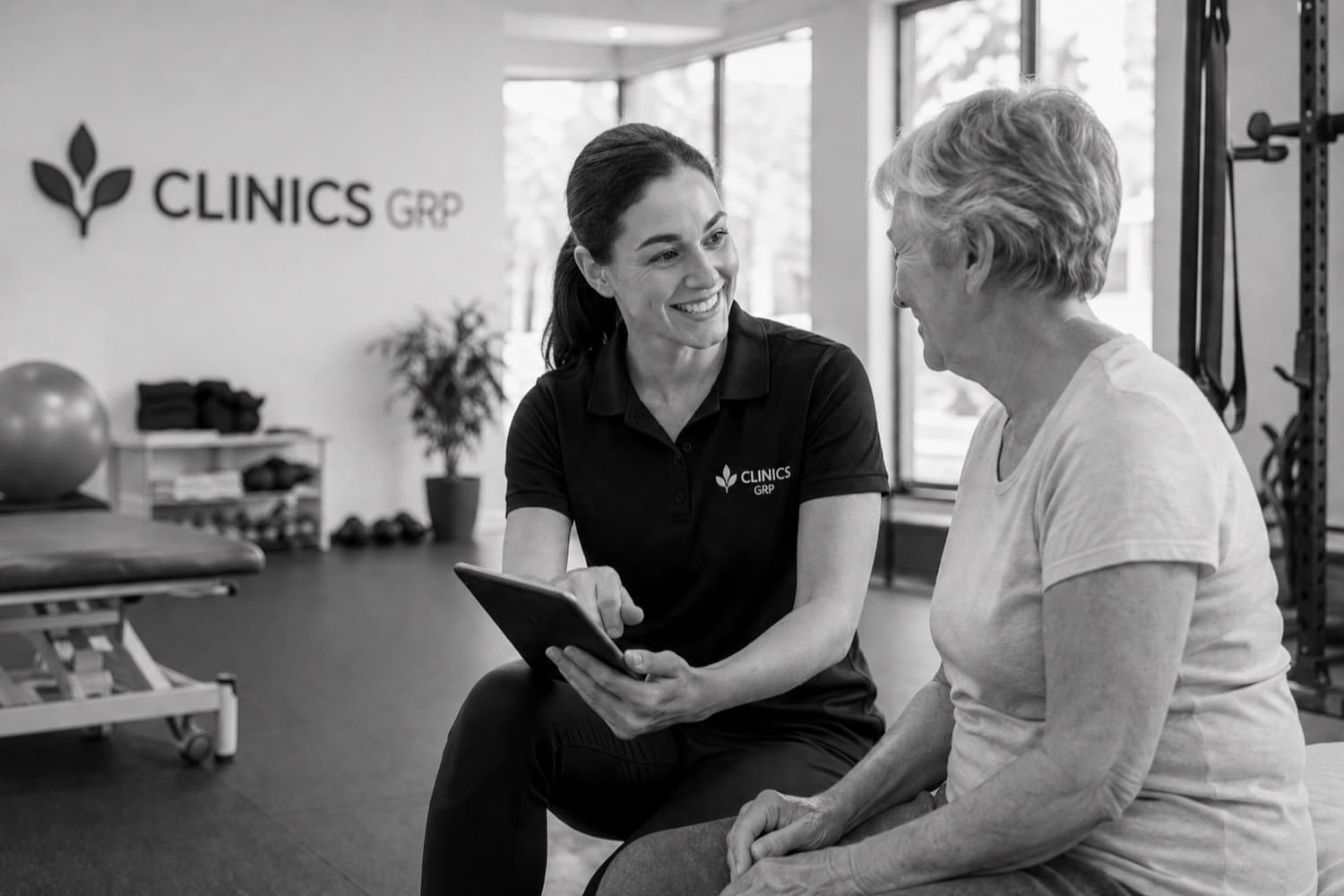
Common reasons a family member starts the enquiry
Choose the closest situation first. If more than one applies, intake can still help join the pieces together.
When this pathway may fit
Use this pathway when the starting point is unclear
This is most useful when the person has more than one issue, the care setting is not obvious, or the family needs help deciding whether to start with assessment, treatment, rehabilitation, review, or funding clarification.
has had a fall, is becoming less steady, or is avoiding movement
is coming home after hospital, surgery, illness, or a change in health status
is becoming weaker, slower, or less confident with walking
is finding transfers, stairs, showering, or daily tasks harder
has wounds, skin concerns, medication-related risks, or nursing needs
has funding available but the best service or setting pathway is unclear
Falls, dizziness, or confidence
Start here when a parent or spouse is unsteady, has fallen, avoids walking, or seems less confident moving around.
Coming home from hospital
Use post-hospital rehabilitation when discharge planning, strength, transfers, stairs, or return-to-home routines need support.
Care needs to happen at home
Check home-visit coverage when clinic travel is difficult or care needs to happen in the person's usual environment.
Wound, medication, or health monitoring
Use nursing when the concern is wound care, medication safety, health monitoring, escalation, or review after a health change.
Funding or access is unclear
Compare common pathways such as Support at Home, CHSP, Medicare, private health, NDIS, and self-funded care.
The situation is not clear yet
Start with intake when the right service, setting, funding pathway, or urgency is still uncertain.
A practical intake sequence
Families are not expected to choose the correct service from the start. Intake works through the concern, likely pathway, setting, access context, and next step.
Select a step to explore the detail.
We listen to the concern
We ask what has changed, what you are worried about, what the person is finding difficult, and whether there are immediate safety concerns.
We clarify the likely pathway
This may involve physiotherapy, nursing, rehabilitation, balance and falls support, vestibular care, therapeutic exercise, remedial massage, healthy ageing support, or digital resources.
We consider the best setting
Care may be suitable in clinic, at home, in the community, in residential aged care, or through digital support.
We review access and funding context
Private funding, aged-care funding, provider-managed services, GP referral pathways, and other options can change the most practical next step.
We help confirm the next step
The next step may be an initial assessment, home visit, clinic appointment, nursing review, rehabilitation pathway, falls and balance assessment, or advice about what information is needed before booking.
What intake needs from a family member
You do not need to know the exact service before contacting Clinics GRP. These details help intake decide whether the next step should be a service page, booking, referral, funding review, or home-visit coverage check.
The person's suburb or address and whether clinic travel is realistic
What changed, such as a fall, hospital stay, wound, dizziness, pain, or reduced confidence
Any current referral, care provider, package, My Aged Care, CHSP, NDIS, or insurer context
Who should be contacted first and who is involved in decisions
Older-adult care often needs more than one lens
The goal is to make the next step clear, practical, and safe when mobility, health, confidence, environment, and support needs overlap.
One older-adult care model
Clinics GRP brings physiotherapy, nursing, rehabilitation, balance, falls, vestibular, remedial massage, therapeutic exercise, healthy ageing, and digital support into one clinical model.
Needs are often connected
Mobility, pain, falls risk, confidence, medical history, medications, cognition, the home environment, and carer support can all affect the right plan.
Family and carer communication
Where appropriate and with consent, family members, carers, providers, or referrers can be included so everyone understands the priority, plan, monitoring, and escalation points.
Choose the setting that fits daily life
The right service depends partly on where care can realistically happen and who else needs to be involved.
Clinic appointments
Use clinic care when the person can travel and needs assessment, therapy, supervised exercise, or hands-on treatment in a clinic.
Home visits
Use home-based care when stairs, transfers, fatigue, transport, or daily routines are part of the clinical question.
Care or supported living settings
Use care-setting pathways when coordination with staff, family, providers, GPs, or substitute decision-makers matters.