
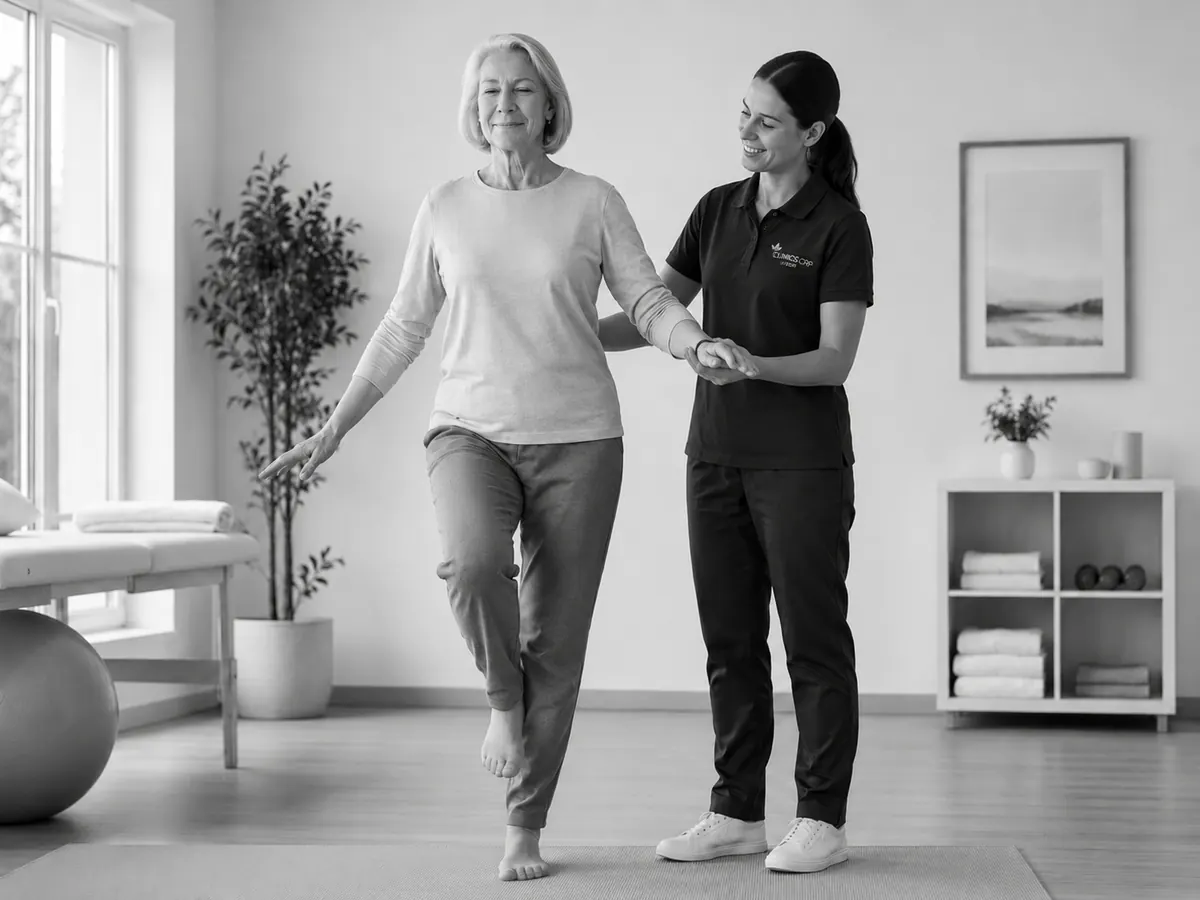
Balance Is More Than Strength: The Clinics GRP Approach to Balance in Older Adults
How sensory information, movement, confidence and surroundings contribute to balance, and how Clinics GRP connects care with meaningful participation.
Ageing in Full
Balance connects movement, sensory information, confidence and everyday surroundings. Through Ageing in Full, Clinics GRP explores what these connections mean for meaningful activity and individual care.
Our central guide to the Clinics GRP approach to balance in older adults.
How sensory information, movement, confidence and surroundings contribute to balance, and how Clinics GRP connects care with meaningful participation.
18 articles in Understanding Balance
Clear search and filtersWhat proprioception means, how it contributes to balance and why assessment should connect body sensation with everyday movement.
7 min read
How the inner ears contribute to balance, why dizziness needs individual assessment and when vestibular rehabilitation may be appropriate.
7 min read
Why removing vision changes balance, what an eyes-closed result can and cannot show, and how practical support can help everyday activity.
7 min read
Understand how vision, inner-ear signals and body-position information work together to support balance in older adults.
7 min read
Why balance can change with age, from sensory information and movement to attention and surroundings, and when an individual assessment may help.
7 min read
How sensory information, movement, confidence and surroundings contribute to balance, and how Clinics GRP connects care with meaningful participation.
7 min read
Assessment and rehabilitation for balance changes, unsteadiness, falls and reduced walking confidence, shaped around everyday function and participation.
Clinician-guided balance classes with Beginner, Intermediate and Advanced levels of challenge.
Assessment and rehabilitation for dizziness, vertigo, and balance-related vestibular concerns in a calm, structured pathway.
Clinics GRP provides in-home physiotherapy across Brisbane for older adults who need assessment, treatment or rehabilitation in their usual environment. Also known as mobile physiotherapy or home-visit physio, the service supports mobility, strength, balance, falls prevention and recovery following hospitalisation, illness or surgery.
Broader or continuing rehabilitation for functional goals after illness, injury, surgery, neurological change or complex mobility decline. People can enter directly or continue after a focused Post-Hospital Rehabilitation episode.
Call Triple Zero (000) for a life-threatening situation. Sudden new stroke-like symptoms, loss of consciousness or serious injury need emergency medical attention. Do not wait for a routine website enquiry.
Head impact, acute severe dizziness, rapidly changing function, unexplained recurrent falls or acute illness may need prompt medical assessment before balance training. If symptoms are serious or urgent, seek emergency care.
Healthdirect: when to call Triple ZeroFor help choosing a routine care pathway, contact intake if you are unsure where to start.
Contact intake