
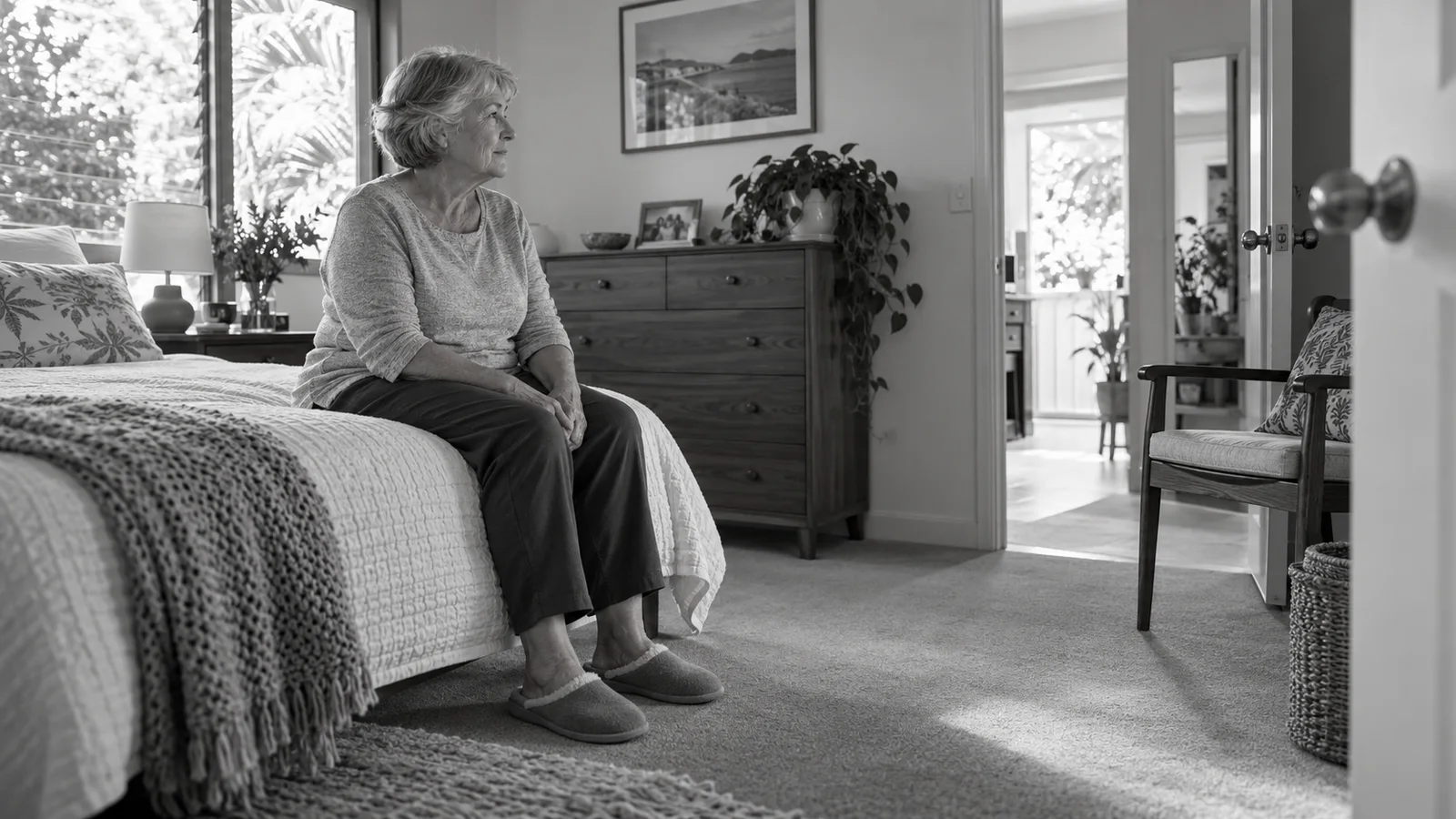
After hip replacement, getting home and being comfortable at home can be different achievements. Your bed may be lower than the hospital bed. The bathroom may be further away, and the chair you prefer may feel awkward to use. Home physiotherapy can help assess those practical questions within the instructions provided by your surgical team.
The useful starting point is what your operation and current ability mean for daily movement. People receive different advice about precautions, loading and rehabilitation. The plan should reflect your own care, rather than a universal list of movements everyone must avoid or achieve.
Key points
- Confirm the specific instructions provided by your surgeon and hospital team.
- Assessment at home can connect walking and transfers with the furniture, access and support you actually use.
- Exercise progression and changes to walking aids require individual decisions.
- Rehabilitation should be coordinated with wound care, medicines review and other follow-up where needed.
- New severe symptoms or a sudden loss of function require medical assessment.
Clarify the surgical plan first
Have the discharge summary and any written movement instructions available. Explain whether the operation was planned, whether complications occurred and what follow-up has been arranged. If the replacement followed a fracture, the broader recovery needs may differ from those after elective surgery for arthritis. The receiving team needs to recognise that separate recovery context rather than assume an elective-surgery pathway applies.
Ask the treating team to clarify any advice you do not understand. The surgical approach, procedure and individual circumstances can influence the recommendations. Do not copy precautions from a friend’s hip replacement or assume that the absence of a particular restriction means every movement is appropriate now.
Australian hospital guidance describes prescribed home exercise, equipment and support as parts of the pathway after hip replacement.1 That framework is useful, but the details must come from your own team. A receiving physiotherapist needs to understand those details before progressing a task or changing how you use an aid.
Why the actual home can be useful
A home visit makes a question specific. Getting into bed involves your mattress height, the available space and the direction of approach. Sitting for a meal involves a particular chair and the route to the table. The clinician can discuss these demands alongside your movement and symptoms.
This does not mean that every household difficulty needs a home modification. Sometimes an agreed technique, different assistance or a change in the rehabilitation plan is more relevant. Equipment prescription and formal assessment of modifications may require occupational therapy. The professions should coordinate their contributions so you receive a workable explanation.
You can describe a difficulty without attempting it during the appointment. If a bathroom is private, a step is unsafe or you are too tired, say so. Consent to a visit does not remove your control over what happens in your home. Read more about assessment in the home environment.
Connect the exercises with daily movement
Rehabilitation may involve individually selected work on muscle function, walking and activities such as standing from a chair. An exercise is useful when its purpose is understandable and its demands fit the stage of recovery. The programme should explain the support needed and how the response will be reviewed.
A physiotherapist may assess whether you understand the movement, can set it up safely and can perform the prescribed amount. Written advice can be supplemented with a demonstration or a suitable visual reminder. Ask for clarification if a movement feels different at home from how it felt when taught in hospital.
The Royal National Orthopaedic Hospital’s exercise information advises checking exercises with the therapist or surgeon, particularly when hip precautions apply.2 It is not a programme to copy without assessment. The relevant lesson is that progression belongs within your individual instructions, even when another person’s exercise sheet looks straightforward.
Walking aids need a reason and a review
A walking aid may help you manage the current stage of recovery. Its use should be considered alongside your walking pattern, symptoms, balance, permitted loading and the routes you need to negotiate. The smallest aid is not automatically the best choice, and walking without one is not the only meaningful sign of progress.
Discuss what should happen before the aid changes. You may be managing a short indoor route but still need support outdoors or when tired. An assessment can distinguish those situations and identify what needs further practice. Avoid leaving an aid behind simply because a calendar date has arrived.
Our article on walking aids and participation explains the broader principle. After surgery, that discussion also needs to remain consistent with the surgical plan. If an aid does not fit a narrow space, ask for assessment rather than using furniture as an improvised substitute.
Consider the whole household routine
A technically manageable transfer may still be difficult when it is repeated throughout the day. Dressing, reaching the bathroom, preparing meals and attending follow-up can create a considerable combined demand. Tell the clinician where you need help and which parts of the day are hardest.
Make the support arrangement specific. Who is available, what have they been shown and what can they reasonably do? A relative’s willingness to help does not establish that lifting or supporting someone is safe. Any physical assistance needs an appropriate plan that protects both people.
You may also want to discuss the activities that give the day its shape: sitting outside, joining a meal or getting to a familiar room. These priorities can guide rehabilitation without requiring immediate independence in every task. Accepting assistance during recovery does not reduce the value of participating in something important to you.
Keep symptoms and clinical follow-up connected
Explain the pattern of pain, fatigue and any other concerns. The physiotherapist needs to know whether an activity causes a manageable response, whether symptoms are changing unexpectedly and whether you can complete essential movements. Questions about possible complications need to go to the appropriate medical service.
Wound management and prescribing are separate responsibilities. If the dressing, pain relief or another medicine raises concern, clarify who is reviewing it. A home physiotherapy appointment can identify a need for communication, but it should not create the impression that every postoperative issue has been covered.
The home physiotherapy assessment after hospital article describes how discharge information, symptoms and support can be brought together. Keep a current contact list and make sure you know whom to call before the next planned visit. A referral being sent is not the same as a service accepting responsibility.
Choose the next setting deliberately
Home may be the most useful starting setting when travel is difficult or the unresolved problem occurs in the house. Later, a clinic or community setting may offer a suitable place for continued work. Some people continue at home because that remains the appropriate setting for their needs.
The choice should follow the clinical question and your preferences. Ask what a different setting would add and whether transport is realistic. There is little value in attending several versions of the same appointment without an explanation of their separate purposes. Our guide to home physiotherapy or a clinic visit can help frame that conversation.
A change in setting also requires continuity. The next clinician should understand the operation, current instructions, response to rehabilitation and goals that remain unfinished. You should not need to reconstruct the entire recovery story each time a new service becomes involved.
Review the activity that matters
Clinical measures can help describe change, but review should also return to the practical concern. Is using the bed more manageable? Is the person assisting confident about the agreed approach? Can you reach the destination you wanted, with the support currently planned?
If progress is limited, ask what needs reconsideration. Symptoms, task demands, understanding, equipment or another health issue may be relevant. The answer may involve changing the plan or obtaining another clinical opinion. Recovery should not become a judgement about your effort when the explanation remains uncertain.
How Clinics GRP can support you
Clinics GRP provides home and mobile physiotherapy in Brisbane. Intake checks address, clinical fit and availability before arranging care. Provide the operation date, discharge instructions and the everyday problem you want assessed so the service can consider whether it is an appropriate next step.
The plan can connect movement assessment with treatment, practice and review where clinically suitable. Any need for surgical, nursing, occupational therapy or other follow-up should remain explicit rather than becoming an assumed part of the physiotherapy booking.
When to seek urgent help
Call 000 for new chest pain, sudden breathlessness or collapse. A fall with severe hip pain, a sudden inability to bear weight or a suspected dislocation needs urgent medical assessment; do not repeatedly test the leg. Follow your surgical team’s instructions about fever, wound changes, calf symptoms and other concerns.1, 3
Next steps
Bring the surgical advice to the first visit and name the movement you most want help with. Ask what you can practise, what assistance is needed and when the plan will be reviewed. If those answers remain unclear, contact the treating team before attempting a new technique or exercise.
References
- Metro North Health, Royal Brisbane and Women’s Hospital. Total Hip Replacement: Surgical Wards. Patient guide. https://metronorth.health.qld.gov.au/rbwh/wp-content/uploads/sites/2/2026/04/total-hip-replacement-rbwh-patient-guides.pdf
- Royal National Orthopaedic Hospital. A Patient’s Guide to Total Hip Replacement Exercise Pack. https://www.rnoh.nhs.uk/patients-and-visitors/patient-information-guides/total-hip-replacement-exercise-pack
- Cambridge University Hospitals. Hip replacement, total: advice and exercises following. https://www.cuh.nhs.uk/patient-information/hip-replacement-total-advice-and-exercises-following/
Disclaimer
This article provides general information only and does not replace individual medical, nursing, allied health, or emergency care advice. Health needs vary from person to person. If you are concerned about symptoms, falls risk, medication issues, mobility, pain, wounds, dizziness, or a change in health or function, speak with your GP or an appropriately qualified health professional. In an emergency, call 000 in Australia.