
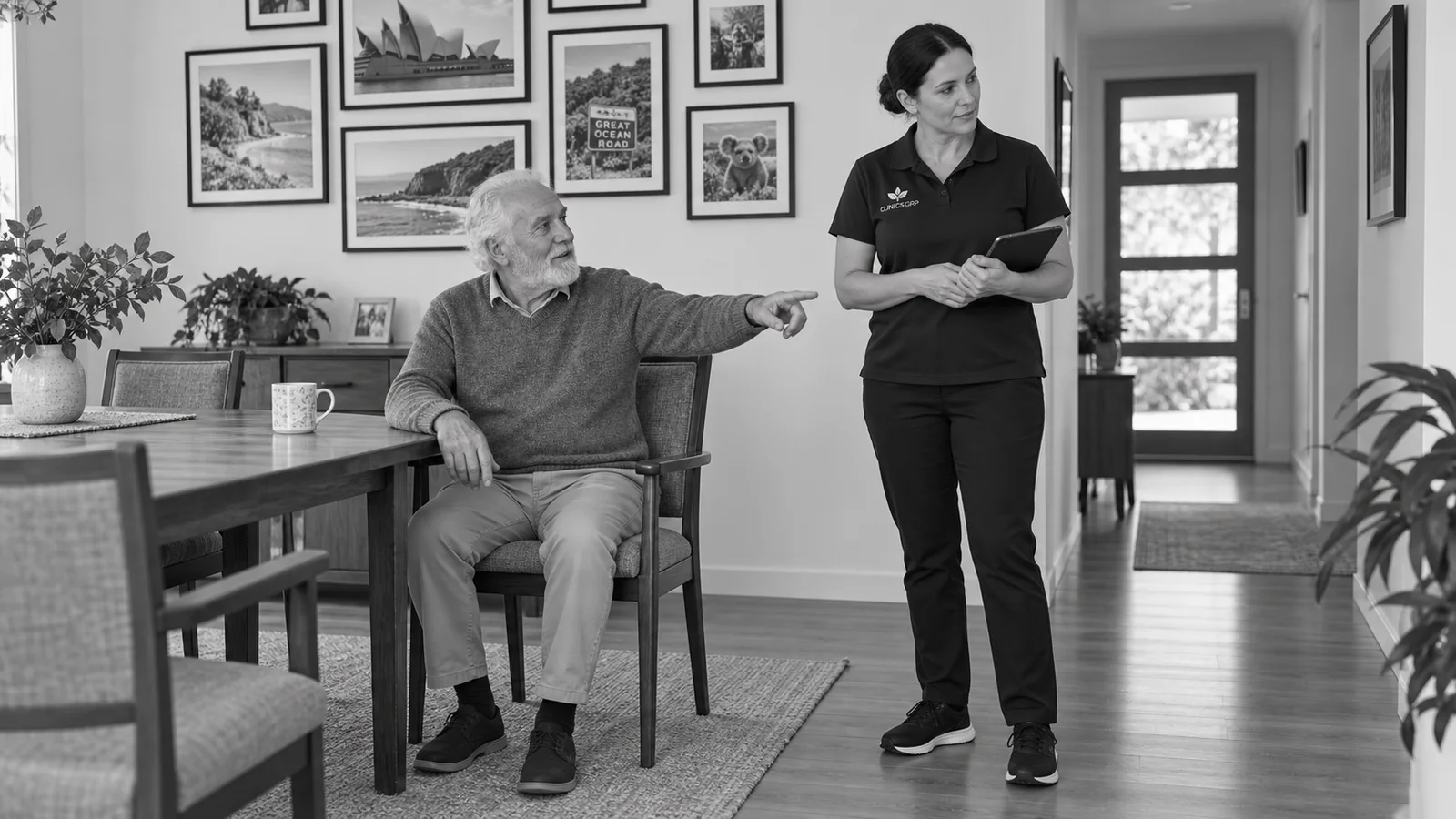
Getting out of a chair is rarely the whole activity. It might be the first step towards answering the door, making lunch or joining someone outside. When that movement becomes difficult, the effect can reach far beyond the chair.
At Clinics GRP, we begin with what has changed and what the person wants to be able to do. Looking at everyday movement at home can help connect an assessment with the places, routines and support that shape daily life. It does not mean every difficulty has an environmental solution, or that everyone should practise without assistance.
Key points
- Transfers are movements between positions or surfaces, such as getting out of bed or moving from a chair to standing.
- The surface, available space, symptoms and usual assistance can change the demands of a task.
- Assessment should respect privacy, consent and the person's priorities, with help from other disciplines where needed.
- A useful plan explains what to try, what assistance is needed and when to review it. It should not promise that every person will become independent.
Start with the activity that matters
“I struggle to stand up” is a useful starting point. The next question is where, when and why that matters to the person. Getting up for the bathroom at night may present a different concern from standing after an afternoon of reading.
A physiotherapist may ask which movements have changed, whether the change was sudden and whether pain, dizziness, fatigue or a recent illness is involved. A new or unexplained deterioration may require medical assessment before practice is appropriate.
The person's goal also matters. Someone may want to use their favourite chair more comfortably. Another person may want a clearer way for a support worker to help. Neither goal is less legitimate because it includes assistance. This is consistent with our approach to care: agree what matters, make a practical plan and review the response.
The chair is part of the task
Seat height, firmness, armrests and the space around a chair may influence how a person approaches standing or sitting. A movement completed from a clinic plinth may therefore leave a useful question about the chair used at home.
That difference does not make a clinic assessment wrong. It means the two settings can provide different information. At home, a physiotherapist can observe the relevant task when it is safe and agreed, discuss what the person experiences and consider whether further assessment is needed.
It is not a reason to improvise furniture changes. An unstable cushion, unsuitable chair raiser or poorly positioned support could create another difficulty. Equipment selection and changes to the home may need occupational therapy input. Australian community falls guidance recommends tailored home-safety assessment by an occupational therapist for older people at increased risk of falls.1
A transfer may include several movements
Moving from bed to a nearby chair can involve getting upright, placing the feet, standing, turning and sitting again. A person may find one part harder than the others. Space for a walking aid, the position of furniture and the help available may also matter.
Assessment can clarify which part needs attention rather than treating the whole activity as one failure. It may also identify a mismatch between written advice and the actual space available at home.
Personal tasks require particular care. A person should understand what the clinician proposes to observe and can decline or pause. Discussion, a description of the layout or a less private demonstration may sometimes provide useful information. An appointment does not remove the person's right to control access to their home and personal routines.
Stairs have a purpose as well as a physical demand
For one person, stairs are the route to a bedroom. For another, one step at the entrance is what separates staying indoors from seeing friends. Asking about the destination helps explain the practical significance of the difficulty.
The physiotherapist may consider the person's movement, symptoms and current ability alongside the actual access route and any existing instructions. Not every staircase needs to be attempted during a visit. If the task cannot be assessed safely, the plan may involve another way to gather information or a referral.
There is no universal stair technique suitable for every diagnosis, operation or home. A public article cannot determine how much weight someone may put through a leg, which support is appropriate or whether a particular staircase is currently safe. Individual instructions from the treating team take priority.
Assistance should be realistic and agreed
“Family will help” is not a complete plan. The person offering help may have pain, other responsibilities or limited availability. They may be unsure what has been recommended, or uncomfortable with the task.
With the person's agreement, discussion can include who usually helps, what they have been shown and what is feasible between visits. A physiotherapist may provide advice within their scope or identify the need for equipment assessment, additional services or a coordinated handling plan.
No one should be expected to lift another person because a general article describes a movement. If a fall or injury has occurred, first-aid and medical needs come before attempts to practise transfers. Healthdirect provides guidance on seeking help after a fall.2
A hypothetical example: returning to the dining table
Consider a fictional person who has begun eating in an armchair because getting up from the dining chair feels too difficult. The goal is not simply to complete more repetitions of standing. It is to join family meals without the activity becoming exhausting or distressing.
A home assessment might explore the chair, the route to the table, symptoms, current assistance and what happens over a whole meal. It could lead to an individual movement plan, an equipment referral, a change in available support or medical follow-up, depending on the findings.
At review, the question would include whether joining the meal has become more manageable. A change in a clinic measure might be useful information, but it would not by itself answer that question. This example illustrates a discussion, not a treatment prescription or a predicted outcome.
Make the plan understandable between visits
Before an agreed activity is practised, the person should understand its purpose and any limits or assistance requirements. They should know whom to contact if symptoms or circumstances change. The amount and type of practice should be individual, rather than copied from someone else's programme.
Goals should allow for comfort, participation and workable support as well as movement ability. NICE guidance on reablement supports goals agreed with the person, including social and leisure activities.3 This is UK clinical guidance; it does not determine eligibility or funding for Australian services.
Review might ask whether the activity is easier, whether help is sustainable and whether the original goal still matters. If progress is limited, the response should be to reassess the plan and contributing circumstances, not assume the person has failed.
Connecting the assessment with everyday life
Home physiotherapy may be useful when the unresolved question concerns movement in the person's actual surroundings. Rehabilitation may also form part of an ongoing plan where goals require coordinated follow-up.
The value of seeing a task at home is the opportunity to make care more relevant. It is not proof that every home visit improves transfers or prevents falls. The setting, clinician's findings, person's preferences and response over time all need to inform the next step.