
An assessment can tell us something about movement. The next question is how that information relates to what a person needs to do. Standing from a treatment chair, walking through an open room and practising a movement under supervision can all be useful. They do not describe every demand of an ordinary day at home.
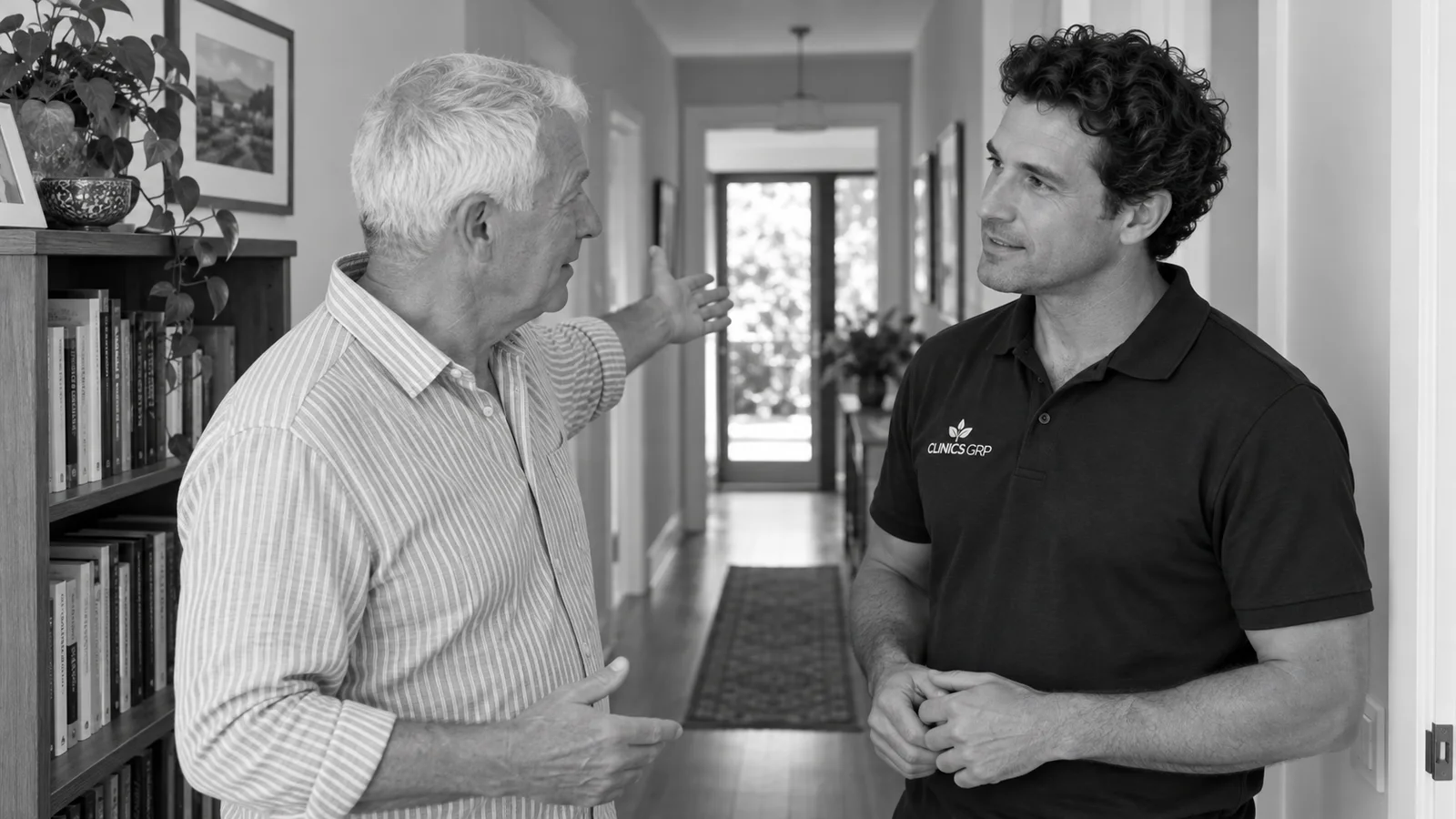
A home assessment can add context: the chair someone actually uses, the corner they negotiate with their walking aid, or the routine that leaves them tired. Its purpose is to connect clinical findings with daily life, while recognising that one visit is still only part of the picture.
Key points
- Home assessment may clarify how movement interacts with furniture, access, space and ordinary routines.
- Your account of difficult activities remains important even when the difficulty does not occur during the visit.
- Assessment should respect privacy, consent, fatigue and safety. You should not recreate a dangerous situation to demonstrate a problem.
- Physiotherapy contributes movement expertise; equipment, home modifications and other health needs may require additional professionals.
- A useful assessment explains priorities, uncertainty and the next step, not simply a list of things that were tested.
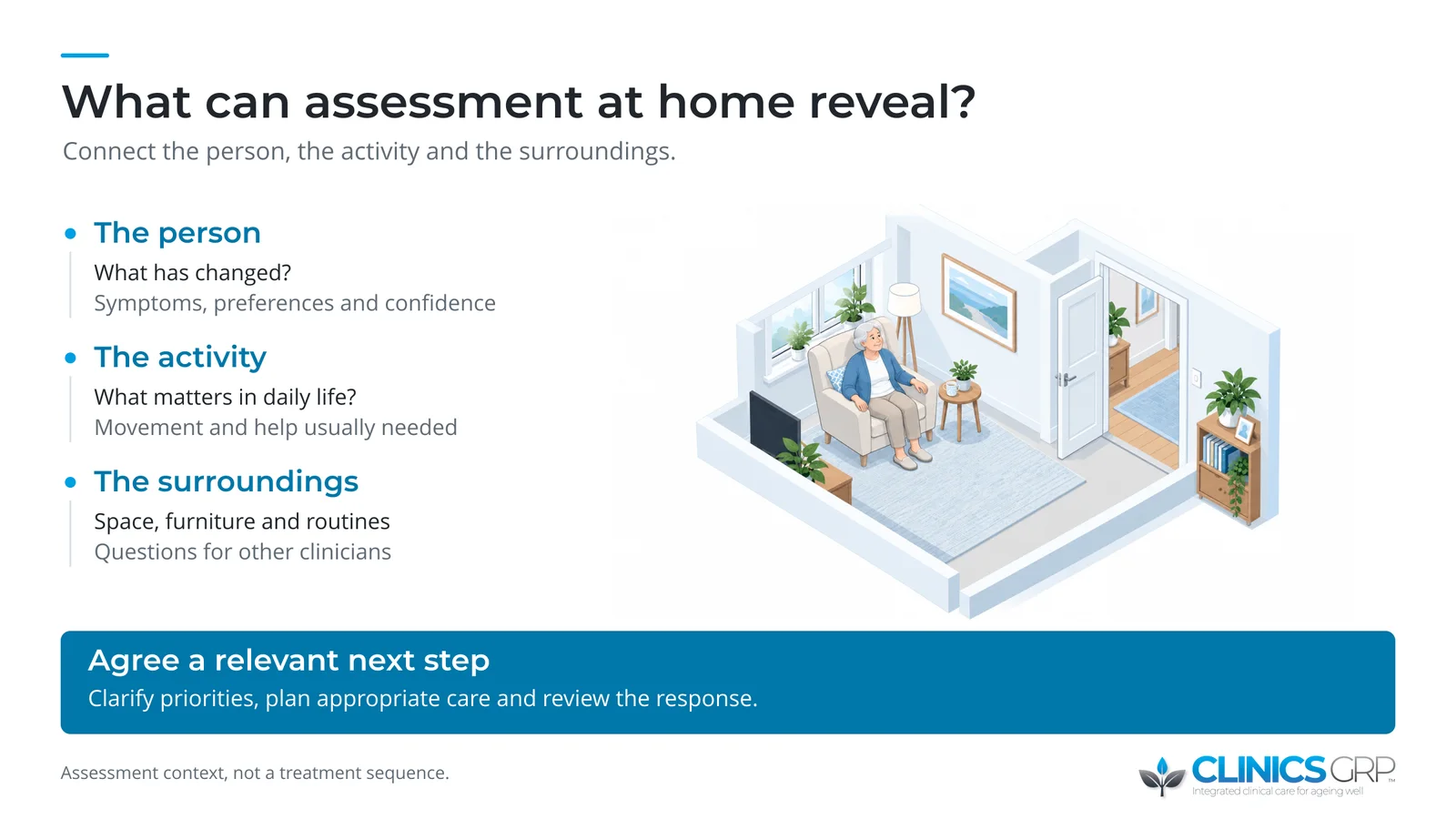
Assessment connects these perspectives; the diagram illustrates context, not a treatment sequence. View diagram at full size.
What does a usual day require?
Start with conversation: what became difficult, when did it begin, and does it vary during the day? Which activities does the person want to protect or regain?
Reaching the front door for a visitor may matter more than walking farther in general. Another person may prioritise enough energy to prepare breakfast.
With consent, family and support workers can add observations. Their account should complement the person's voice, with communication support where needed.
Furniture changes the task
The height, firmness and position of a seat may affect the task of getting up. The same applies to the arrangement of a bed or the space around a dining chair. These are reasons to describe the specific difficulty, not instructions to change furniture without advice.
A physiotherapist may consider how the person approaches, starts and completes a relevant movement where it is safe to do so. They may also ask about pain, confidence, assistance and how often the task occurs. A successful attempt during the appointment does not settle whether it is manageable throughout the day.
The practical question is whether the assessment helps explain the next care decision. That could involve rehabilitation, an agreed change in assistance, equipment assessment or another professional's input. It should not begin with an assumption that every difficult transfer is a strength problem.
Routes can matter as much as distance
Walking to the bathroom may involve turns, doors, changes in surface and limited space. Reaching the garden may involve a threshold or an outdoor path. A reported distance therefore tells only part of the story.
At home, the clinician can consider the relevant route and ask where the person hesitates, rests or needs support. They may discuss the walking aid being used and whether it fits the activity and surroundings. This is different from encouraging the person to test themselves without the supervision or support their situation requires.
Some routes should not be attempted during an assessment. The person's description, available records and a discussion of the environment may be enough to identify a need for a safer plan or further assessment. There is no requirement to reproduce a near fall to make it clinically credible.
The sequence of activities may reveal a different problem
One activity can feel manageable while several in succession are not. Getting dressed, moving to the kitchen and preparing breakfast may create a different experience from completing a single task after a rest.
A home visit can support discussion of that sequence. The clinician may ask when symptoms or tiredness appear, what the person does next and what assistance is available. It is not necessary or appropriate to push someone through a full routine merely to see whether they become exhausted.
Your account remains relevant if the appointment happens on a better day. A simple description of recurring patterns can help the clinician understand what was not visible. New or unexplained fatigue may also require medical assessment; it should not automatically be attributed to poor fitness.
Available support is part of the picture
An activity may be manageable with one kind of assistance but difficult when that assistance is unavailable. The plan should distinguish what the person can do alone, what requires agreed support and what remains uncertain.
This includes considering the person providing assistance. A family member's willingness does not establish that a task is safe for them. If support is required, the team may need to clarify equipment, training, timing and responsibilities. The answer should not be an informal expectation that family will somehow manage.
The World Health Organization's account of functional ability includes environmental and social influences.1 That provides a broad reason to consider support, not a formula for predicting what any individual can achieve. Assessment and discussion are still needed to turn those influences into a realistic care plan.
Privacy and professional scope still apply
A home is a private space. The clinician should explain why a room, activity or item is relevant and seek agreement before proceeding. The person can raise discomfort, ask questions or decline an activity. Photographs and sharing information require appropriate consent and handling; a home visit is not permission to document everything in the house.
Physiotherapists may assess movement in the home, but that does not make every environmental recommendation a physiotherapy responsibility. An occupational therapist may be needed for a formal home-safety assessment, equipment prescription or modifications. The Australian community falls guidelines specifically identify occupational therapy for tailored home-safety interventions in people at increased risk.2
Other concerns may belong with a GP, pharmacist, nurse or another clinician. Good coordination means recognising these boundaries and helping the person understand the next step. It does not require every discipline to repeat the same assessment.
A hypothetical example: the clinic task and the home task differ
Imagine a person who walks comfortably in an open clinic space but avoids their bedroom-to-bathroom route at home. The route has a tight turn, and they are uncertain how to manage their current walking aid there. They have begun asking a family member to accompany them.
Assessment could explore the route, movement and available help, without an unsafe demonstration. Findings might prompt review of aid use, the environment or other clinical needs.
This hypothetical example does not establish a cause or imply that changing equipment would resolve the difficulty.
What should the assessment leave you with?
You should understand the priorities, uncertainties and proposed next step: treatment, rehabilitation, further assessment or different support.
Ask how progress will be judged in the activity that brought you to care. It may be a change in assistance, confidence, comfort or participation, rather than a test result alone. Agree when the plan should be reviewed and what changes should prompt earlier contact.
NICE's rehabilitation-related intermediate-care guidance supports discussing individual goals and recording risk plans with the person.3 This is not evidence that every home assessment will improve function. It supports a clear, shared process for choosing and reviewing care.
Making home information useful
Note the activities you want to discuss and have relevant care instructions available. Avoid rehearsing difficult movements or buying equipment beforehand. Tell the clinician about hazards so the visit can be planned safely.
Clinics GRP connects assessment with practical care decisions. Explore home physiotherapy and our approach to care. For concerns about unsteadiness or falls, the balance and falls service describes a related clinical pathway.