
“Falls prevention” is an established term in healthcare.
It appears in clinical guidelines, research papers, public-health programmes and service descriptions around the world.
Clinics GRP will continue to use the term when referring to that recognised body of evidence.
But in our own clinical language, we prefer to talk about falls management, falls risk management and reducing falls risk.
There is a reason for that distinction.
Taken literally, the phrase “falls prevention” can imply something healthcare cannot promise: that if the right programme is followed, falls will no longer occur.
That is not how falls work.
Key points
- “Falls prevention” is legitimate and established clinical terminology.
- It should not be interpreted as a guarantee that falls can be eliminated.
- Falls are usually influenced by multiple interacting factors.
- Good care aims to reduce modifiable risk, reduce harm, improve responses to balance challenges and support meaningful participation.
- Clinics GRP therefore uses falls management as its preferred public-facing framework while retaining “falls prevention” where it accurately describes the evidence base or formal guideline terminology.
The problem is not the evidence
Australia’s 2025 national guidelines are formally titled Preventing Falls and Harm from Falls in Older People.
They provide evidence-based recommendations for identifying falls risk and tailoring interventions to the person. The Australian Commission on Safety and Quality in Health Care describes the guidelines as a nationally consistent approach to preventing falls and harm, while also emphasising reduction of risk factors and person-centred intervention.
International guidance uses similar language.
The World guidelines for falls prevention and management for older adults recommend risk stratification, multifactorial assessment and personalised interventions for people at higher risk.
So Clinics GRP is not rejecting the term used by the evidence base.
The distinction is about what that term can sound like when heard by a person, family or carer.
“Prevention” can sound like a guarantee
Most people understand the word prevention quite literally.
Prevent infection.
Prevent injury.
Prevent something from happening.
When applied to falls, that can create an expectation that the right exercise programme, walking aid or home modification should stop falls altogether.
If another fall occurs, the person may then feel they have failed.
A family member may wonder whether they should have supervised more closely.
A clinician may feel pressured to restrict more activity.
None of those responses necessarily reflects the complexity of the situation.
A fall is influenced by probability, not certainty.
Falls are usually multifactorial
A person may fall because several factors come together:
- reduced balance
- slower reactive stepping
- sensory change
- dizziness
- medication effects
- blood-pressure change
- fatigue
- pain
- visual difficulty
- cognitive load
- an environmental obstacle
- an unfamiliar task
- urgency
- illness
- fear or altered movement strategy.
Some of these factors can be modified.
Others can only be partly changed.
Some will vary from one day to another.
And the environment may change unexpectedly.
The goal of assessment is therefore not to discover a single switch labelled “fall prevention”.
It is to understand the pattern of risk well enough to decide what can reasonably be improved, compensated for or managed.
Reducing risk is different from eliminating risk
Exercise programmes can reduce fall rates.
Home-hazard interventions can reduce falls in appropriately selected groups.
Medication review, management of particular health conditions, vision care and other interventions may reduce relevant risks.
These effects matter.
But a reduction in risk is not the same as zero risk.
The Australian Commission itself describes the clinical task in terms of addressing underlying risk factors and reducing harm, even within guidelines that retain the established “falls prevention” terminology.
Clinics GRP wants our public language to preserve that distinction.
We can work to make a fall less likely.
We can work to make the consequences of a fall less severe.
We can improve the person’s ability to recover when balance is disturbed.
We can adapt environments.
We can improve strength, power, movement, confidence and decision-making.
We cannot guarantee that another fall will never happen.
The easiest way to have fewer falls is not necessarily the best outcome
Imagine a person who has fallen several times while walking outside.
One response would be to tell them not to walk outside anymore.
Their exposure to outdoor falls would drop dramatically.
That does not automatically mean their life has improved.
They may lose:
- physical activity
- social contact
- confidence
- access to community activities
- independence in errands
- the pleasure of simply going somewhere on their own terms.
This is why fall count alone cannot define success.
We need to know what the person is still doing.
A reduction in falls achieved through severe restriction may be clinically very different from a reduction in falls while the person remains active.
That distinction sits at the centre of why Clinics GRP prefers the language of falls management.
Falls management begins with the person, not the fall
A useful falls plan asks:
What happened?
What is contributing?
What can change?
What cannot change?
What does the person want to keep doing?
What level of support would help?
What risks are acceptable?
What risks need stronger management?
These questions move care beyond the idea that the fall itself is the only outcome that matters.
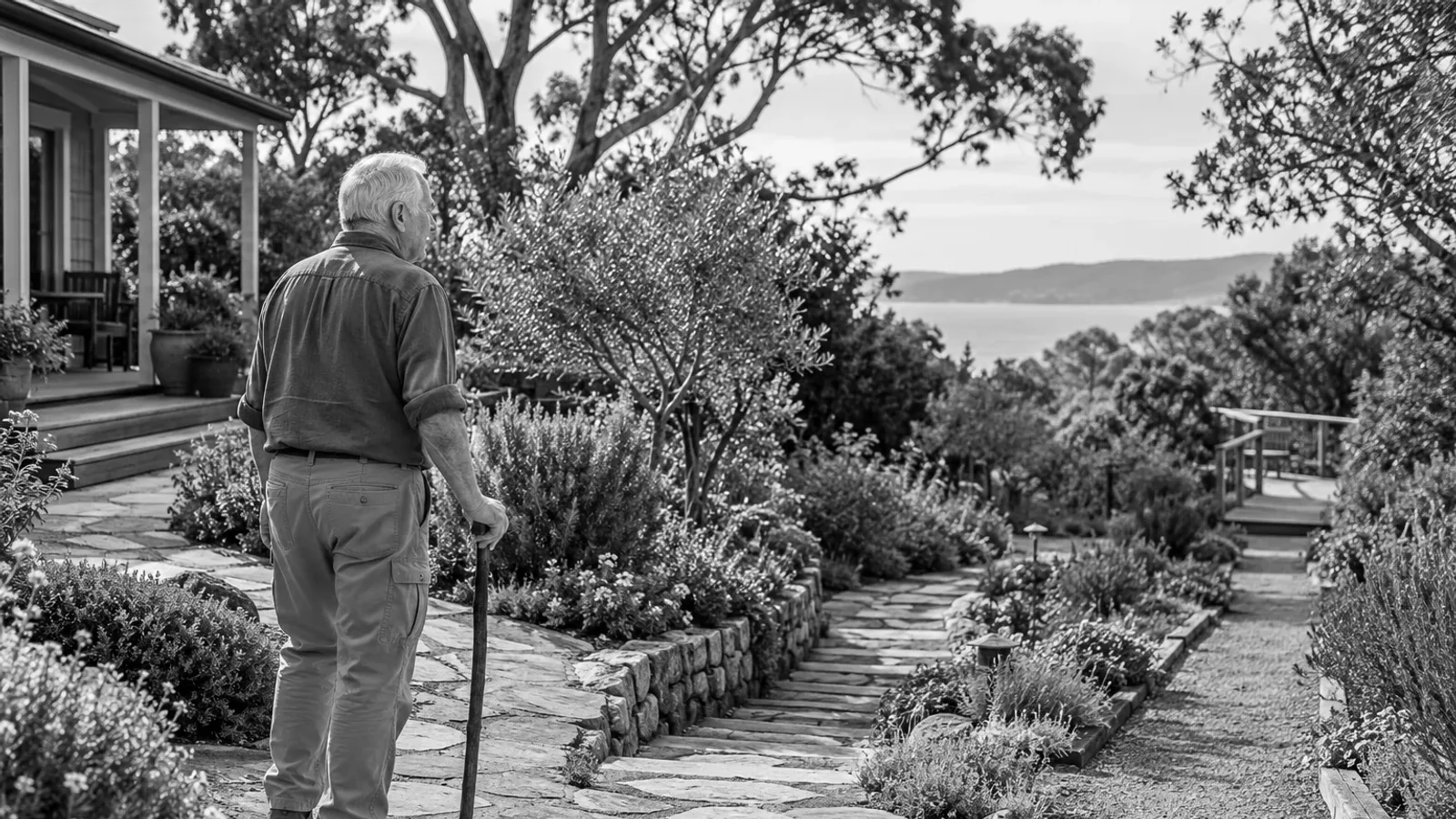
Sometimes the most important outcome is returning to the garden.
Sometimes it is remaining able to shower independently.
Sometimes it is walking to the café with a rollator.
Sometimes it is knowing when to ask for help.
Sometimes it is reducing the consequences of a future fall because risk cannot be completely removed.
Managing risk is not the same as accepting unnecessary risk
The phrase “falls management” should not be misunderstood as passive.
It does not mean:
“Falls happen, so there is nothing we can do.”
It means exactly the opposite.
It asks us to understand risk more precisely.
A good falls-management plan may involve:
- progressive exercise
- balance and gait rehabilitation
- reactive stepping practice
- vestibular rehabilitation
- medical investigation
- medication review
- vision care
- footwear changes
- walking-aid prescription
- environmental modification
- osteoporosis management
- support from family, carers or home-care workers
- review after another fall or near-fall.
Management can be active and ambitious.
It simply avoids promising an outcome we cannot guarantee.
Falls management fits a broader view of ageing
The World Health Organization describes healthy ageing in terms of functional ability — the capacity to be and do what a person values — shaped by both the person’s intrinsic capacity and their environment.
That is compatible with the way Clinics GRP wants to think about falls.
An older person does not become successful because they have removed every risk from their life.
Nor do they fail because they use a walking aid, need another person nearby or adapt an activity.
The question is whether care helps them maintain meaningful choice, participation and dignity while managing risk responsibly.
That is also why we need to be cautious about language that makes absolute safety sound like the endpoint of rehabilitation.
Life contains risk.
Clinical care should help people navigate it intelligently.
We should also manage harm
Not every intervention changes whether a fall occurs.
Some reduce what may happen if one does.
Bone health is one example.
So are some environmental strategies.
A rapid response after a fall may reduce secondary complications.
Education about what to do after a fall can matter even when risk remains.
The national Australian guidelines explicitly refer not only to preventing falls but also to preventing or reducing harm from falls.
This broader perspective is useful.
It recognises that care can remain valuable even when complete risk elimination is impossible.
When Clinics GRP will still use “falls prevention”
We should not erase the established terminology.
We will still use falls prevention when:
- naming formal guidelines
- describing research programmes
- discussing the evidence base
- referring to recognised falls-prevention services or initiatives
- using terminology needed to help people find reliable health information.
But in our own explanations and clinical philosophy, the default language should be:
falls management
falls risk management
reducing falls risk
reducing the frequency of falls
reducing harm from falls
This makes the intended outcome clearer.
The Clinics GRP position
We do not promise to prevent every fall.
We aim to understand the factors influencing a person’s risk, reduce modifiable contributors, improve physical and functional capacity where possible, reduce harm and create practical strategies for the situations that matter.
Sometimes that means improving the person.
Sometimes it means changing the task.
Sometimes it means changing the environment.
Sometimes it means introducing support.
Often it means several of those things together.
And the success of the plan should not be judged only by whether the person reaches the ground again.
It should also be judged by whether they have more confidence, more appropriate support, better strategies and more ability to continue participating in their life.
That is why Clinics GRP talks about falls management, not just falls prevention.
Understand more
- Balance Is More Than Strength: The Clinics GRP Approach to Balance in Older Adults
- Why Do Older Adults Fall? There Is Rarely One Cause
- Managing Falls Risk Should Protect Participation, Not Restrict It
Relevant care
References
- Australian Commission on Safety and Quality in Health Care. Preventing Falls and Harm from Falls in Older People: Best Practice Guidelines for Community Care in Australia. 2025. https://www.safetyandquality.gov.au/resources/falls-guidelines-community-care
- Australian Commission on Safety and Quality in Health Care. Preventing harm from falls with the updated Falls Guidelines. 2025. https://www.safetyandquality.gov.au/news-and-media/latest-news/preventing-harm-falls-updated-falls-guidelines
- Montero-Odasso M, et al. World guidelines for falls prevention and management for older adults: a global initiative. Age and Ageing. 2022. https://pmc.ncbi.nlm.nih.gov/articles/PMC9523684/
- World Health Organization. Healthy ageing and functional ability. https://www.who.int/news-room/questions-and-answers/item/healthy-ageing-and-functional-ability