
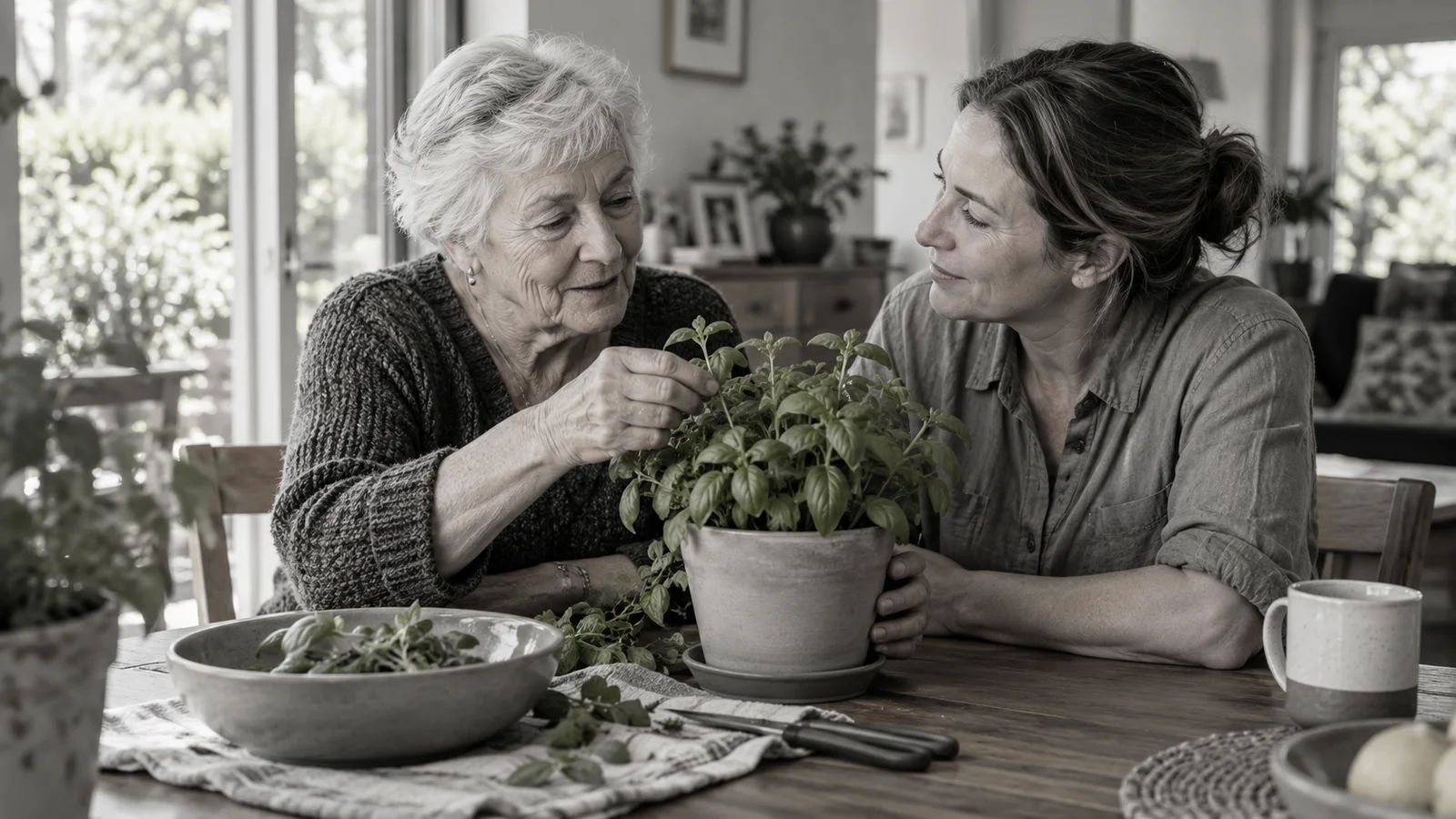
A person living with dementia may still enjoy walking to the garden, joining others at the table or taking part in a familiar household activity. If movement has become difficult, physiotherapy at home can help assess what is changing and whether rehabilitation, adaptation or different support may be useful.
The starting point remains the person. Their preferences, comfort and response matter, including when communication takes time. Dementia should not become a reason to stop asking what they want, or an explanation applied automatically to every new difficulty with walking or daily activity.
Key points
- Assess the movement difficulty and relevant health changes rather than assume dementia explains everything.
- Familiar activities can help make the purpose of a home programme understandable.
- Communication, consent and suitable assistance are part of care.
- Exercise research in dementia has mixed findings; improvement or slower decline cannot be guaranteed.
- Sudden confusion or a rapid change in function may need prompt medical assessment.
Understand what has changed
Describe the actual activity. Perhaps getting up from a chair takes longer, the person has stopped going into a particular room or a familiar walk now needs help. Explain when the change began and whether it followed illness, injury, hospitalisation or another change in circumstances.
A diagnosis of dementia does not rule out pain, acute illness, a new neurological problem or a difficulty with equipment. The clinician needs to consider the history and decide whether physiotherapy is the appropriate next step. Rapid deterioration deserves attention rather than an assumption that the condition has simply progressed.
Family or support workers may contribute useful observations, with appropriate consent and attention to the person’s rights. Describe what happened rather than assigning a motive. Saying that someone stopped after a few steps gives the team a question to explore; labelling them uncooperative can close that question too early.
Begin with something the person recognises
A meaningful task can give a movement a clear purpose. Getting to a favourite chair, standing to greet someone or walking towards a familiar garden may be easier to connect with than an abstract instruction to improve function. The activity still needs assessment and appropriate support.
Familiarity is helpful information, not proof that an activity is safe. A route may have become difficult because movement, vision, attention, symptoms or the available assistance has changed. A home visit can explore the relevant circumstances without asking the person to recreate a frightening or dangerous event.
Our article on what home assessment can show explains how the environment and the person’s account fit together. The aim is to make the care decision more relevant, while recognising that the house cannot explain every change in health or ability.
Make communication part of the assessment
Ask how the person usually communicates agreement, discomfort and uncertainty. Allow time to respond and reduce unnecessary competing conversation. Instructions may need to be presented differently, with demonstration or a simpler step, depending on the individual. The clinician should observe the response rather than continue repeating words more loudly.
Pain can be difficult to describe. Changes in expression, movement or willingness to continue may need attention, particularly when they differ from the person’s usual behaviour. These observations do not diagnose pain on their own. They provide reasons to pause, clarify and consider an appropriate assessment.
A familiar person may help communication, but should not automatically answer every question. Address the person receiving care and seek their participation in the way they can manage. If decisions require additional support, the team needs to follow the applicable consent arrangements while continuing to respect the person’s preferences and responses.
What might physiotherapy contribute?
Dementia Australia describes possible physiotherapy roles including movement-related rehabilitation, exercise, advice about aids and teaching families or carers to support appropriate activities.1 The contribution should be selected through assessment. A dementia diagnosis alone cannot determine which intervention is useful or how much practice is appropriate.
A physiotherapist may consider walking, transfers, relevant muscle function and the support needed for a valued task. Occupational therapy, nursing, medical review or another discipline may also be required. The person should receive a connected plan rather than several separate sets of instructions that assume someone else is coordinating them.
The programme might involve recovery after illness, maintaining an activity or making assistance more manageable. Those purposes should be explained honestly. Supporting participation can remain worthwhile even when the expected course of the condition limits how confidently an improvement can be predicted.
Be candid about what exercise research shows
The PrAISED trial tested an intensive, tailored exercise and functional-activity programme for people with early dementia or mild cognitive impairment. It did not improve the primary daily-function outcome compared with usual care, and did not establish benefits across the main secondary outcomes.2 A carefully designed programme is therefore not a guarantee of improved independence.
That result does not mean every movement goal is pointless. It means the clinical purpose and the response need to be considered for the individual, without promising that exercise will slow dementia or prevent a particular outcome. Enjoyment, access to a valued activity and comfort may matter to a person even when a broad research measure does not improve.
Ask what the proposed care is intended to change and how that will be recognised. Distinguish a practical goal chosen with the person from a claim about disease modification. An evidence-informed conversation should make room for uncertainty rather than use a reassuring promise to secure agreement.
Agree what help is needed between visits
The person and their support network need clear instructions about any agreed activity. Who will set it up? Does it require direct supervision or physical assistance? What has the helper been taught, and when should the activity stop? A written sheet alone may not answer these questions.
Assistance should be demonstrated and assessed for the particular situation. Do not improvise lifting, pull someone through a movement or assume a familiar helper can manage every transfer. If suitable assistance is unavailable, the team needs to reconsider the plan. The support person’s safety and practical capacity matter as well.
Our article on why more than one clinical discipline may be needed explains how shared responsibilities can be organised. The person’s own preferences should remain visible throughout that coordination. Care is not improved by making the household’s routine entirely about completing a therapy checklist.
Respond when an activity is declined
A person may not want to participate at that moment. Consider what their response is telling you: discomfort, tiredness, confusion, lack of interest or a preference for something else may be relevant. These are possibilities to explore, not explanations to assume without assessment.
Pause and use the agreed approach. Continuing through distress simply to finish the programme can undermine the purpose of care. The team may need to change the timing, communication, task or clinical understanding. Record what occurred and seek advice if the pattern is new or concerning.
Preferences can change without making the previous goal wrong. A person who enjoyed an outdoor activity may now prefer something closer to home. Review should ask whether the goal still belongs to them, rather than continue because family or clinicians have invested effort in it.
Review participation and assistance in real life
Assessment scores may contribute useful information, but they need to be connected with daily experience. Is the person reaching the place they wanted? Does the task appear comfortable and meaningful? Is the assistance manageable, and have there been new falls, symptoms or concerns?
Review can support a decision to continue, adapt, reduce or stop a particular intervention. If benefit is unclear, discuss that uncertainty directly. Our article on maintaining an ability as a meaningful goal explains why care does not always need an improvement target to have a legitimate purpose.
At the same time, maintenance should not become a claim that cannot be examined. The team should describe the intended purpose, what is being observed and when the plan will be reconsidered. That gives the person and their supporters a fair basis for deciding whether the arrangement remains worthwhile.
How Clinics GRP can support you
Clinics GRP provides home and mobile physiotherapy in Brisbane. Intake checks clinical suitability, relevant clinician availability and address. Explain the movement concern, communication needs, current care team and assistance available so an appropriate starting point can be considered.
A home visit may help connect movement assessment with a familiar activity and an agreed support plan. Additional medical, nursing, occupational therapy or other input may be needed. The service should be clear about its role and any limitation rather than imply that a mobile appointment covers all dementia-care needs.
When to seek urgent help
A sudden change in attention, alertness or confusion may represent delirium and needs prompt medical assessment.3 New stroke symptoms, collapse, a serious injury or other medical emergency requires 000. Do not wait for physiotherapy or assume an acute change is an expected consequence of dementia.
Next steps
Describe a specific change and an activity the person values. Share useful communication information and the current support arrangement. Ask how the proposed assessment will respect the person’s choices, what any programme requires and when its purpose and response will be reviewed.
References
- Dementia Australia. Rehabilitation and physiotherapy for people with dementia. https://www.dementia.org.au/about-dementia/treatment-and-management-dementia/rehabilitation-and-physiotherapy-people-dementia
- Harwood RH, Goldberg SE, Brand A, et al. Promoting Activity, Independence, and Stability in Early Dementia and mild cognitive impairment (PrAISED): randomised controlled trial. BMJ. 2023;382:e074787. https://pmc.ncbi.nlm.nih.gov/articles/PMC10463053/
- Australian Commission on Safety and Quality in Health Care. Delirium Clinical Care Standard. 2021. https://www.safetyandquality.gov.au/clinical-care-standards/delirium
Disclaimer
This article provides general information only and does not replace individual medical, nursing, allied health, or emergency care advice. Health needs vary from person to person. If you are concerned about symptoms, falls risk, medication issues, mobility, pain, wounds, dizziness, or a change in health or function, speak with your GP or an appropriately qualified health professional. In an emergency, call 000 in Australia.