
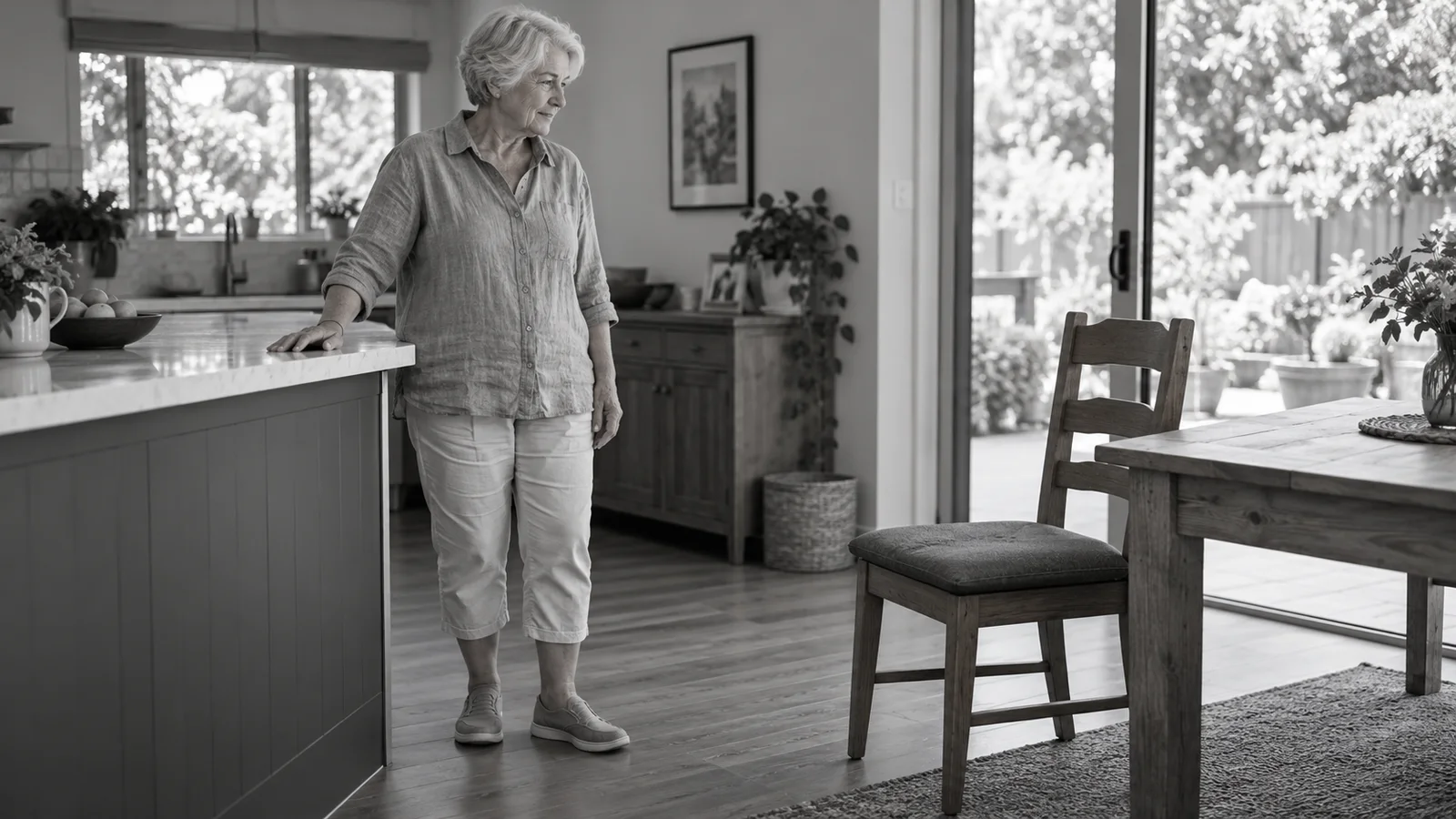
Knee osteoarthritis often becomes a care question through an ordinary activity: standing from a favourite chair, using the front steps or walking far enough to meet someone. In-home physiotherapy can assess that activity where it happens and help develop an appropriate movement plan around it.
The diagnosis matters, but it does not explain every person’s experience. Pain, other health conditions, confidence, available support and the demands of the task can differ considerably. The aim is to understand your particular difficulty and agree what would count as useful change.
Key points
- Knee osteoarthritis care should consider symptoms and everyday participation alongside the diagnosis.
- Appropriate exercise and physical activity are core parts of recommended care.
- A home visit can help adapt a programme to the actual space, equipment and routine.
- Symptoms and response should guide review; copying someone else’s programme is unlikely to answer every need.
- Sudden severe pain, a hot swollen joint or an acute inability to bear weight needs medical assessment.
Begin with the activity you want to manage
Describe which part of the day has changed. Does the first movement from a chair hurt? Is walking limited by pain, tiredness or uncertainty about the knee? Are you avoiding an activity that you still value? These details give the assessment a clearer purpose than a general request to strengthen the leg.
Explain the pattern, including what happens afterwards. An activity that looks manageable during a brief appointment may leave you uncomfortable later. The physiotherapist needs that information when choosing the starting point and reviewing the response. You should not have to produce a painful demonstration to make your concern credible.
Our broader article on osteoarthritis, joint pain and meaningful movement explains how the diagnosis connects with daily life. A home visit adds the chance to assess the particular chair, step or walking route involved, while recognising that one visit cannot capture every part of the day.
What does recommended knee osteoarthritis care include?
Australia’s Osteoarthritis of the Knee Clinical Care Standard supports a comprehensive assessment, education and a tailored programme of exercise and physical activity. Weight management support is relevant for some people and should be discussed respectfully within appropriate care.1 The plan needs to reflect individual circumstances rather than make body weight the explanation for every symptom.
Exercise can be chosen for a purpose such as improving relevant muscle function or making an activity more manageable. The appropriate type, amount and progression require assessment. There is no single public programme that fits every painful knee, and an article cannot establish which symptoms are due to osteoarthritis.
A useful conversation also considers what has already been tried. Tell the clinician about previous exercise, treatment, medicines and the barriers that interrupted them. A plan is more likely to be usable when those barriers are understood. Reissuing the same sheet without asking why it was difficult leaves an important question unanswered.
Assess the person alongside the joint
The physiotherapist may examine movement, muscle function, walking and the task you want help with. They may ask about other painful areas, health changes and the assistance available. The assessment should explain how the findings relate to the next care decision, including when another clinician’s opinion is needed.
A scan can contribute information in the right circumstances, but treatment decisions should not be based on the image alone.1 Ask how the examination and your experience fit the diagnosis. New or unusual symptoms may require a different investigation rather than being attributed automatically to existing arthritis.
The home setting can make this discussion more precise. A deep lounge, an awkward turn or several steps at the entrance may create a different demand from a clinic task. The question is whether treatment, practice, equipment assessment or a change in the task would best address that demand.
Make the exercise plan fit the home
A programme should specify where an activity can be done, what support is required and how you will know whether the response is acceptable. Demonstration and feedback can help establish understanding. If you cannot confidently explain what to do after the visit, ask for clearer instructions before practising alone.
Space and equipment deserve attention. A resistance exercise that was taught using clinic equipment may need an appropriate alternative at home. A balance activity may require supervision or a particular support. Do not improvise with unstable furniture, increase resistance without advice or assume that a kitchen bench makes every standing exercise suitable.
You should also understand the priority. If only a small amount of practice is feasible on a difficult day, ask what matters most and what should change. That discussion allows the programme to respond to real life without turning every variation into a question about commitment.
Review symptoms rather than using a fixed pain rule
An individual plan should explain what response to expect and which changes require contact. That advice may consider the nature of the pain, swelling, the activity and the later response. A universal instruction to ignore pain or stop whenever discomfort appears can both be unhelpful when applied without context.
Describe the response in practical terms. Was the task harder later that day? Did symptoms interfere with sleep or the next morning’s routine? Did the knee feel different in a way that concerns you? These observations can help the clinician reconsider the programme without requiring you to diagnose the cause.
If symptoms worsen, the next step may involve adjusting the plan or seeking medical review. Do not independently change prescribed medicines to make an exercise target achievable. Discuss medicine concerns with the prescriber or pharmacist, and tell the physiotherapist when symptoms or adverse effects affect movement.
Changing a task can be part of care
Rehabilitation may involve adapting the activity as well as addressing physical capacity. A different setup, suitable equipment or agreed assistance may make a valued task more manageable. Equipment and home modifications may require occupational therapy assessment, particularly when several daily activities are affected.
Adaptation should remain connected with your preferences. A chair change is only useful if it is appropriate, comfortable and acceptable to you. Advice should explain what problem it is intended to address, rather than treating every household object as a hazard or imposing a uniform home arrangement.
For a practical discussion of movement and furniture, see getting up, stairs and transfers. Those considerations can complement knee rehabilitation, but they do not replace assessment of new symptoms or establish that a particular piece of equipment is needed.
Keep valued activity in the conversation
Pain can narrow a person’s routine. You may stop visiting a neighbour, spend less time in the garden or avoid a community activity because the whole outing has become difficult. Tell the clinician what has been lost, including the social consequences, rather than reporting only a walking distance.
The World Health Organization’s account of functional ability includes the interaction between a person and their environment.2 That provides a useful framework for discussing participation. It does not prove that home physiotherapy produces a better outcome than every other setting. The choice still depends on the actual care question.
A goal might involve participating with planned rests or suitable assistance. It does not have to require symptom-free movement or complete independence. The article on connecting exercise with meaningful goals explains how those priorities can guide practice and review.
Ask what progress would look like
Agree a small set of relevant outcomes with the clinician. These may include the activity itself, the assistance needed, symptoms and clinical measures. Review should ask whether the programme is feasible as well as whether a measurement has changed. A technically sound exercise is of limited use if its setup cannot be managed.
If progress stalls, ask what should be reconsidered. The diagnosis, programme, available support or purpose of care may need review. Continuing treatment should have a clear reason. See how physiotherapy progress should be reviewed for questions that can help you take part in that decision.
It is reasonable to ask about the next setting too. Some work may continue at home, while clinic or community care may become useful for particular goals. The transition should be explained and coordinated, not treated as an automatic reward for reaching an arbitrary level of ability.
How Clinics GRP can support you
Clinics GRP provides home and mobile physiotherapy in Brisbane, including assessment of movement difficulties where home is a suitable setting. Intake confirms the address, clinical fit and clinician availability. Tell the team which activity knee pain is changing and what help you currently need.
Depending on the findings, care may include education, treatment, exercise planning and review. Further medical or occupational therapy input may be appropriate. The plan should make those responsibilities clear without suggesting that one service can address every contributor to pain or function.
When to seek urgent help
Seek urgent medical advice for a hot swollen knee with fever or illness, sudden severe pain, or a new inability to bear weight after injury. A marked new change should not simply be labelled an arthritis flare. Call 000 for a medical emergency. Healthdirect’s knee-pain information describes reasons to seek timely assessment.3
Next steps
Choose one activity to discuss, describe your symptoms and bring details of previous care. Ask what the proposed programme is intended to change, how the response will be monitored and whom to contact if the knee becomes unexpectedly worse.
References
- Australian Commission on Safety and Quality in Health Care. Osteoarthritis of the Knee Clinical Care Standard. 2024. https://www.safetyandquality.gov.au/clinical-care-standards/osteoarthritis-knee
- World Health Organization. Healthy ageing and functional ability. https://www.who.int/news-room/questions-and-answers/item/healthy-ageing-and-functional-ability
- Healthdirect Australia. Knee pain. https://www.healthdirect.gov.au/knee-pain
Disclaimer
This article provides general information only and does not replace individual medical, nursing, allied health, or emergency care advice. Health needs vary from person to person. If you are concerned about symptoms, falls risk, medication issues, mobility, pain, wounds, dizziness, or a change in health or function, speak with your GP or an appropriately qualified health professional. In an emergency, call 000 in Australia.