
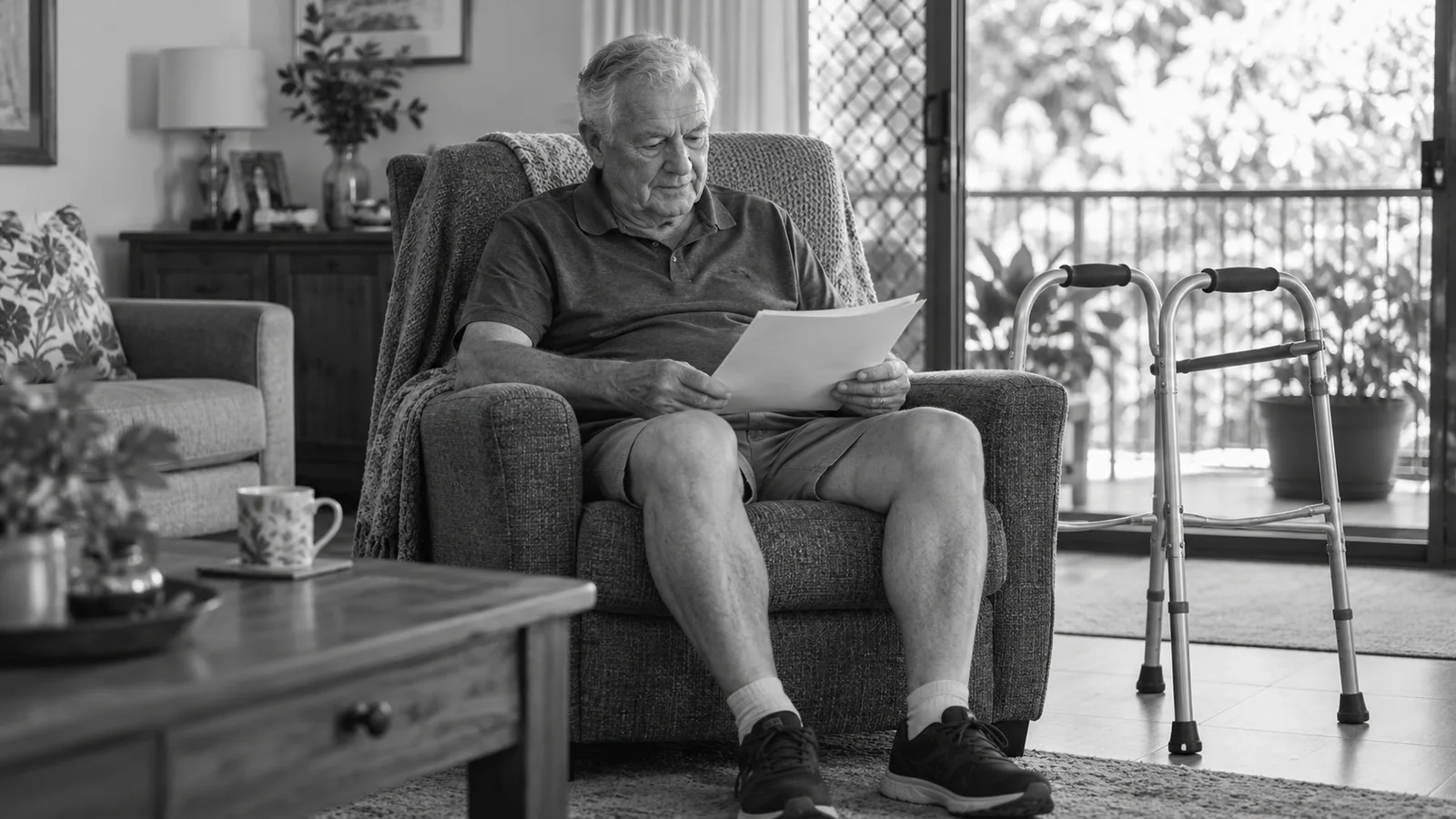
Coming home after a knee replacement brings rehabilitation into familiar surroundings. The exercises on the discharge sheet now sit alongside getting out of your own chair, reaching the bathroom and deciding how much activity feels manageable. A home physiotherapy visit can help connect those instructions with the movements your day requires.
The starting point is your individual surgical plan. Recovery differs between people, and a home visit should take account of the operation, your symptoms, other health needs and the help available. You do not need to keep pace with someone else’s recovery to have a worthwhile rehabilitation goal.
Key points
- Home physiotherapy can assess how knee movement and walking affect your actual household routine.
- Surgical instructions and the discharge programme guide the initial plan.
- Exercise, daily activity and recovery time need to be considered together.
- Increasing pain, new illness or an unexpected loss of function may require medical review.
- Progress should be connected with activities you want to resume, alongside relevant clinical measures.
Start with the information from hospital
Have your discharge summary, exercise instructions and follow-up arrangements available for the first appointment. Tell the physiotherapist about any restrictions, the walking aid you were advised to use and concerns raised before discharge. If instructions appear to conflict, the receiving clinician should clarify them with the treating team before changing the programme.
The Royal Brisbane and Women’s Hospital knee replacement guide describes home preparation, prescribed exercises, equipment and arrangements for assistance as parts of recovery.1 Its local pathway is useful background, but your own discharge instructions determine what applies to you. A booklet written for another hospital cannot settle an individual question about your surgery.
Mention practical gaps early. You may understand an exercise but have nowhere suitable to perform it. You may have received advice about stairs that does not match your entrance. These are specific questions for assessment, rather than reasons to improvise a new technique or stop all movement while waiting.
What can the physiotherapist assess at home?
Assessment may include knee movement, relevant muscle function, walking, symptoms and the assistance needed for ordinary tasks. The clinician also needs your account of what happens outside the appointment: how the knee feels later, whether sleep is disrupted and which activities have become difficult.
Your home provides details that a clinic cannot fully reproduce. A low lounge chair, the position of a bed or a narrow turn may change how a movement is managed. The purpose of observing those details is to choose an appropriate response. That response could involve treatment, exercise progression, different assistance or equipment assessment by another professional.
Consent and safety remain part of the assessment. You should not have to struggle up a staircase or recreate a near-fall to demonstrate that something is difficult. Describe the problem and explain why the activity matters. Our guide to what a home physiotherapy assessment can show explains this approach in more detail.
Build a programme around the knee and the day
A rehabilitation programme may address bending and straightening the knee, muscle activation, strength, walking and relevant functional tasks. The selection and amount depend on assessment and the surgical plan. A public article cannot prescribe the right number of repetitions, force a movement target or decide when a particular exercise should begin.
Ask what each exercise is intended to change. An explanation is more useful than a page of movements without priorities. You should know how to position yourself, what support is required and what response should lead you to pause and seek advice. If written instructions are unclear, ask the clinician to demonstrate and check your understanding.
Household activity also contributes to the day’s demands. Repeated trips to the bathroom, preparing food and attending appointments may make a programme harder to manage than it appears on paper. Discuss the whole day when reviewing the plan. Do not assume that adding more exercises is the only way to respond when recovery feels slow.
Make walking and transfers specific
A goal such as walking better becomes easier to assess when it names a destination. It might involve reaching the kitchen using your prescribed aid, negotiating the front entrance with agreed assistance or managing the route needed for a follow-up appointment. These goals help explain why particular practice has been chosen.
The physiotherapist may examine the walking route, how you use the aid and what happens when you turn or approach a chair. Any change in equipment or assistance needs to fit your current ability and instructions. Putting an aid aside because someone else stopped using theirs at the same stage is not a sound basis for a decision.
Chairs and stairs deserve their own discussion. A movement that works from a firm hospital chair may feel different from your usual lounge. See getting up, stairs and transfers at home for the questions an assessment can explore. Avoid altering furniture with unstable cushions or makeshift supports.
Understand symptoms without guessing
Tell the clinician about the pattern of pain, swelling and fatigue, including whether symptoms settle or are worsening. These observations can affect the next step, but an article cannot determine whether a particular postoperative symptom is expected. Follow the hospital’s instructions about what to report and whom to contact.
Keep medicine questions with the prescriber or pharmacist. If pain relief is inadequate, causes troubling effects or leaves you unsure about participating, ask for review. A physiotherapist can communicate how symptoms affect movement, but should not replace the prescribing plan with informal advice about changing doses.
It can help to keep brief notes about an activity and your response. Record what you attempted, what assistance you used and what happened afterwards. You do not need an elaborate diary. The purpose is to give the treating team usable information, including problems that were absent during the appointment.
What does research say about recovering at home?
In the Australian HIHO trial, adding inpatient rehabilitation before a monitored home programme did not produce superior mobility at the principal follow-up compared with the monitored home programme alone in the selected knee replacement population.2 This supports considering an appropriate home pathway. It does not show that every person should leave inpatient rehabilitation, or that every home service provides equivalent care.
A monitored programme includes clinical input and review. Research about that arrangement should not be interpreted as advice to manage an uncertain recovery without support. Suitability depends on your health, functional needs, available assistance and the receiving service. Choosing the setting remains a clinical decision made with you.
The question to ask is what the proposed service will assess, teach and review in your circumstances. The existing home assessment after hospital article covers the wider transition. Knee-specific rehabilitation then needs to remain connected with the surgical team and the activities you want to regain.
Review progress against a meaningful activity
Knee measurements can provide useful information, but they do not describe the whole recovery. Ask whether the activity that brought you to care is becoming more manageable, whether the support arrangement is sustainable and whether symptoms allow you to participate as intended. A clinical improvement and a practical difficulty can exist together.
If the plan is not producing the expected response, review the explanation and the programme. Further assessment, a change in practice or communication with the surgeon may be appropriate. Continuing the same visit indefinitely should not become the automatic answer. Our article on reviewing physiotherapy progress offers useful questions.
Look beyond bending alone
Knee movement is one part of rehabilitation. The physiotherapy guideline for total knee replacement also addresses muscle function and motor tasks such as walking, balance and movement symmetry.4 A person may therefore need practice that relates a clinical finding to an actual activity, rather than focus only on achieving a bending measurement. Ask which limitation is affecting the task you want to manage and what the next part of the programme is intended to address.
How Clinics GRP can support you
Clinics GRP provides home and mobile physiotherapy in Brisbane. Intake confirms your address, clinical suitability and clinician availability before arranging care. Share the operation date, main difficulty and discharge information so the team can consider the appropriate starting point.
Home may be useful initially, with clinic or community rehabilitation considered as your needs change. The purpose of each appointment should remain clear, whichever setting is chosen. Care involving several services also needs an agreed handover, so you know who will answer a question between appointments.
When to seek urgent help
Follow your surgical team’s emergency instructions. New chest pain, sudden breathlessness or collapse requires urgent help: call 000. Seek prompt medical assessment for concerning wound changes, fever, new calf pain or swelling, or a sudden substantial deterioration. Do not wait for a routine physiotherapy visit to assess a possible postoperative complication.1, 3
Next steps
Have the discharge plan ready, identify the household activity causing the most difficulty and clarify the next review date. Ask the treating team whom to contact if recovery changes before that review. A clear plan should leave you knowing what to do now and how to obtain help when the plan no longer fits.
References
- Metro North Health, Royal Brisbane and Women’s Hospital. Total Knee Replacement: Surgical Wards. Patient guide. https://metronorth.health.qld.gov.au/rbwh/wp-content/uploads/sites/2/2026/04/total-knee-replacement-rbwh-patient-guides.pdf
- Buhagiar MA, Naylor JM, Harris IA, et al. Effect of inpatient rehabilitation vs a monitored home-based program on mobility in patients with total knee arthroplasty: the HIHO randomized clinical trial. JAMA. 2017;317:1037–1046. https://doi.org/10.1001/jama.2017.1224
- Healthdirect Australia. Knee replacement. https://www.healthdirect.gov.au/knee-replacement
- Jette DU, Hunter SJ, Burkett L, et al. Physical therapist management of total knee arthroplasty. Physical Therapy. 2020;100:1603–1631. https://doi.org/10.1093/ptj/pzaa099
Disclaimer
This article provides general information only and does not replace individual medical, nursing, allied health, or emergency care advice. Health needs vary from person to person. If you are concerned about symptoms, falls risk, medication issues, mobility, pain, wounds, dizziness, or a change in health or function, speak with your GP or an appropriately qualified health professional. In an emergency, call 000 in Australia.