
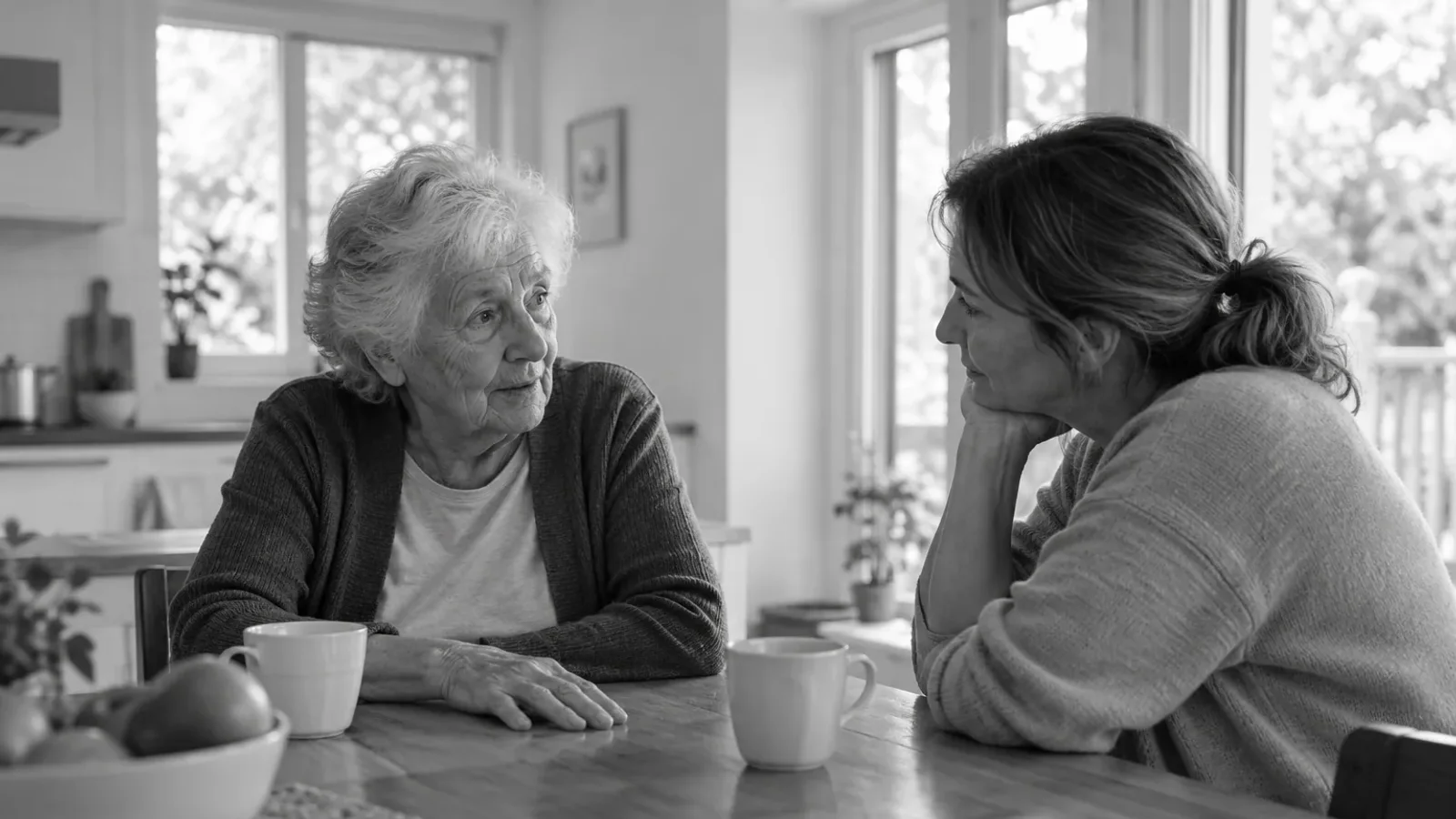
“The pain is worse” may mean that a familiar symptom has become stronger, moved, lasts longer or now interferes with something the person could do last week. Those differences change the clinical question. At home, a nursing review can describe the change, assess its effect on the person, check the current care plan and make sure the concern reaches the clinician who can decide what happens next.
This article focuses on a change in pain, not on choosing a pain medicine or treating a condition. Some pain needs urgent medical assessment. Other pain calls for a timely review of the existing plan and the person's goals. The Nursing Hub explains the service's role in assessment and coordination; it does not replace a GP, emergency service or specialist pain assessment.
Key points
- A change in pain needs assessment against the person’s usual pattern and daily function.
- Nursing review should use the existing plan and communicate findings to the right treating clinician.
- Severe or rapidly changing symptoms need timely medical assessment.
Ask what is different from usual
The person is the first source. Where is the pain? When did the change begin? Is it present at rest, during movement or at a particular time of day? Does it feel different, or is a familiar pain simply more intrusive? What has the person stopped doing because of it? A description of lost sleep, difficulty getting dressed or a reluctance to walk to the kitchen can help the clinician judge impact even when the person does not give a number on a scale.
The Aged Care Quality and Safety Commission's clinical-care guidance requires processes for assessing pain, including when someone has difficulty communicating it, and for monitoring the response to a plan.1 That requirement applies in proportion to the service context. It does not mean every home service can diagnose or manage every cause of pain. The nurse should explain the purpose and limits of the visit, obtain consent and use assessment methods suitable for the individual.
Ask what else changed at the same time. A fall, new wound, recent operation, altered medicine, fever, reduced appetite or new confusion may alter the urgency and the clinician needed. The question is not whether every symptom has one cause. It is whether the full picture makes the current plan inadequate or raises concern about a new condition. If the person looks seriously unwell, do not spend time completing a routine pain questionnaire before seeking urgent help.
Listen when the person cannot describe it easily
Some older adults have difficulty locating or describing pain because of cognitive, hearing, language or communication changes. A quieter voice or an incomplete answer should not be interpreted as an absence of pain. The nurse may need to observe movement, facial expression, guarding, sleep or behaviour, and ask someone who knows the person's usual pattern what has changed. Those observations support assessment; they do not give a family member a diagnosis to make at home.
The RACGP Silver Book discusses approaches to assessing pain in older people, including people who cannot verbalise it, and the importance of asking about pain in the present.2 A tool may help a trained clinician record change consistently. It should not replace the person's own account where that account is available, or turn a score into a treatment instruction without clinical interpretation.
There is also a risk of attributing every new behaviour to dementia or ageing. If a person withdraws from meals or resists a transfer that was previously comfortable, pain is one possibility among others. The nurse can document the change and seek medical or allied health assessment where appropriate. The response should respect the person's dignity and avoid talking about them as though they are absent from the conversation.
Check the existing plan before changing anything
Pain management may involve a prescriber's instructions, physiotherapy, positioning, pacing or other agreed strategies. The nurse needs to know what the person was asked to do, what they have actually been able to do and whether the plan has helped. If there is a written medicine list, check that it is current and identify discrepancies for the authorised prescriber or pharmacist to resolve. A report that “the tablets no longer work” is a reason to seek review, not permission to increase a dose.
The Commission's clinical-care guidance describes tailored non-pharmacological and pharmacological approaches and the need to evaluate benefit and safety.1 The right choice depends on the cause, the person and the professionals responsible for the plan. Nursing may assess, monitor and communicate within scope. The medicine-change article addresses what should happen when a prescribed medicine changes; this article starts earlier, with the symptom and its effect on daily life.
Practical barriers deserve attention. A person may avoid a movement they were advised to practise because it now hurts, or they may skip an appointment because transport is difficult. An existing treatment may be effective in one setting but not manageable in the home. The nurse can describe that gap and involve the relevant clinician. Documenting the reason an agreed strategy was not used is more useful than marking the person as “non-compliant”.
The timing of pain can also help the team frame the next question. Pain that appears with a particular transfer may need a different assessment from pain that wakes the person at night or remains present at rest. Ask whether a strategy helps for long enough to support the activity it was meant to make possible. A brief improvement followed by a difficult afternoon may be missed if the only question is whether the person felt better immediately after a visit. Record the time, activity and effect without assuming that a pattern proves a cause.
Record impact, response and ownership
A useful pain record says what the person reported, what was observed, what changed from their usual state, and how pain affects function or comfort. It also records what was done, whether the concern was communicated, to whom, and what response is expected. If the person has asked for a particular outcome, such as sleeping through the night or managing a short walk, include that goal. A pain score alone cannot show whether the plan is working for them.
The Australian Commission on Safety and Quality in Health Care's Primary and Community Healthcare Clinical Safety Standard describes comprehensive care planned with the patient, collaboration with other providers, and processes for recognising serious deterioration.3 In home nursing, those elements meet at the handover: the right clinician needs enough detail to decide whether to review treatment, investigate a new cause or escalate care. A message sent without a response leaves the question open.
Where several services are involved, the care plan should say who owns the next step. Is the GP reviewing the symptom? Is a physiotherapist assessing movement or function within their scope? Will a nurse return to monitor an agreed response? Who tells the person the outcome? The nursing assessment and care review pathway is intended to clarify these relationships for an accepted episode of care.
When a plan is revised, the person should be able to tell which parts remain the same. If one clinician changes treatment but another continues to use an older instruction, the review has created a new safety problem. Confirm that the updated advice reaches the people who need it, with the person's consent, and that the next visit checks the intended response. A treatment decision and a monitoring decision belong together.
Do not let a routine visit set the pace for urgent pain
New severe pain, pain accompanied by serious symptoms, or a person who appears acutely unwell needs urgent medical assessment. Sudden chest pain, serious breathing difficulty, signs of stroke or a major injury should be treated as emergencies. Call Triple Zero (000) for a medical emergency. Clinics GRP is not an emergency or 24-hour service. If the person is concerned but the situation is not clearly an emergency, use the agreed medical contact or seek timely professional advice rather than waiting for a scheduled nursing visit.
Pain is worth revisiting even after an initial response. Did the agreed action help? Has the person regained an activity they value, or is their sleep, mood or movement still affected? A plan that reduces one symptom but creates a new problem should be reviewed. The older adult should know when that review will happen and who to contact if things change sooner.
References
- Aged Care Quality and Safety Commission. Safety of clinical care services, Outcome 5.5.8 Pain. https://www.agedcarequality.gov.au/strengthened-quality-standards/clinical-care/safety-clinical-care-services
- Royal Australian College of General Practitioners. Silver Book, Part A: Pain. https://www.racgp.org.au/clinical-resources/clinical-guidelines/key-racgp-guidelines/view-all-racgp-guidelines/silver-book/part-a/pain
- Australian Commission on Safety and Quality in Health Care. Primary and Community Healthcare Clinical Safety Standard. https://www.safetyandquality.gov.au/national-standards/primary-and-community-healthcare-standards/clinical-safety-standard