Dedicated to older-adult care
Clinics GRP logo

Clinics GRP Nursing pathway

A clearer nursing assessment and care-review plan

A structured older-person nursing assessment to identify current clinical priorities, risks, required follow-up, communication needs and an appropriate review plan.

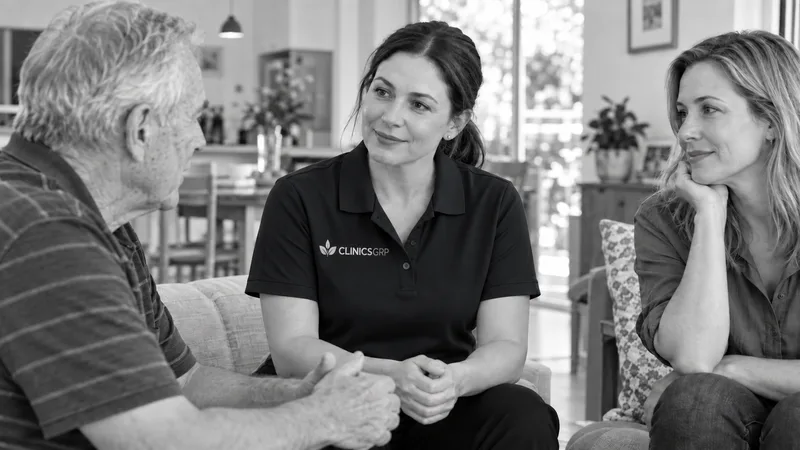
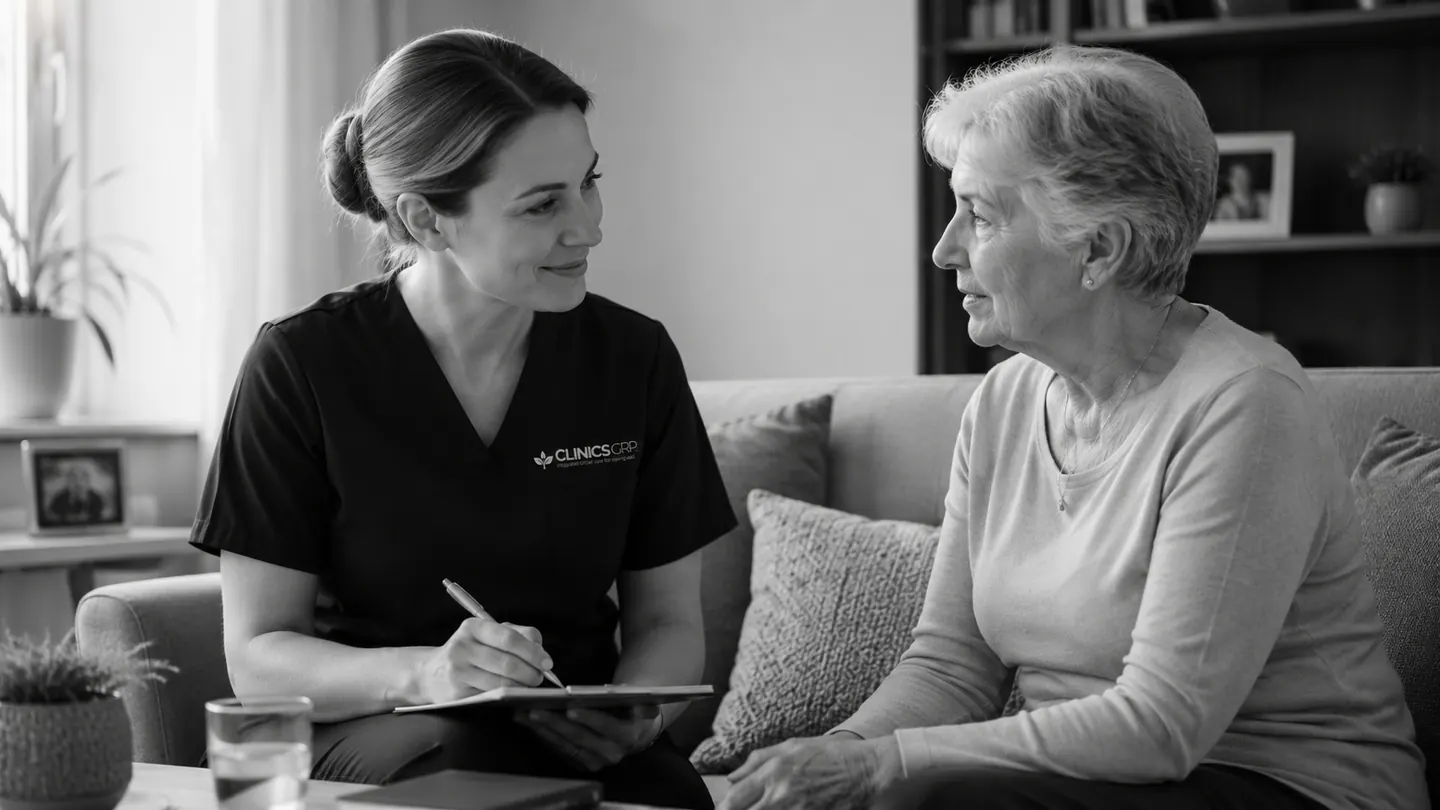
Clinics GRP nurse completing a nursing assessment and care review with an older adult.
inClinicinHomeinCommunityinCareDigital access

Care can occur inClinic, inHome, inCommunity or inCare, subject to referral information, clinical fit, location or facility arrangements, equipment, accepted scope and nurse availability. Digital supports access and coordination rather than universal online treatment. This is not an emergency or 24-hour response service.

Who it may suit

Reasons this pathway may be requested

  • Health needs have changed and the current nursing plan no longer feels clear
  • A provider or family needs a structured view of clinical risks and follow-up priorities
  • A review is needed after hospitalisation, a fall, deterioration or a material change
  • The likely frequency, nursing level or communication plan needs clinical clarification

What nursing can include

Care within an accepted nursing plan

  • Review of current clinical concerns, health history, medicines context and existing supports
  • Consideration of skin integrity, continence, cognition, mobility, falls, nutrition, carer capacity and other relevant older-person risks
  • Documented nursing priorities, proposed follow-up and defined review points
  • Recommendations about nursing frequency and other disciplines or medical review where indicated
  • A written report or care-team communication when included in the agreed referral pathway
First nursing visit

Assessment, priorities and a clear next step

The first visit confirms what can be safely delivered, what needs monitoring and who must be informed if the clinical picture changes.

Select a step to explore the detail.

  1. Review your care context

    Clarify why the assessment has been requested and who needs the outcome.

  2. Assess your nursing needs

    Complete a structured nursing review focused on relevant clinical risks, function, supports and changing needs.

  3. Agree the nursing plan

    Document priorities, recommended next steps, review timing and escalation responsibilities.

Expected review points

What the nurse reviews over time

  • Whether identified risks and priorities are being addressed
  • Whether the nursing frequency and level remain appropriate
  • Changes requiring GP, provider, allied-health or hospital communication
  • Whether care can transition, conclude or requires a revised assessment
Scope and boundaries

What must be clear before care begins

  • The assessment informs nursing and care-team planning; it does not replace medical diagnosis.
  • Recommendations depend on the information available and may require confirmation by a GP, specialist, pharmacist or registered provider.
  • Provider care-plan and funding decisions remain with the accountable provider and participant arrangements.

Call Triple Zero (000) for a life-threatening situation. Sudden or severe deterioration, heavy bleeding, acute obstruction, chest pain, severe breathlessness or new stroke-like symptoms require urgent medical assessment rather than a routine website enquiry.

Nurse allocation

Matched to the accepted task

Intake confirms the registration, competence and authorised scope required before allocating a nurse.

Communication

Connected with the care team

With consent, relevant findings and escalation can be communicated to family, GPs, hospitals, providers and other clinicians.

Funding and access

Confirmed before commencement

If eligible nursing is included in an approved Support at Home plan, a 0% participant contribution applies to that clinical service. The service still uses available programme funding and remains subject to the service agreement, registered-provider arrangements and accepted nursing scope.

Evidence and clinical standards

Evidence informing our approach

Australian nursing standards and WHO older-person guidance support comprehensive, person-centred assessment, care planning, monitoring and review across relevant clinical and functional domains.

How to read this evidence

Evidence guides care but does not establish that a service is suitable for every person or guarantee an outcome. Assessment, goals, health conditions, functional capacity, consent and identified risks shape individual care.

Reviewed by: Clinics GRP Clinical Review Team, Clinical review and governance

Last reviewed: 2026-08-15

How Clinics GRP manages clinical evidence
Frequently asked questions

Common questions about nursing assessment and care review

What does a nursing assessment cover?

It is tailored to the referral and may consider current clinical issues, skin, medicines, continence, cognition, mobility, falls, nutrition, supports and escalation needs.

Will the referrer receive a report?

A written report or structured communication can be included when it is agreed in the referral pathway and consent permits sharing with the relevant care team.

Can the assessment recommend other Clinics GRP services?

Yes. Where mobility, falls, strength or recovery also need attention, the nurse can coordinate an intake handover to the appropriate rehabilitation pathway.

Your next step

Ask intake to review this nursing need

Share the main concern, suburb, preferred timing, current care-plan or provider context and any information needed to understand the requested nursing task.