
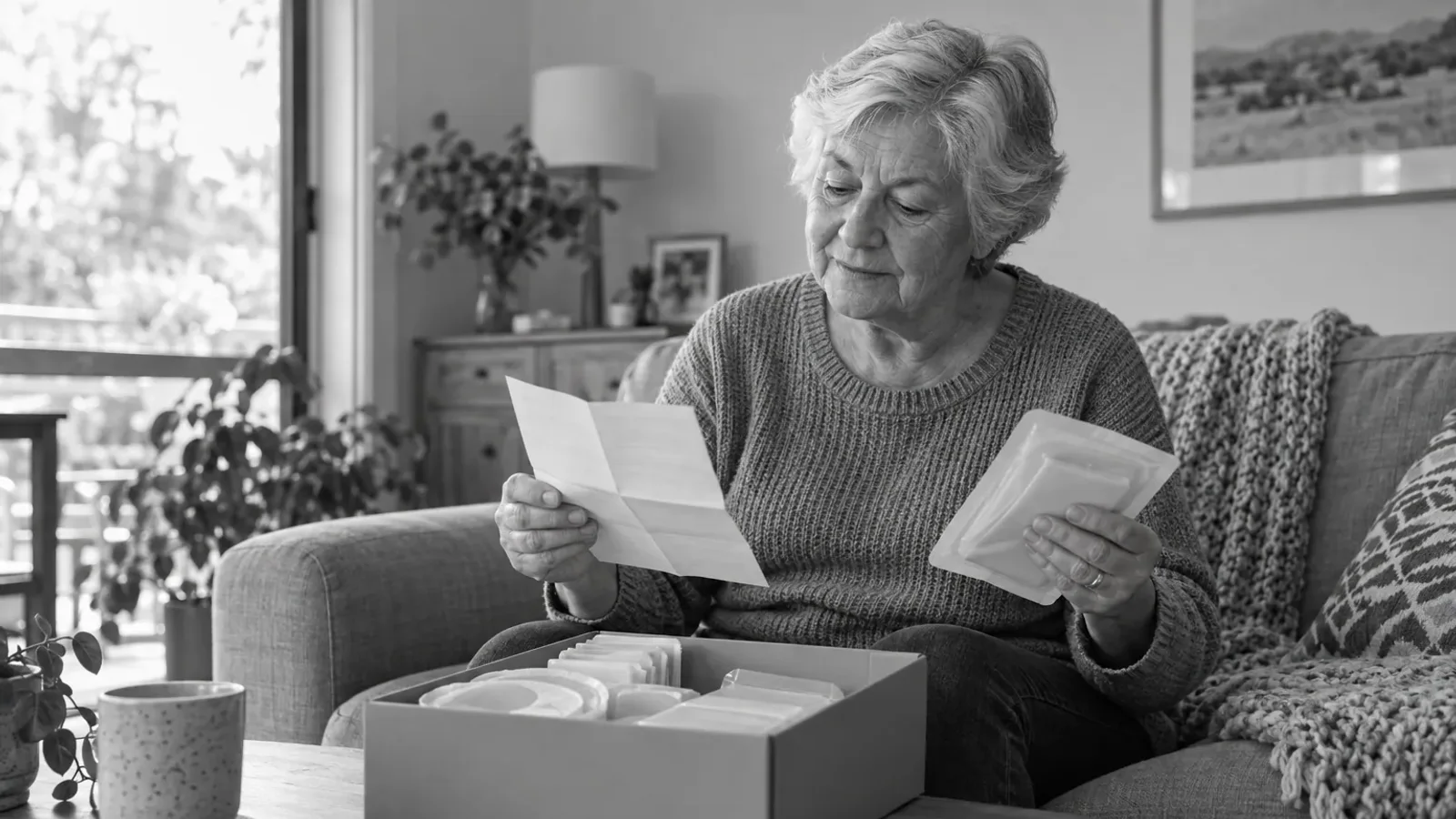
The first weeks at home with a stoma often involve questions that were difficult to anticipate on the ward. The person may know the steps they practised with a stomal therapy nurse but find that the bathroom layout, clothing, hand strength or supply deliveries make those steps different at home. A good follow-up plan covers both the stoma and the practical setting in which the person now manages it.
This article is about continuity after discharge. Our earlier overview of catheters and stomas at home explains why ongoing nursing contact can help with device care. A bowel or urinary stoma needs its own assessment, specialist instructions and follow-up. This article does not teach appliance changes or diagnose a stoma problem from appearance.
Key points
- A new stoma care plan needs a clear specialist handover and reliable supplies at home.
- Nursing follow-up should check how the agreed routine works in the person's own setting.
- Skin, appliance or health changes need a named contact and an agreed escalation route.
Bring the specialist plan home
The first useful question is whether the person and the receiving team have the same current plan. What type of stoma was created? Which surgery and follow-up service are responsible? What equipment has been selected, what supply route is in place, and when is the next review? The person may have been given several pieces of paper at discharge. The home team needs the authoritative instructions and a way to clarify anything missing or contradictory.
Townsville Hospital and Health Service describes stomal therapy nurses working with surgical teams, GPs, community nursing and home care services for post-discharge concerns.1 That model is a reminder that a home visit does not transfer every specialist decision to the visiting nurse. If the appliance plan needs changing or a surgical concern arises, the nurse should know which stomal therapy or surgical service to contact and what information that service needs.
The person should also know whom to call outside a planned visit. A phone number without a description of when it is staffed may be misleading. The plan should distinguish routine queries, prompt clinical concerns and emergencies. If the stoma service has not yet confirmed the first appointment, the team should actively close that handover gap. Recording that a referral was sent is not the same as confirming that the person can access review.
Ask how the routine works in this home
Care at home is personal and often private. Ask where the person changes or empties their appliance, whether supplies are within reach, and what they want to manage independently. Can they see the area well enough to notice a change? Does hand function, vision, balance or fatigue affect the routine? Is there a safe place to dispose of used supplies? A person may have learnt a method in hospital that requires adapting because the home does not have the same light, surfaces or assistance.
The answer should start with the older adult's preferences and consent. A family supporter may want to help, but that does not automatically make them the right person for intimate care. If they are involved, clarify what they have agreed to do, what education they have actually received and which tasks remain with a nurse. A plan should not assume that a relative will be available every day because they attended one discharge conversation.
Healthdirect notes that living with a stoma can involve adjusting routines around diet, activity, work, intimacy and travel, and that a stomal therapy nurse can answer questions.2 Not every person wants to discuss all of these topics on the first home visit. The nurse can make space for the person's priorities and arrange the appropriate specialist input rather than delivering a scripted list of lifestyle advice.
Review skin and appliance concerns without guessing
The skin around a stoma may be irritated for different reasons. Leakage, an appliance that no longer fits well, sensitivity and changes in the stoma or surrounding body shape can all warrant review. The nurse should document what the person reports, what is observed within scope and whether the current appliance remains usable. The presence of a rash or pain is a clinical question, not a reason to try a succession of products without assessment.
Queensland Health's stoma-related wound referral criteria identify skin reactions to an appliance and other stoma concerns as reasons for clinical review, while listing more serious presentations that warrant emergency assessment.3 Those criteria guide referrals; they do not provide an at-home diagnostic algorithm. A specialist stomal therapy nurse may be the right person to review appliance fit and peristomal skin. A GP or surgical team may need to assess concerns that extend beyond appliance management.
The record should allow the next clinician to understand the change. When did leakage or pain begin? Is it happening with every appliance or only under particular circumstances? Has output changed from the person's usual pattern? Has the person already been advised to change something, and by whom? Recording those details is more useful than “stoma care completed” when the person is still struggling each day.
The person may hesitate to mention leakage because they feel embarrassed or expect to be told it is part of living with a stoma. A private conversation can make the issue easier to describe. Ask what effect it has had on sleep, clothing, leaving home or accepting help. Those consequences do not determine the cause, but they show why a review should not be delayed until the next planned appliance order. When the person has already tried to solve the problem, record what they did without blame. That history may help the stomal therapy service distinguish a new issue from a longstanding fit concern.
Make supplies and responsibility explicit
An appliance plan depends on reliable access to supplies. Before the initial supply runs low, the person needs to know what was prescribed or selected, where it comes from, who orders it, and how long a replacement order may take. The exact funding and distribution arrangements vary. Nursing can identify a gap and contact the appropriate service, but the article cannot promise eligibility or a particular delivery route.
Ask what happens if the prescribed item is unavailable. Quietly substituting another product can create fit or skin problems and may undermine the specialist plan. The responsible clinician or stomal therapy service should advise on alternatives. A care plan should show who will communicate that advice to the person and any staff providing support.
The catheter and stoma care pathway explains how Clinics GRP assesses a defined home nursing need. If another provider requests support, the nursing referral guide can help them supply the specialist plan, current appliance information, recent changes and the exact question for the nurse. The nurse then has a basis for confirming scope, competence and the right follow-up.
Check what has changed since discharge
Early review is not only a lesson in equipment. The person may be recovering from major surgery, managing altered medicines, eating differently or relying on new help at home. A change in general health, fluid intake or function can affect whether the existing plan remains suitable. The home nurse can notice and communicate those changes, but diagnosis and treatment decisions belong with the relevant treating clinician.
The Australian Commission on Safety and Quality in Health Care describes a safe transition as one in which the person and the clinician responsible for ongoing care receive timely, accurate information and know who is accountable for follow-up.4 Applied here, that means the stoma instruction, supplies, next appointment and contact route should join up. A person should not have to reconstruct the plan from conflicting messages while learning a new daily routine.
At the end of a visit, ask the older adult what remains difficult. The answer may be a small practical issue, a question for the stomal therapy nurse, or a change that needs prompt medical assessment. Record who will act and when the person will hear back. If the person has a serious new symptom, marked change in stoma output, significant bleeding, severe pain or appears acutely unwell, seek urgent medical advice. Call Triple Zero (000) for a medical emergency. Clinics GRP is not an emergency or 24-hour service.
References
- Townsville Hospital and Health Service. Stomal therapy. https://www.townsville.health.qld.gov.au/services/services-a-z/stomal-therapy/
- Healthdirect Australia. Living with a stoma. https://www.healthdirect.gov.au/living-with-a-stoma
- Queensland Health. Stoma related wounds: Clinical Prioritisation Criteria. https://www.health.qld.gov.au/cpc/wound-management/stoma-related-wounds
- Australian Commission on Safety and Quality in Health Care. Transitions of care. https://www.safetyandquality.gov.au/clinical-topics/transitions-care