
Clinics GRP Nursing pathway

Catheter and stoma nursing support at home

Nursing assessment, routine care, monitoring, education and escalation for urinary catheters and stomas, delivered within an authorised plan and the allocated nurse’s scope.

Care is subject to referral information, clinical fit, address, required equipment, accepted scope and nurse availability. This is not an emergency or 24-hour response service.

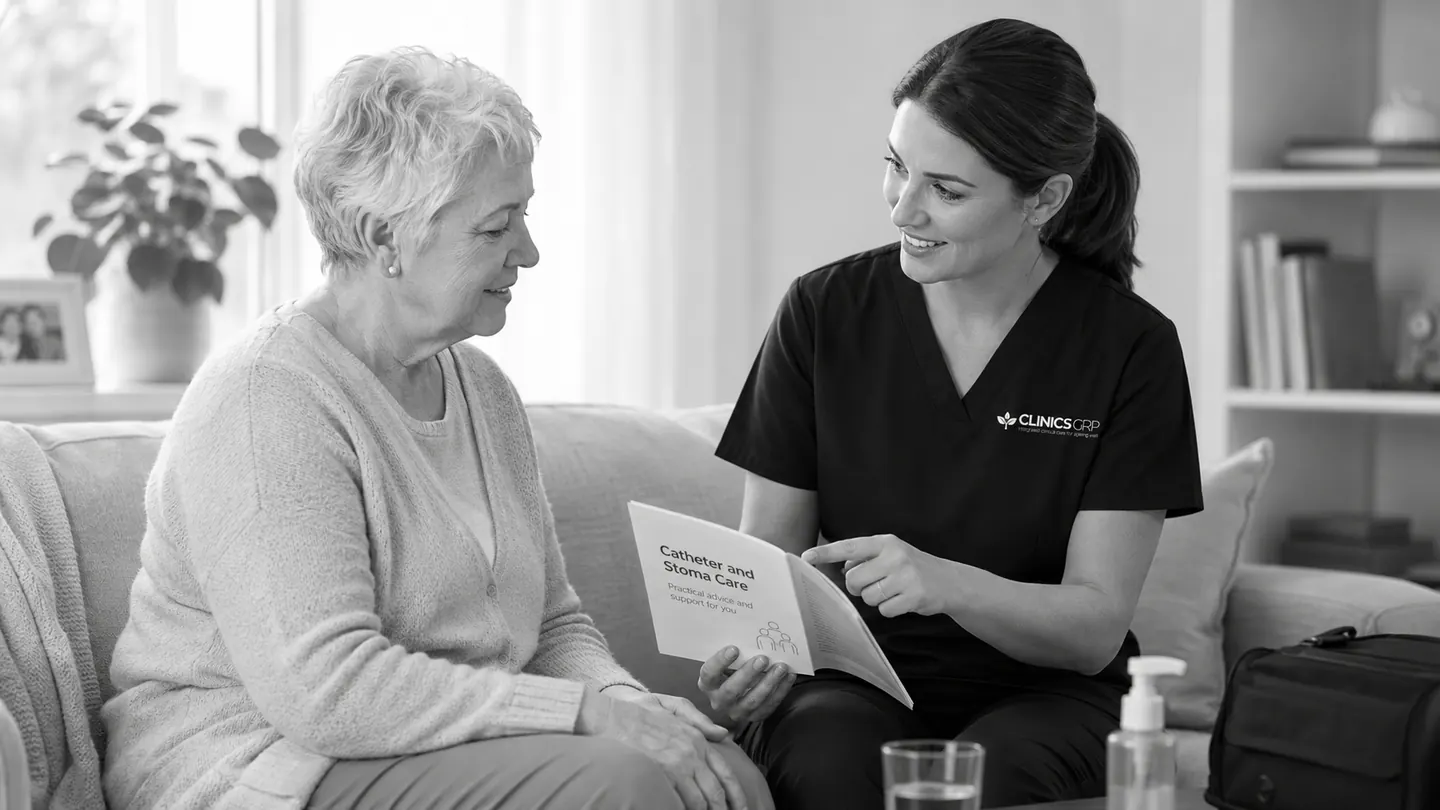
Clinics GRP nurse explaining catheter and stoma care to an older adult at home.

Who it may suit

Reasons this pathway may be requested

  • A urinary catheter needs routine nursing care, observation or an authorised change
  • A stoma or surrounding skin needs review, practical support or monitoring
  • The person or carer needs education about the agreed catheter or stoma plan
  • A provider needs documentation and escalation when output, comfort, skin or device function changes

What nursing can include

Care within an accepted nursing plan

  • Review of the current device, clinical instructions, supplies and relevant health history
  • Routine catheter care and authorised catheter changes when clinically appropriate and within scope
  • Stoma and peristomal-skin review, appliance support and observation of clinically relevant changes
  • Education for the person, family or care team about the accepted care plan
  • Communication and escalation when blockage, leakage, infection concern, skin breakdown, pain or another change requires review
First nursing visit

Assessment, priorities and a clear next step

The first visit confirms what can be safely delivered, what needs monitoring and who must be informed if the clinical picture changes.

  1. 1

    Confirm the device type, reason for care, treating-clinician instructions, change schedule and required supplies.

  2. 2

    Assess the device, output, comfort, surrounding skin and any issue that requires prompt escalation.

  3. 3

    Agree routine care, review timing, consumable responsibilities and communication with the relevant clinician or provider.

Expected review points

What the nurse reviews over time

  • Device function, output, leakage and the person’s comfort
  • Peristomal, perineal and surrounding-skin integrity
  • Availability and suitability of the authorised equipment and consumables
  • Need for GP, stomal therapy, urology, hospital or other specialist review
Scope and boundaries

What must be clear before care begins

  • Catheter insertion, removal or change requires appropriate clinical authorisation, equipment and nurse competence.
  • The pathway is not presented as a specialist stomal-therapy service unless a suitably credentialled clinician is allocated.
  • Acute obstruction, severe pain, heavy bleeding, systemic illness or rapid deterioration requires urgent medical assessment.

Call Triple Zero (000) for a life-threatening situation. Sudden or severe deterioration, heavy bleeding, acute obstruction, chest pain, severe breathlessness or new stroke-like symptoms require urgent medical assessment rather than a routine website enquiry.

Nurse allocation

Matched to the accepted task

Intake confirms the registration, competence and authorised scope required before allocating a nurse.

Communication

Connected with the care team

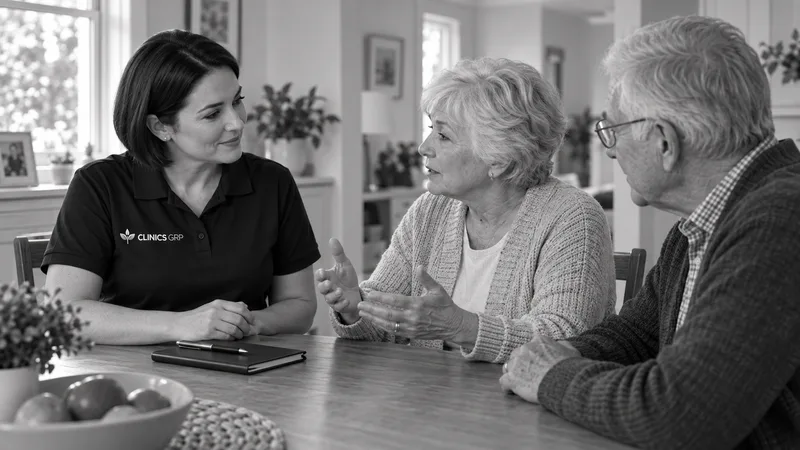
With consent, relevant findings and escalation can be communicated to family, GPs, hospitals, providers and other clinicians.

Funding and access

Confirmed before commencement

If eligible nursing is included in an approved Support at Home plan, a 0% participant contribution applies to that clinical service. The service still uses available programme funding and remains subject to the service agreement, registered-provider arrangements and accepted nursing scope.

Frequently asked questions

Common questions about catheter and stoma care

Can a nurse change a catheter at home?

Potentially. Intake must confirm the catheter type, clinical authorisation, required supplies, timing and that an appropriately competent nurse is available.

Do you provide stoma support?

Yes. The pathway may include routine stoma and surrounding-skin review, appliance support, education and escalation within the accepted nursing plan.

Are catheter and stoma supplies included?

Supply arrangements depend on the person’s existing prescription, provider, funding and service agreement. Intake confirms what must be available before the visit.

Your next step

Ask intake to review this nursing need

Share the main concern, suburb, preferred timing, current care-plan or provider context and any information needed to understand the requested nursing task.