
Article topic: Post-Hospital Recovery Audience: olderadult / familycarer Reading time: 6 minutes
Short introduction
The walk from your chair to the bathroom may feel different after hospital. You might need a new walking aid, more time or another person's assistance. The distances and furniture at home can also differ from the environment where your movement was assessed before discharge.
These changes are worth discussing early. The immediate priority is making essential movement workable with appropriate support. Longer-term strength, balance and endurance goals can then be considered through the Post-Hospital Recovery hub.
Key points
- Explain which movement is difficult and how much help it now requires.
- Continue prescribed precautions and use equipment as instructed.
- Report falls, near-falls and new dizziness without treating them as personal failure.
- Review essential mobility separately from broader rehabilitation goals.
Why this matters
Safe movement depends on the person, the task and the environment. Getting out of a low lounge is different from rising from a hospital chair. Turning through a narrow doorway adds demands that may not have been present on the ward.
Healthdirect describes falls as having several possible contributors, including health conditions, medicines, balance and environmental hazards.1 After hospital, assessment should identify relevant contributors instead of assuming a fall has one cause or can be prevented with one exercise.
Avoiding all movement can also restrict daily life. The decision is which movement is suitable, what support is required and what needs reassessment. A plan should make essential activities possible without asking the person or family to take an unassessed risk.
What to look out for
Tell the clinician about difficulty getting in or out of bed, rising from a chair, reaching the toilet, turning or managing steps. Include when the problem occurs and whether another person is needed. A change from supervision to hands-on assistance is useful information.
Report near-falls as well as falls. Describe dizziness, loss of balance, a leg giving way, catching a foot or difficulty controlling a descent into a chair. There is no need to recreate the event to show what happened.
Consider the time of day. A route that is manageable in daylight may be harder when tired or getting up at night. Let the team know if urgency, poor lighting or difficulty finding an aid affects essential movement.
What can help
Review the movements you need today
Begin with the tasks that cannot simply be postponed: bed access, toileting and moving to a suitable place for meals. Explain the actual chair, steps and distances involved. If a task is unsafe, ask for an interim arrangement while assessment is being organised.
The clinician may observe relevant transfers or walking when appropriate. The assessment should determine assistance, equipment and precautions. Family members should not attempt unfamiliar lifting techniques or pull someone up by the arms because they want to help.
Ask for a clear description of the assistance required. “Needs help” can mean several things. Clarify whether the person requires someone nearby, verbal guidance or trained physical assistance, and whether the available support person can provide it safely.
Check the walking aid and access
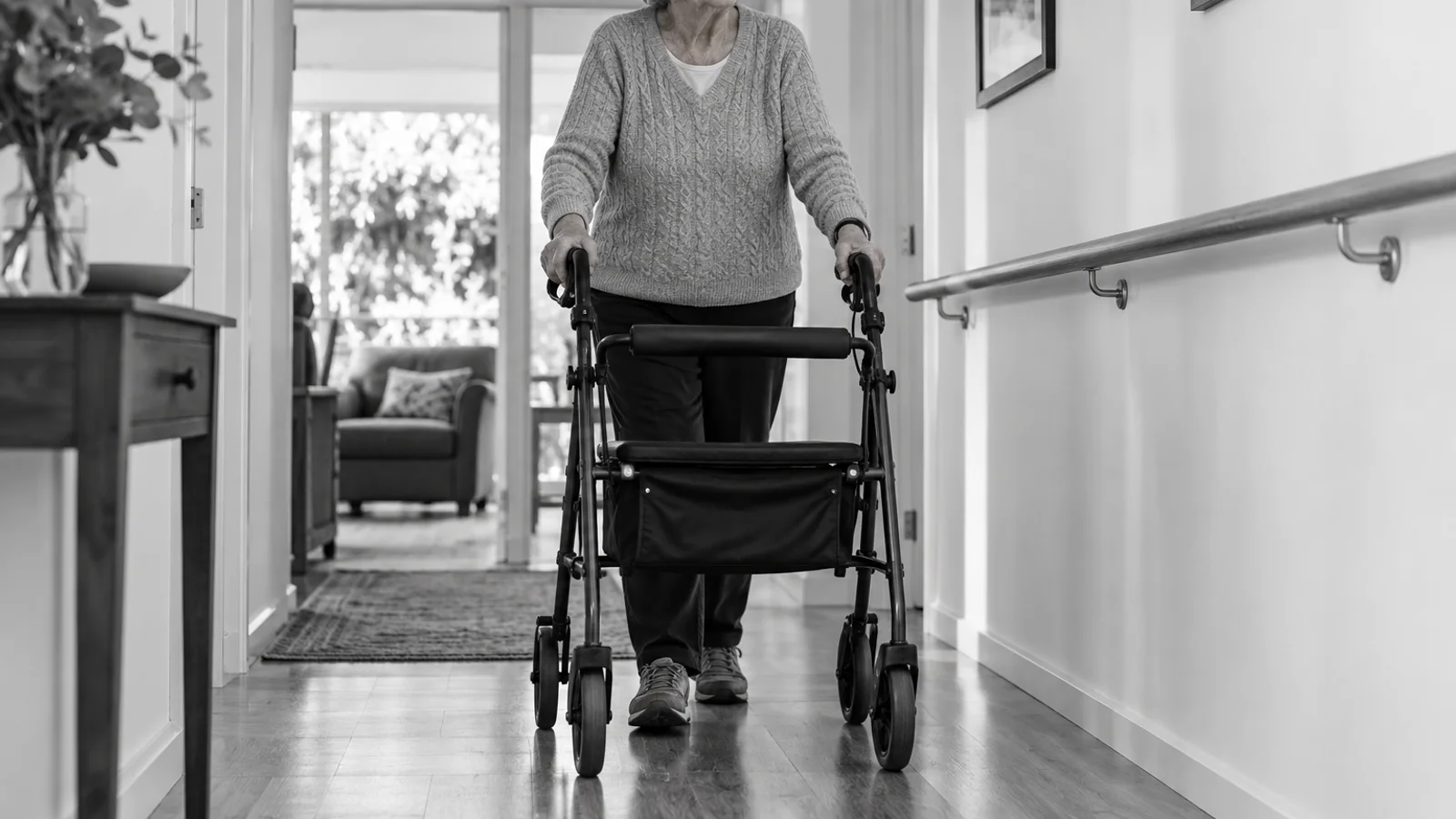
Use the prescribed aid as instructed and ask for review if it is difficult to control or does not suit the home. Avoid substituting borrowed equipment or changing its height without advice. The equipment should be checked in relation to the person's current needs.
Tell the clinician about narrow doorways, rugs, pets, steps or clutter along essential routes. Make straightforward changes, such as clearing loose objects, where you can do so safely. More substantial equipment or home changes may require an appropriate assessment.
Keep required items within reach where practical, including the aid, suitable footwear and a means of calling for help. Discuss lighting along routes used at night. Any arrangement still needs to respect movement restrictions and the person's preferences.
Address dizziness and symptoms
Dizziness can affect movement but needs assessment of its cause. Describe whether it occurs when standing, turning, moving the head or at another time. Include faintness, nausea and any accompanying symptoms.
Do not automatically start balance exercises for unexplained dizziness. The clinician may recommend medical review or other assessment before movement progresses. Medicines questions should be raised with the GP, pharmacist or prescriber rather than addressed by changing doses yourself.
Follow individual instructions about getting up and using assistance. A general article cannot determine that a particular technique is safe after your illness or surgery.
Build a rehabilitation plan when suitable
Once immediate needs and relevant precautions are understood, physiotherapy may address selected strength, balance, walking and task goals. The exercises, dose and supervision come from assessment. A generic list cannot account for changing symptoms or a particular home layout.
Ask how practice connects to a meaningful activity. Reaching the garden or attending a community activity may involve endurance and transport as well as balance. The plan can include adaptation and support alongside physical training.
The Balance & Falls service may be relevant when balance or falls concerns remain. A focused post-hospital episode may instead be appropriate where the main problem is capacity lost around the admission. Clinical review helps decide the fit.
Agree what happens after a fall
Ask the treating team for an appropriate response plan, including how to summon help. Do not practise getting up from the floor alone when this has not been assessed as suitable. After a fall, consider injury or illness before trying to resume ordinary activity.
Tell the team about an event even if there is no obvious injury. The circumstances may alter equipment, assistance or treatment decisions. Falls management should support participation without promising that all future falls can be eliminated.
How Clinics GRP can support you
Hospital-to-Home may include physiotherapy where essential mobility affects a nursing-led transition. Post-Hospital Rehabilitation addresses a separate focused episode of physical recovery. People may enter directly at the service that fits.
Home physiotherapy can be discussed when actual home tasks are relevant. Intake confirms suitability, coverage and timing; a referral does not itself establish that immediate assistance is available.
When to seek urgent help
Call 000 after a fall involving suspected serious injury, collapse, severe pain or when the person cannot be assisted safely. Sudden weakness, speech difficulty or severe breathing difficulty also require emergency help. Seek urgent medical assessment after a head injury, particularly when taking blood-thinning medicines, and follow the advice given.
Next steps
Identify the essential movement that is least manageable and the assistance available. Share those details with the treating team or Clinics GRP intake. Report deterioration promptly rather than waiting for a routine assessment.
References
- Healthdirect Australia. Older people and falls. Patient information.
Disclaimer
This article provides general information only and is not a mobility assessment or exercise prescription. Follow individual precautions and seek professional advice about assistance and equipment. In an emergency, call 000 in Australia.