
Article topic: Post-Hospital Recovery Audience: olderadult / familycarer Reading time: 6 minutes
Short introduction
You may be medically ready to leave hospital while still finding ordinary movement harder than before. Walking, standing from a chair or getting through a shower can require more effort. A focused rehabilitation assessment can help distinguish what has changed and what is reasonable to work towards.
Clinics GRP Post-Hospital Rehabilitation is a physiotherapy-led service within the Post-Hospital Recovery hub. It is designed around physical capacity lost during illness, treatment and a hospital stay. You may be able to enter directly when nursing-led transition care is not required.
Key points
- Assessment begins with your usual function, present capacity and priorities.
- A short, concentrated episode still needs individual decisions about intensity and duration.
- Daily activities contribute to the total physical demand of recovery.
- Progress, adaptation and additional support can each be useful outcomes.
Why this matters
A discharge diagnosis describes an illness or procedure. It does not fully describe how you now move through your day. Two people with the same diagnosis may have different precautions, previous activity levels, home environments and recovery goals.
Rehabilitation therefore needs more information than the name of the admission. The clinician needs to understand whether you were already losing capacity before hospital, what happened during the stay and which changes are now limiting meaningful activity.
A randomised trial in very old hospital patients found that an individualised exercise intervention improved function at discharge compared with usual care.1 The intervention occurred in hospital. It supports the relevance of assessed exercise but does not prove the effectiveness, duration or outcomes of a Clinics GRP programme delivered after discharge.
What to look out for
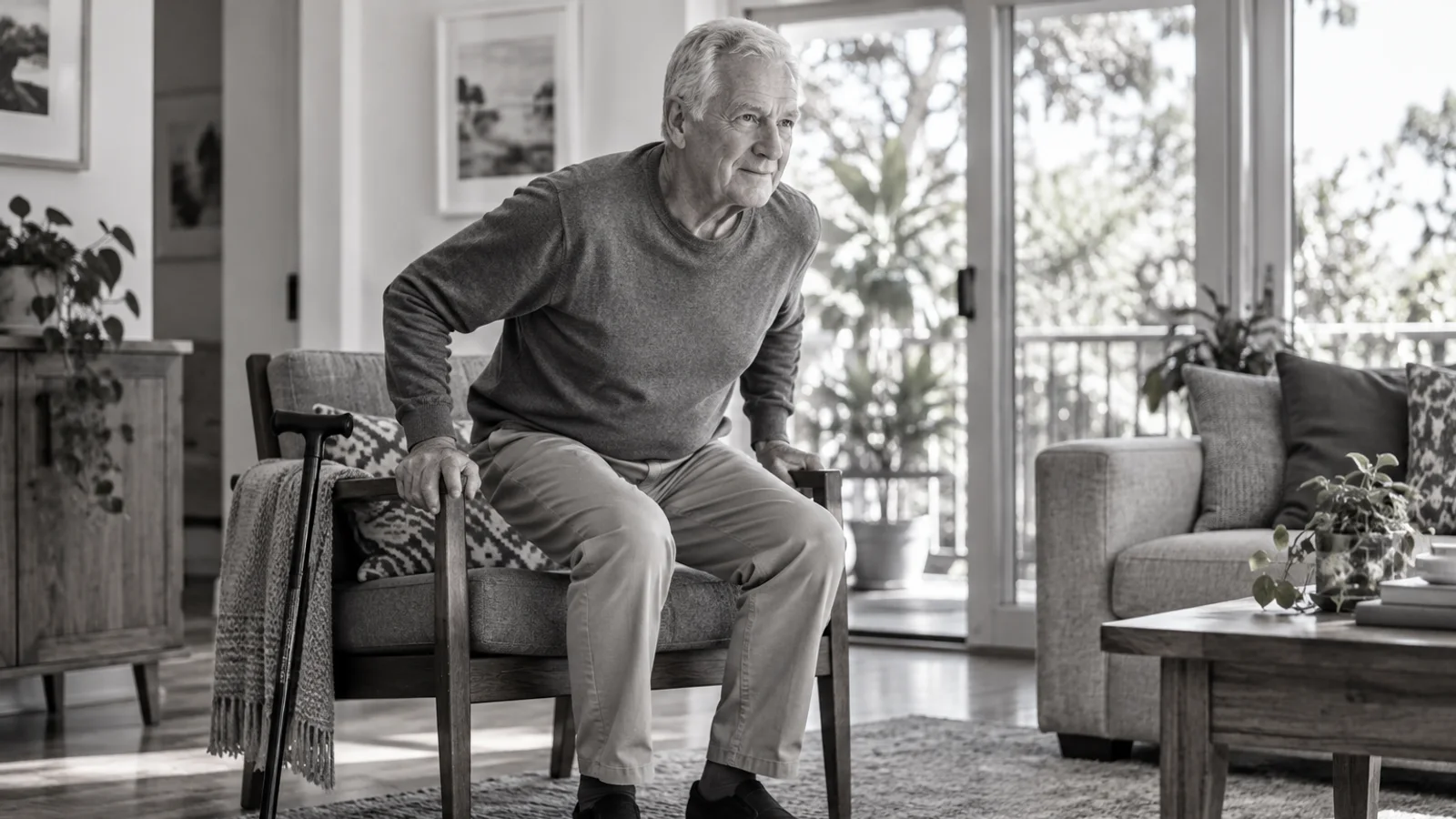
A change worth discussing might be needing your arms or another person's help to rise from a chair, tiring after a short walk or being unable to manage the steps you previously used. You may also have enough capacity for one task but not for several tasks across a day.
Tell the physiotherapist about new dizziness, breathlessness, pain, near-falls or changes in how much assistance you need. These observations may alter the assessment or indicate that medical review is needed before exercise progresses. Avoid assuming that every difficulty is simply deconditioning.
A problem does not have to be severe to matter. If you are managing basic self-care but cannot reach your usual community activities, that gap may still be a reasonable rehabilitation priority. Your goals should be discussed in their own terms.
What can help
Establish the starting point
Bring discharge information, precautions and relevant follow-up instructions to the assessment. Explain your usual walking distances, daily activities, equipment and assistance before hospital. If illness affected you before admission, describe your earlier capacity as well as the days immediately preceding the stay.
The physiotherapist may assess selected aspects of strength, mobility, balance, endurance or task performance. Tests should help answer a clinical question. They are not a ranking of how well you are ageing, and you do not need to attempt them alone before the appointment.
Current function gives a starting point for the plan. Previous function provides context and a possible direction. Neither establishes a guaranteed endpoint. Lasting effects of illness, changing health or other circumstances may make adaptation part of recovery.
Choose goals that change daily life
A useful goal identifies an activity and the conditions in which it needs to happen. Walking from the bedroom to the kitchen, managing the front steps with a rail or attending a short outing gives the programme a practical focus.
The clinician can break a larger goal into manageable components. An outing may require transfers, walking, stamina and a suitable transport arrangement. Improving one component may help without immediately making the whole activity possible.
Discuss your priorities when there are trade-offs. You may prefer to use available energy for a family event rather than a longer exercise session that day. The plan should help you make informed decisions about activity, support and recovery.
Build an individual programme
Treatment may include strengthening, movement practice, walking or endurance work and practice of the tasks that matter to you. Equipment, supervision and the environment can be adjusted to make practice suitable. The relevant combination comes from assessment.
There is no universal exercise dose after hospital. Frequency, duration, difficulty and rest are clinical decisions. “Intensive” should mean focused and appropriately supervised, not an instruction to work through concerning symptoms or exhaustion.
Ask what response is acceptable during the activity and afterwards. Also ask what would mean stopping, reducing the task or seeking review. The instructions should be specific enough to use between appointments, including any precautions that continue from hospital.
Count the rest of the day
Rehabilitation takes place alongside getting dressed, washing, preparing food, appointments and moving around the house. These tasks also use physical capacity. A session that is manageable in isolation may be too much when added to an already demanding day.
Tell the physiotherapist how you felt after the last visit and what else you did. Discuss symptoms later that day and the next morning, rather than reporting only whether you completed the exercises. This helps the clinician interpret tolerance and adjust the next session.
Review and decide what comes next
Review should consider meaningful function as well as selected measures. Can you complete the agreed task with less difficulty, more suitable support or a manageable recovery afterwards? Has your health changed? Does the original goal still matter?
Depending on the response, the plan may progress, hold, change or step down. Some people can continue more independently. Others may benefit from broader Rehabilitation, specialist input or renewed medical assessment. Needing a longer plan is not evidence that you have failed a short one.
How Clinics GRP can support you
Clinics GRP can discuss whether a focused episode fits your current needs and which setting is practical. Home physiotherapy may be appropriate when travel or the home tasks themselves are relevant. Coverage, availability and clinical suitability are confirmed before care begins.
If nursing-led clinical transition remains the main need, Hospital-to-Home may be considered instead or alongside essential mobility input. A clinician should clarify the purpose of each service rather than requiring you to navigate the distinction alone.
When to seek urgent help
Stop activity and seek medical help for concerning new symptoms. Call 000 for severe breathing difficulty, chest pain suggesting an emergency, collapse, stroke-like symptoms or serious injury. Promptly report worsening illness, unexpected loss of function or symptoms that differ from the response your treating team described.
Next steps
Note two or three activities that have become difficult and any precautions from hospital. Contact intake to discuss an assessment. Ask how the proposed programme will be reviewed and how you should respond if your symptoms or capacity change.
References
- Martínez-Velilla N, Casas-Herrero A, Zambom-Ferraresi F, et al. Effect of Exercise Intervention on Functional Decline in Very Elderly Patients During Acute Hospitalization: A Randomized Clinical Trial. JAMA Internal Medicine. 2019;179:28–36. Article. DOI: 10.1001/jamainternmed.2018.4869.
Disclaimer
This article provides general information only and is not an exercise prescription. Follow individual medical and rehabilitation instructions, including precautions after illness or surgery. Speak with an appropriately qualified health professional about changes in symptoms or function. In an emergency, call 000 in Australia.