
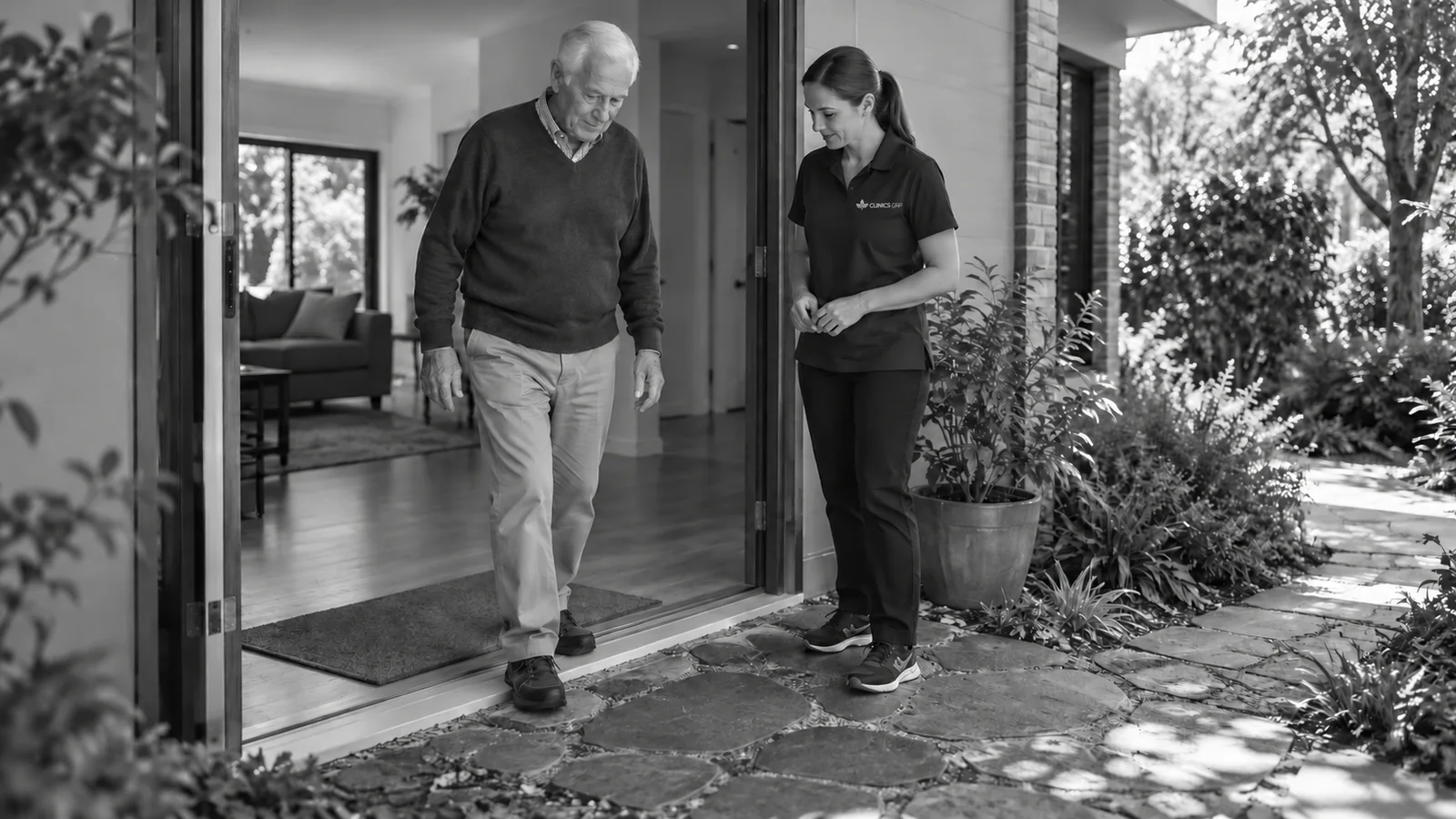
Your nervous system never receives a perfect description of the world. Sensory information can be incomplete, noisy or ambiguous. Usually, the brain combines several sources of information and still produces a useful movement response. Balance becomes more difficult when an important signal is less reliable and the task offers few trustworthy alternatives.
This can happen briefly, such as when you enter a dark room. It can happen because of the environment, such as on soft sand or an uneven path. It can also be associated with changes in vision, vestibular function, sensation, attention, health or medication.
The key point is that unreliable sensory information does not automatically mean that the person is weak or that one organ has failed. Balance depends on the whole system described in Balance Is More Than Strength.
Key points
- Sensory information varies in quality from one situation to another.
- The nervous system compares and combines information from the eyes, inner ears, skin, muscles and joints.
- Difficulty often becomes apparent when two challenges occur together, such as dim light and uneven ground.
- Slowing down or seeking support may be a sensible response to uncertainty.
- Assessment should identify the conditions that change performance, not only whether a person can stand still in one setting.
What does less reliable mean?
A signal can be less reliable for several reasons. It may be faint, delayed, inconsistent or difficult to interpret. It may also conflict with other information.
Consider standing in a train as it begins to move. The visual scene changes, the feet feel pressure shift and the inner ears detect head movement. The nervous system must decide which changes reflect your body and which reflect the environment.
Now consider walking on a thick rug. Information from the foot and ankle may be less precise than it is on a firm floor. If the room is also dim, vision provides less help. The vestibular system and the person's movement strategy become more important.
Foundational balance research describes this as a problem of sensory integration. The nervous system estimates orientation and movement by combining information according to its usefulness in the current context.1
Vision can be accurate but incomplete
Vision helps locate edges, obstacles and changes in surface. It also provides a broad sense of how the body is moving through the environment. Its usefulness falls when lighting is poor, contrast is low, glare is strong or the view is blocked.
Some visual scenes can also be misleading. A moving crowd, patterned flooring or traffic passing beside a footpath may create strong visual motion. A person who relies heavily on vision may feel unsteady even though the ground is firm.
This is why closing the eyes can make balance much harder, but it is not an invitation to practise with eyes closed without assessment. Removing vision can expose difficulty, yet it also removes a protective source of information.
Information from the feet and joints depends on the surface
Somatosensory information includes touch, pressure, joint movement and muscle stretch. It helps estimate where the body is and how weight is shifting.
Firm, level ground usually provides clear information. Foam, thick carpet, sand, gravel and slopes alter the signal. Footwear can change it too. Pain, swelling, reduced sensation or limited joint movement can further affect how the information is received or used.
Research on sensorimotor and proprioceptive exercise in older adults suggests that targeted practice can improve some balance and functional outcomes, although programmes and study quality vary.2 The practical implication is that sensation can be considered and trained in context. It is not evidence that all balance problems come from poor proprioception.
Vestibular information becomes more important when other signals fade
The vestibular system provides information about head movement and gravity. It is particularly important when vision or surface information is uncertain. If vestibular function is reduced, a person may manage well on a firm surface in good light but struggle in darkness, on soft ground or while moving the head.
Dizziness, a sense of spinning, vision that seems to bounce when the head moves, and imbalance can have many causes. They deserve careful assessment. Learn more in How the Vestibular System Affects Balance in Older Adults.
Conflicting signals increase the processing demand
The nervous system must do more than detect a weak signal. It has to judge whether that signal should be trusted. When sources disagree, it may need to change its estimate and movement plan.
This can take attention. Conversation, worry, rushing or carrying an object may leave fewer cognitive resources available for monitoring the task. That does not mean balance is purely cognitive. It means attention is one part of an integrated control system.
A 2025 systematic review and meta-analysis found associations between sensory integration measures and gait outcomes in older adults, while also reporting variation across methods and populations.3 The evidence supports looking at sensory contributions, but it does not provide one universal sensory score or treatment formula.
Why difficulty may appear only in certain conditions
A person may stand steadily in a clinic and still feel unsafe outdoors. The clinic may offer a firm floor, even lighting, minimal distraction and a predictable task. A community environment adds surface changes, moving people, traffic, time pressure and competing decisions.
A systematic review of walking measured in daily life found that these observations can add information to standard clinical tests, but the evidence base was small and observational.4 This is a useful reminder that performance observed in a controlled room is only one sample of the person's capacity.
Clinicians can narrow this gap by asking where, when and during which tasks the difficulty occurs. Safe task variation may then help reproduce the relevant demand.
Why the body may choose a cautious strategy
When information is uncertain, the nervous system may reduce speed, shorten steps, widen the base of support or use a handrail. These changes can increase the time available to gather information and respond.
Such strategies are not automatically bad habits. They may be appropriate for the immediate environment. The question is whether they are flexible and effective. A strategy becomes limiting when it is used in every setting, consumes excessive attention, increases stiffness or causes the person to avoid activities that matter.
The article Is Cautious Walking a Problem or a Smart Adaptation? explores this distinction in more detail.
What sensory uncertainty does not mean
Difficulty in one sensory condition does not prove that a sensory organ has failed. Performance can also change because the task is unfamiliar, the person is tired, pain alters movement or attention is directed elsewhere. A difficult foam or eyes-closed task is an observation, not a diagnosis.
It also does not mean that the answer is to remove useful information during unsupervised exercise. Good lighting, contrast, a handrail and an appropriate walking aid can improve safety and participation. Rehabilitation may then use carefully selected challenges to build options without taking away sensible support.
What a useful assessment should ask
A sensory-informed balance assessment may explore:
- whether difficulty changes in bright and dim conditions
- performance on firm and less predictable surfaces
- the effect of head movement and turning
- foot sensation, pain, footwear and ankle movement
- dizziness, hearing and visual concerns
- the effect of conversation or another task
- confidence, near-falls and activity avoidance
- the person's usual home and community environments.
The World Guidelines for Falls Prevention and Management recommend an assessment of several contributing factors for older adults at higher risk. These extend beyond balance testing to medication, heart and blood pressure concerns, cognition, vision and hearing, feet and footwear, environment, confidence and personal goals.5
What treatment may involve
Management depends on the source and context of the uncertainty. It may include medical or vision review, vestibular rehabilitation, progressive sensory and movement practice, strength and power training, footwear changes, a walking aid, environmental adaptation or practice in the setting where difficulty occurs.
The aim is not to make every signal perfect. That is rarely possible. The aim is to improve how the person uses available information, selects a response and participates safely in meaningful activity.
Progress can be measured in several ways: less hesitation at a familiar threshold, steadier head turns, more consistent foot placement, better use of an aid or return to an outdoor route. These functional changes may matter more than holding a difficult test position for a few extra seconds.
When to seek help
Seek assessment when balance changes, symptoms occur in particular sensory conditions, dizziness persists, or confidence and activity are declining. Sudden neurological symptoms, fainting, chest pain, a new severe headache or sudden inability to stand or walk require urgent medical assessment.
Understand more
- Balance Is More Than Strength
- How the Brain Keeps You Balanced
- Why Uneven Ground Becomes Harder as We Age