
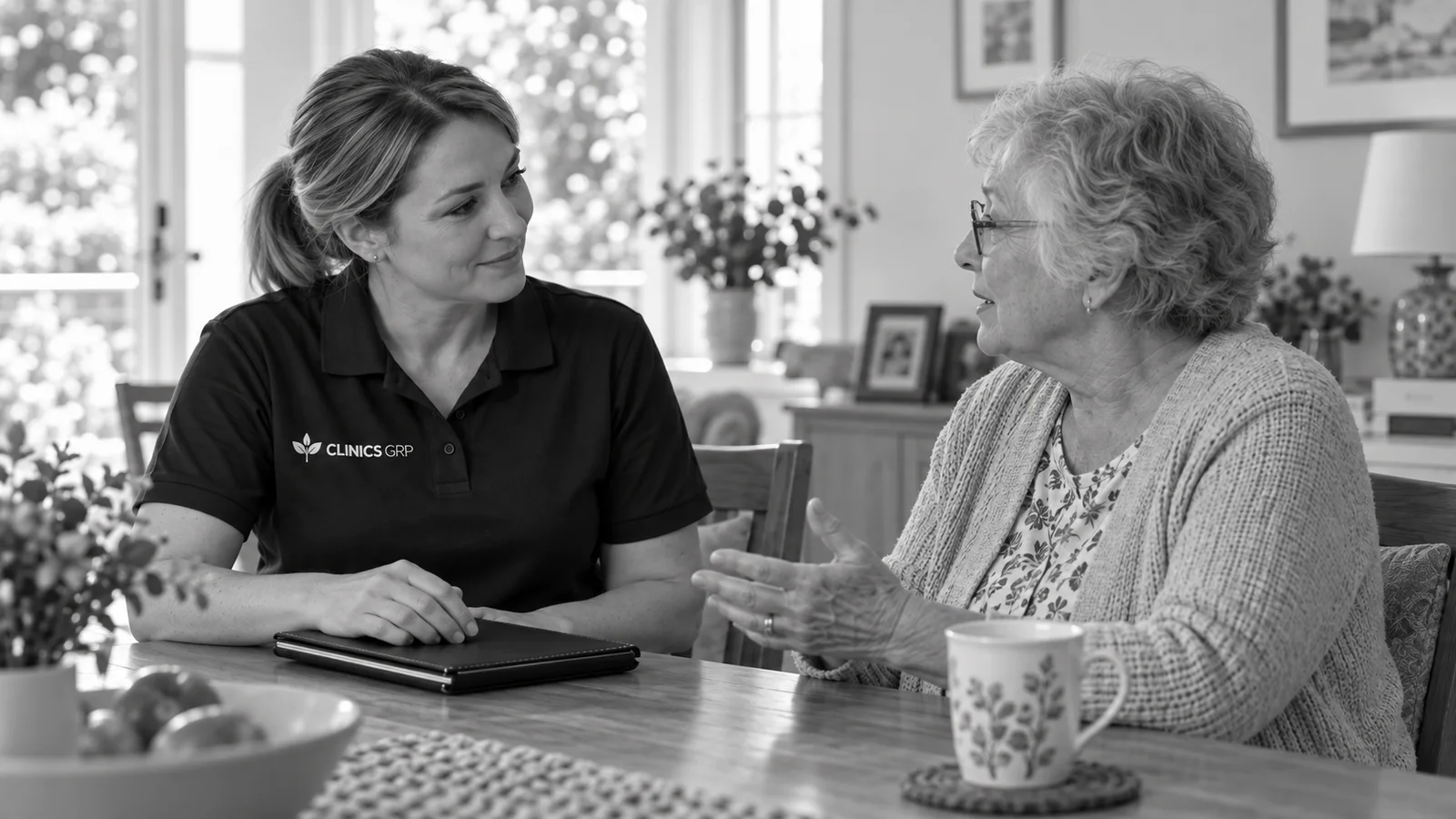
A change in bladder or bowel control can quietly change a person's world. They may stop visiting friends, plan every outing around toilets or wake repeatedly because they are worried about an accident. Sometimes the family notices extra washing or a reluctance to leave home before the person feels ready to explain what is happening.
These experiences deserve a respectful clinical conversation. A continence change should not be dismissed simply because someone is older, and the first response should not always be to supply a different product. Nursing assessment can help clarify what has changed, what support is appropriate and whether medical or specialist review is needed.
For Clinics GRP, the starting point is the person: their symptoms, circumstances, preferences and the activities they want to keep doing. The aim is an appropriate next step, not a promise that every continence problem can be reversed.
Common does not mean unimportant
Continence Health Australia's July 2025 research summary reports an estimate of 7.2 million Australians aged 15 and over living with bladder or bowel incontinence.1 This is a population estimate across that age range, not the prevalence among older home-care clients and not a measure of Clinics GRP outcomes.
The number helps show why the subject belongs in ordinary healthcare conversations. It cannot explain an individual's symptoms or identify their treatment. The significance for one person may lie less in the frequency of leakage than in its effect on confidence, sleep, comfort or participation.
People also use different language for these experiences. “I can't always get there”, “my bowel has changed” or “I need to know where the toilet is” can be useful starting points. A person does not need technical vocabulary or a completed diary before seeking help.
What has changed, and compared with what?
A nursing conversation may explore when the change began, whether it was sudden or gradual, and what the person's usual pattern was before it occurred. Bladder leakage, urgency and difficulty emptying are not interchangeable problems. Bowel leakage also warrants its own assessment rather than being treated as a variation of the same complaint.
Healthdirect advises people with difficulty controlling their bladder or bowel to see their doctor. Treatment depends on the cause; medical assessment may lead to further investigation or referral to a continence professional.23
A nurse can help organise the history and identify information that needs to reach the GP or another clinician. That does not mean a home nursing visit can diagnose every cause or replace a medical assessment. Where the problem suggests a need beyond the nurse's scope, referral is part of good care.
The home environment belongs in the conversation
An older person may know they need the toilet but struggle with the route, clothing or help available at the time. Another may move easily but experience urgency that interrupts activities. A similar report of an “accident” can therefore involve quite different practical circumstances.
A continence nursing assessment can consider those circumstances alongside symptoms and existing instructions. It may be useful to discuss access to the toilet, assistance with personal care, how support is requested and what happens overnight. The assessment should not presume that equipment or an exercise programme is automatically the answer.
If mobility or environmental access is a relevant concern, the team may recommend another discipline with suitable skills. Specialist pelvic health physiotherapy is distinct from general home physiotherapy; a referral should be directed to an appropriately qualified clinician rather than assuming all physiotherapists provide the same service.
Dignity is part of the assessment
The person should be asked how they want the conversation handled and who they want involved. A family member may have useful observations, but should not automatically speak for them. Privacy, communication needs, cultural preferences and the person's comfort with examination all matter.
Shared decision-making involves discussing options and what matters to the person, including benefits and possible disadvantages.4 In continence care, an apparently efficient routine may be unacceptable if it removes privacy or makes the person feel hurried. An agreed plan needs to be both clinically appropriate and workable in everyday life.
It is reasonable to ask what an assessment will involve before agreeing to it. The clinician should explain the purpose of personal questions or examination and seek consent. If the person needs assistance to understand or communicate, that support should be arranged in a way that preserves their involvement.
More products are not always the whole answer
Continence products can play a useful role, but choosing them does not settle why symptoms have changed. Nor does a product that contains leakage necessarily resolve concerns about skin, sleep, confidence or getting help at the right time.
A review may include how current products are working, whether the person can manage them and whether discomfort or skin changes need attention. Product selection and any treatment should follow individual advice. This article is not an instruction to restrict fluids, alter medicines or start a bladder or bowel programme.
If the person already has a prescribed fluid plan or other medical instructions, raise questions with the treating clinician rather than changing them independently. A plan that sounds simple online may be inappropriate for someone with different health conditions or a different cause of symptoms.
When medical review should not wait
New difficulty passing urine, particularly with pain or a full-feeling bladder, needs urgent medical assessment. Healthdirect describes acute urinary retention as a medical emergency.5 New bowel symptoms or blood in the stool also warrant medical review.3
Sudden confusion or a marked change in alertness requires prompt assessment; it should not automatically be attributed to a urinary infection or treated as ordinary ageing.6 A nurse can help communicate observations, but an urgent medical need should not be delayed while arranging a routine service.
For a life-threatening emergency, including collapse or severe breathing difficulty, call Triple Zero (000).7 Clinics GRP is not an emergency or 24-hour service. These examples are not a complete list: seek timely medical advice if you are worried about a significant change.
A hypothetical example: the outing that stopped
Imagine an older woman who has stopped attending a weekly lunch because she worries about reaching the toilet. Her family asks for extra continence products. A respectful assessment also asks what happens before she leaves, what support is available and whether the symptoms have recently changed.
Depending on the findings, the next step might include GP review, specialist continence advice or a practical change to assistance. It might also involve clarification of an existing plan. No particular diagnosis or treatment can be inferred from the example.
The useful outcome of the first conversation is a clearer account of the problem and an agreed responsibility for the next step. This fictional scenario illustrates an assessment question; it is not evidence that a particular intervention restores continence or participation.
Follow-up should reflect the person's priorities
Progress may be discussed in terms of symptoms, comfort, skin condition, sleep, confidence or the person's ability to follow the agreed plan. The relevant measures will vary. A reduction in product use is not the only possible indicator, and it should not override a person's comfort or preferences.
The care record should say what is being monitored, when review is planned and what would justify earlier contact. If several workers provide personal care, they need consistent instructions within their roles and an agreed route for reporting changes.
Our nursing assessment and care review pathway considers that distinction more broadly. Reassessment may be appropriate when the situation changes, even if the scheduled tasks have been completed reliably.
Finding an appropriate starting point
The Clinics GRP nursing service can help determine whether the requested support fits our available scope and what information is needed. Be clear about the change, its timing, current medical involvement and the person's priorities. Specialist services or a medical review may be the more appropriate route.
Where care is arranged through Support at Home, the provider must confirm service authorisation and applicable arrangements. A clinical need does not itself establish coverage of every product or appointment.
The sources here support clinical assessment and person-centred care; they do not prove the effectiveness of the Clinics GRP pathway as a whole. Our approach to care is to take a change seriously, understand its context and help identify a proportionate next step.