Dedicated to older-adult care
Clinics GRP logo

Clinics GRP Nursing pathway

Nursing support for recovery at home after hospital

Time-limited nursing follow-up after hospital, illness or surgery, connected with rehabilitation when wounds, medicines, monitoring, mobility or confidence need coordinated attention.

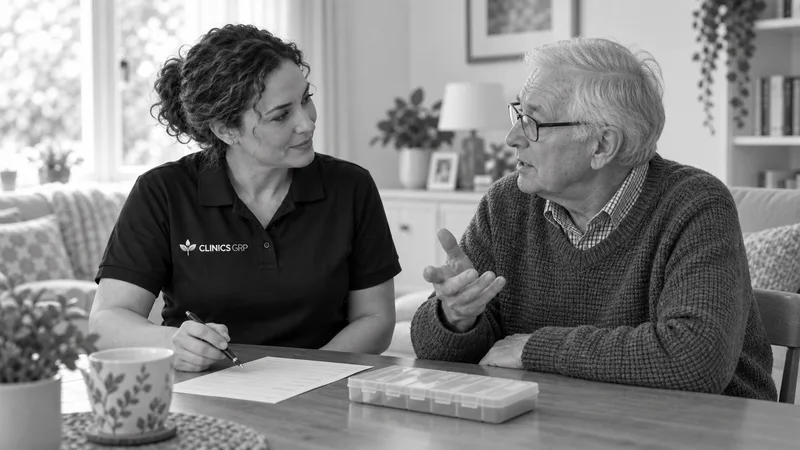
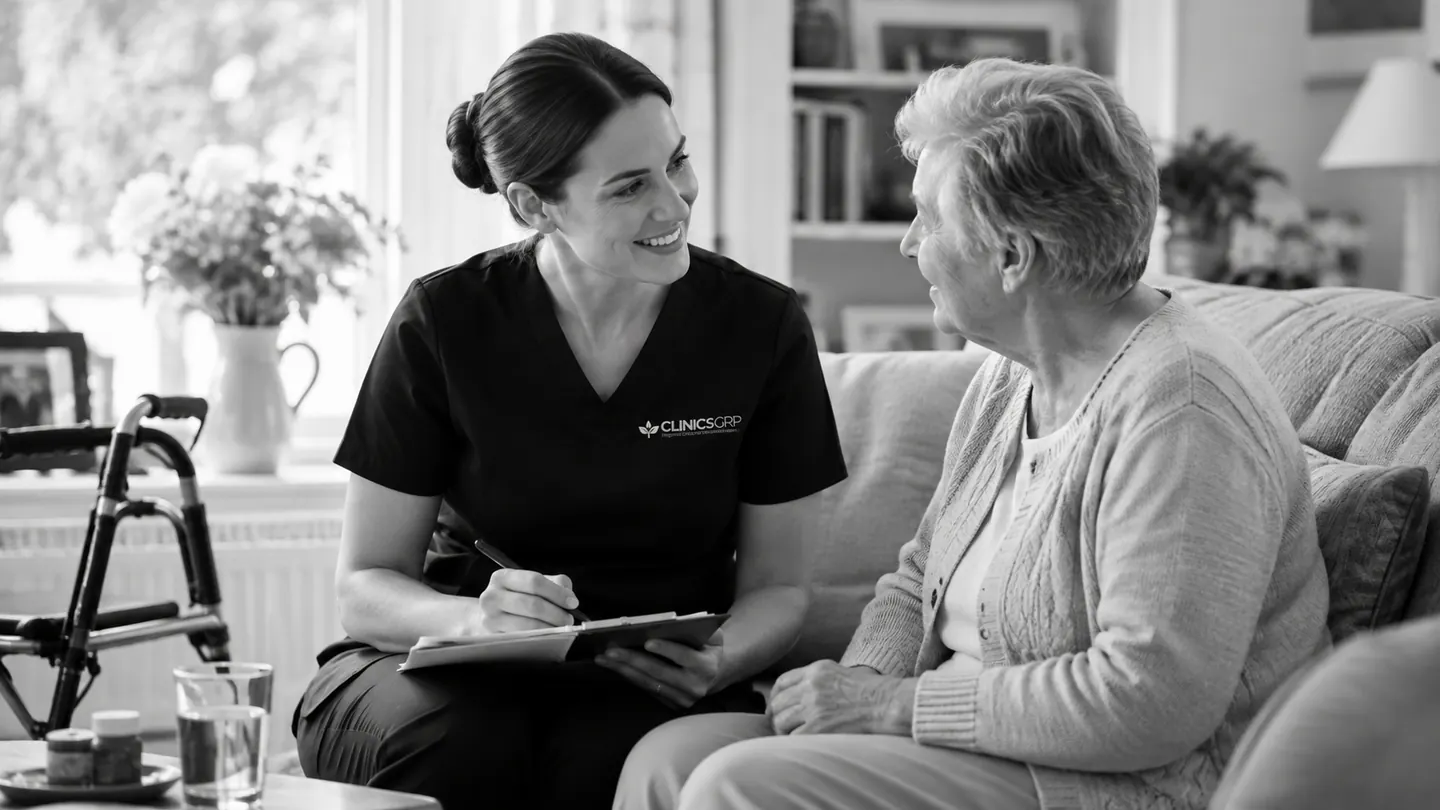
Clinics GRP nurse reviewing an older adult's recovery needs during a home visit.
inClinicinHomeinCommunityinCareDigital access

Care can occur inClinic, inHome, inCommunity or inCare, subject to referral information, clinical fit, location or facility arrangements, equipment, accepted scope and nurse availability. Digital supports access and coordination rather than universal online treatment. This is not an emergency or 24-hour response service.

Who it may suit

Reasons this pathway may be requested

  • An older adult has returned home with new clinical instructions, medicines or monitoring needs
  • A wound, drain, catheter or stoma needs review within an authorised discharge or care plan
  • Family or carers need education and a clearer escalation pathway
  • Nursing and physiotherapy may both be needed to support clinical stability, mobility and confidence

What nursing can include

Care within an accepted nursing plan

  • An initial nursing review of the discharge context, current supports and immediate clinical priorities
  • Medication-change support without representing the service as prescribing or pharmacist-led reconciliation
  • Wound, drain, catheter or stoma review where authorised and within the allocated nurse’s scope
  • Clinical observations and communication when deterioration or an unresolved issue requires escalation
  • Connection with Clinics GRP physiotherapy or rehabilitation when functional recovery also needs attention
First nursing visit

Assessment, priorities and a clear next step

The first visit confirms what can be safely delivered, what needs monitoring and who must be informed if the clinical picture changes.

Select a step to explore the detail.

  1. Review your care context

    Review the available discharge information, current care plan, medicines context and treating-team instructions.

  2. Assess your nursing needs

    Identify immediate nursing priorities, practical risks at home and any issue requiring medical review.

  3. Agree the nursing plan

    Agree a time-limited follow-up plan, communication responsibilities and rehabilitation handover where indicated.

Expected review points

What the nurse reviews over time

  • Clinical status and any change from the discharge plan
  • Wound, device, medicine-support or monitoring priorities
  • Carer understanding and the practicality of the current plan
  • Readiness to transition, discharge from nursing or continue under a revised plan
Scope and boundaries

What must be clear before care begins

  • Clinics GRP Nursing is not a Hospital in the Home service and does not replace hospital-level acute care.
  • The pathway does not promise prevention of hospital presentation or readmission.
  • Complex procedures require appropriate orders, equipment, competence and an accepted clinical plan before commencement.

Call Triple Zero (000) for a life-threatening situation. Sudden or severe deterioration, heavy bleeding, acute obstruction, chest pain, severe breathlessness or new stroke-like symptoms require urgent medical assessment rather than a routine website enquiry.

Nurse allocation

Matched to the accepted task

Intake confirms the registration, competence and authorised scope required before allocating a nurse.

Communication

Connected with the care team

With consent, relevant findings and escalation can be communicated to family, GPs, hospitals, providers and other clinicians.

Funding and access

Confirmed before commencement

If eligible nursing is included in an approved Support at Home plan, a 0% participant contribution applies to that clinical service. The service still uses available programme funding and remains subject to the service agreement, registered-provider arrangements and accepted nursing scope.

Evidence and clinical standards

Evidence informing our approach

Systematic reviews support coordinated transitional care and discharge planning for older adults, including nurse-coordinated models. Effects vary and do not justify promising prevention of readmission or hospital-level care at home.

Frequently asked questions

Common questions about recovery after hospital

How soon can nursing start after discharge?

Timing depends on the discharge plan, clinical priority, address, required information and nurse availability. Intake confirms whether the requested start can be safely supported.

Can nursing and physiotherapy be arranged together?

Yes. One intake pathway can consider both nursing and rehabilitation when clinical follow-up, mobility, strength, balance or confidence need coordinated attention.

Do you provide Hospital in the Home?

No. This is community nursing follow-up after discharge, not a hospital-substitution service. People requiring hospital-level care should use the treating hospital’s pathway.

Your next step

Ask intake to review this nursing need

Share the main concern, suburb, preferred timing, current care-plan or provider context and any information needed to understand the requested nursing task.