
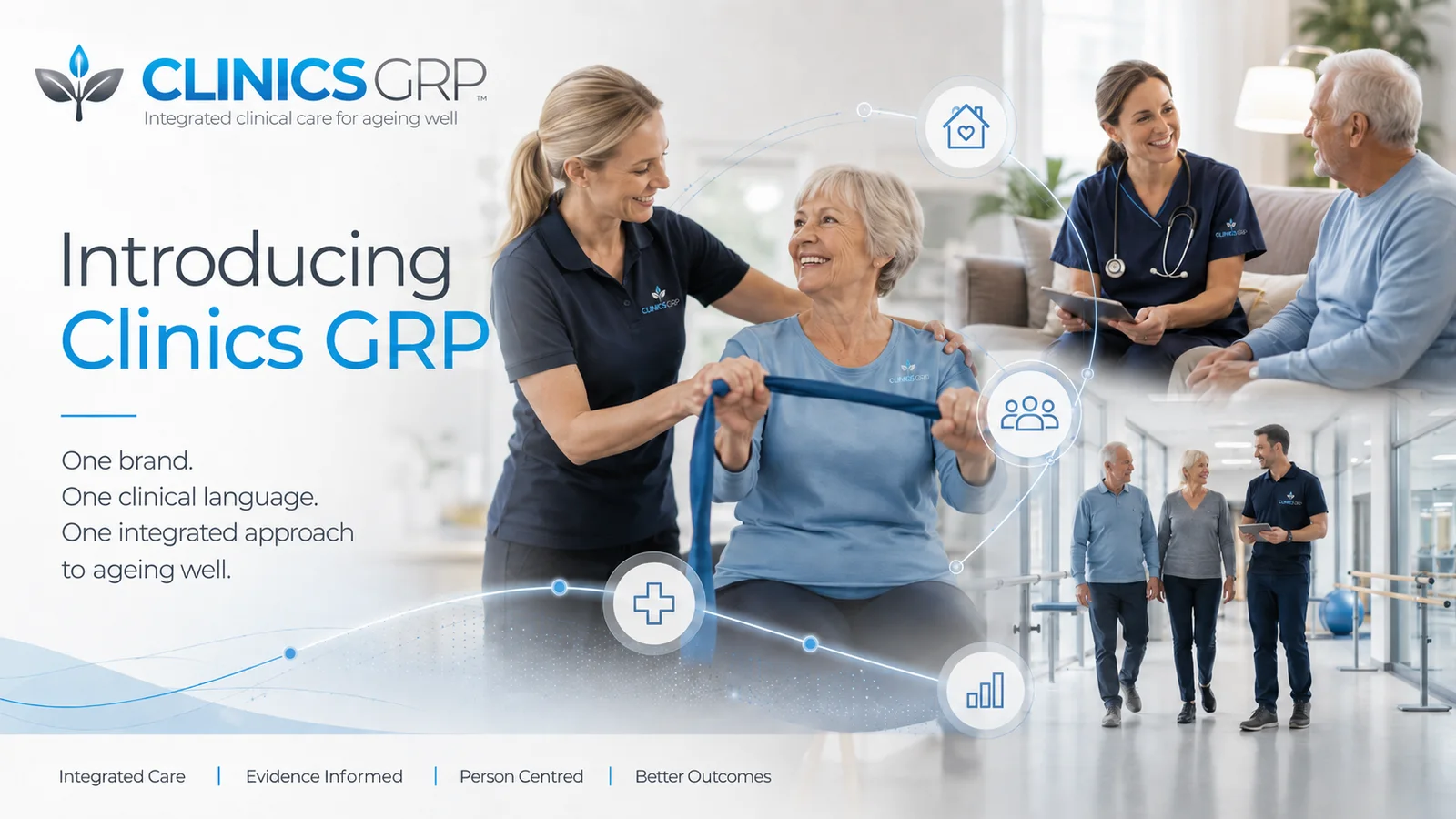
Clinics GRP brings health, rehabilitation and older-adult care together under one name. The purpose is practical: to help people understand the support available, find an appropriate starting point and see how different services can contribute to their care.
For an older person, the important question is often about everyday life. Getting to the dining table, returning home after hospital, managing a changing health need or feeling confident enough to leave the house may matter more than the name of a service. Our approach starts with that person and the situation they are facing.
This article explains the direction of Clinics GRP and the principles behind it. It describes our approach to organising care, rather than reporting a clinical trial or promising a particular result.
Key points
- Care starts with the person, what has changed and what matters in daily life.
- Each service and care setting should have a clear purpose.
- Connected care depends on understandable explanations, communication and review.
Start with the person and what has changed
A useful conversation begins with what matters to the person, what has changed and what they would like help to understand. A diagnosis can provide important context, while daily routines, the home environment, available support and personal preferences help explain the practical problem.
For example, a person may say that walking to the letterbox has become difficult. The next conversation should establish what they are experiencing and how this affects their day. It should leave room for assessment, rather than deciding in advance that the answer must be more exercise or another appointment.
Our Clinical Insight When Something Changes: Why We Start There explores this starting point. Across Clinics GRP, we want people to understand why a question is being asked and how the answer may affect the next step.
Connect clinical findings to everyday life
Healthy ageing includes being able to do things that a person values. The World Health Organization describes functional ability as arising from the person, their environment and the interaction between them.1 This provides useful context for looking beyond an isolated symptom or test result.
For Clinics GRP, a meaningful goal might involve moving more comfortably, participating in a family activity, managing a routine with assistance or maintaining an ability that is important to the person. Recovery, adaptation and appropriate support can each have a place.
The article Function Is More Than a Test Score explains why a measurement needs to be interpreted in the context of daily life. A result becomes useful when it helps the person and clinician understand the problem, choose a reasonable direction and review what happens next.
Choose a setting for a clear reason
Care may take place in a clinic, at home or in another supported setting. The setting should fit the purpose of the assessment or care, the person's circumstances and the service available.
A clinic can provide a suitable place for assessment and treatment. A home visit can make the person's usual surroundings visible: the chair they use, the route to the bathroom, the steps at the entrance or the help available during a task. Each setting offers a different perspective.
Our Home Physiotherapy collection explains these questions in more detail. It covers choosing between home and clinic visits, changes in walking, falls, everyday transfers and returning home after hospital. These articles help readers prepare for a clinical conversation; individual recommendations follow assessment.
Bring services together when there is a defined need
Connected care means that each professional involved has a clear purpose. Physiotherapy and nursing may address different aspects of a person's situation, with communication helping everyone understand the shared priorities.
A person recovering at home might need input about movement alongside nursing attention to a separate health concern. In another situation, one discipline may be enough. Involvement should be proportionate to the person's needs and agreed goals, with referral to other professionals where appropriate.
Why Nursing and Physiotherapy Sometimes Need to Work Together discusses this relationship. The aim is a coherent explanation of who is helping with what, so the person and their family can follow the plan.
Make communication part of care
People should be able to ask what an assessment has shown, what remains uncertain and what the proposed next step is intended to address. Clear explanations make it easier to discuss preferences and decide whether a plan fits daily life.
Communication between services also needs a purpose. With appropriate consent, relevant information can help a receiving clinician understand the current concern, the person's goals and what has already been tried. Families and support people may contribute valuable observations where the person wants them involved.
The World Health Organization's work on person-centred, coordinated care supports organising services around older people's needs.2 We use that broad principle to explain our direction. It is distinct from evidence that any particular Clinics GRP service will achieve a specified outcome.
Review care as circumstances change
A plan needs to remain useful as the person's circumstances change. Reviewing progress means considering the person's experience, practical function, difficulties with the plan and any new concerns. The next step may involve continuing, adapting the approach or seeking another opinion.
Clinical governance gives that work accountability through professional responsibilities, supervision, documentation and review. For readers, the useful public questions are straightforward: who is responsible, what is being reviewed and how can a concern be raised?
Our authorship and review policy explains how written Clinical Insights distinguish authorship, clinical review and publication. The same commitment to clear responsibility informs how we want people to experience the organisation.
Find a useful starting point
The Clinical Insights library brings together perspectives on ageing, nursing, home physiotherapy and care pathways. Readers can search for a particular concern or explore a collection that matches their question.
When approaching a service, it can help to describe what has changed, when it began, what matters most and who is already involved. Referrers can explain the question they would like assessed. The team can then clarify availability and the information needed for an appropriate next step.
Clinics GRP's direction is connected, clinically governed care that remains understandable to the people using it. One name should make services easier to navigate, while care continues to be shaped around the individual, their circumstances and the life they want support to lead.
References
- World Health Organization. Healthy ageing and functional ability. Background on functional ability and the interaction between people and their environments.
- World Health Organization. Transforming health and social services towards a more person-centred and integrated care. Background on organising services around older people's needs. These sources support the general principles discussed; they do not evaluate or endorse Clinics GRP.