
When the ground is firm and the room is well lit, several sensory systems provide clear information about balance. When the lights are low or the surface moves, the nervous system has to change how it uses those signals.
This flexible adjustment is called sensory reweighting. The term describes how the brain increases its reliance on information that is useful in the moment and reduces its reliance on information that has become less reliable.
Sensory reweighting is one part of the integrated balance capability described in Balance Is More Than Strength. It helps explain why a person can feel steady in one setting and unsteady in another, even though their muscle strength has not changed.
Key points
- The nervous system combines information from the eyes, inner ears, skin, muscles and joints.
- It changes how much it relies on each source as the task and environment change.
- Reweighting is continuous and context dependent.
- Age, health conditions and previous experience may influence the speed or effectiveness of adjustment.
- Assessment and treatment should examine the conditions that reveal difficulty rather than assuming one sensory system is solely responsible.
Why does the brain need to change the weighting?
No sensory signal is equally useful in every situation.
Vision is valuable for locating obstacles and judging the environment, but it provides less information in darkness and may be misleading when the visual scene moves. Information from the feet and ankles is usually clear on firm ground but less precise on foam, sand or an uneven surface. Vestibular information about head movement and gravity becomes especially important when vision and surface information are uncertain.
The nervous system therefore has to estimate which information best represents what the body is doing. Peterka's influential account of human balance control describes this adjustment of sensory contributions as a central feature of postural control.1
The word weighting is a useful model, not a suggestion that the brain consciously assigns numbers. The process is largely automatic and changes over time as new information arrives.
A real-life example: walking after sunset
Imagine walking along a familiar path in daylight. You can see the path edge, the slope and objects ahead. The feet provide information at each step, and the vestibular system tracks head movement.
On the same path after sunset, visual detail is reduced. The nervous system may rely more on sensation from the feet and vestibular information. You may slow down, shorten your steps or use a light because the overall estimate is less certain.
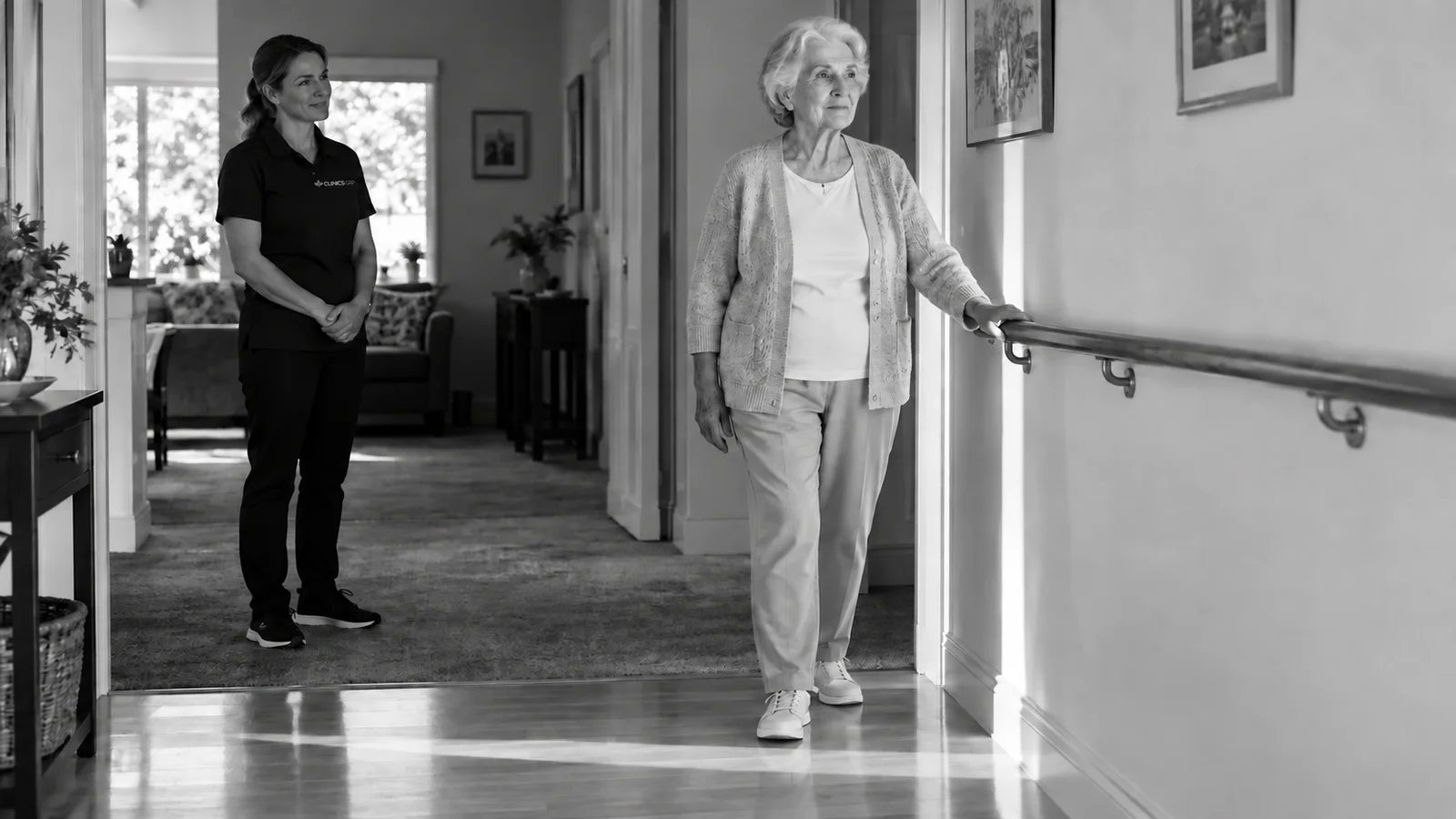
If the path is also uneven, information from the feet changes from step to step. The task now requires repeated adjustments. A handrail or walking aid can add mechanical support and useful sensory information through the hand. Using it can improve function rather than represent failure.
Reweighting is different from compensation
Sensory reweighting and compensation are related, but they are not identical.
Reweighting refers to the nervous system adjusting its relative use of available sensory information. Compensation is broader. It can include slowing down, changing foot placement, using a handrail, turning on a light or choosing a different route.
Both can be adaptive. The clinical question is whether the response is effective, flexible and proportionate to the task. A person who can use vision well when it is available, then shift toward other information when the lights dim, has options. A person who depends almost entirely on looking at the feet may become much less stable when visual information is removed.
What may affect sensory reweighting?
Several factors can affect the process:
- changes in visual acuity, contrast or visual motion tolerance
- reduced vestibular function or difficulty stabilising vision during head movement
- altered sensation, pain or joint movement in the feet and legs
- slower central processing or difficulty resolving conflicting signals
- fatigue, anxiety or divided attention
- limited exposure to varied environments
- neurological or other health conditions.
These factors do not affect everyone in the same way. Sensory reweighting has been studied using different laboratory methods, and results do not translate into a single clinical threshold.
A study of frail older adults found differences in sensory reweighting responses compared with non-frail participants, suggesting that physical reserve and sensory integration may interact.2 This observational evidence helps explain a possible mechanism. It does not show that frailty has one sensory cause or that a laboratory response alone predicts an individual's falls.
Why repeated safe experience matters
The nervous system learns from experience. If a person only practises balance on a firm floor while looking straight ahead, they have limited opportunity to adapt to other combinations of information.
Appropriately graded practice can vary the task, surface, visual conditions, head movement and attention. The purpose is not to make a person unsafe. It is to create a manageable challenge that allows detection, correction and learning.
Recent systematic reviews of multisensory exercise report improvements in some balance and mobility outcomes, but the programmes, measures and participant groups differ substantially.3 A 2026 scoping review similarly found promising approaches alongside limited standardisation.4 Multisensory practice may be useful when it is matched to assessment findings. The evidence does not support one fixed sensory protocol for every older adult.
Reweighting takes place over different time scales
Some adjustments occur quickly, such as relying less on vision when a passing bus fills the visual field. Others develop through repeated experience. A new pair of glasses, an unfamiliar walking aid or return to outdoor walking after illness may initially require more attention while the system learns the changed relationship between sensation and movement.
This helps explain why the first attempt is not always representative. A clinician may repeat a condition, allow familiarisation and compare the pattern across tasks. Improvement with practice provides different information from progressive deterioration or persistent symptoms.
How clinicians can explore reweighting safely
A clinician may compare performance across conditions, while providing appropriate guarding and support. Examples can include:
- firm and less predictable surfaces
- stable and reduced visual information
- still and moving head positions
- narrow and wider bases of support
- quiet tasks and tasks with an added cognitive demand
- familiar and unfamiliar walking environments.
The pattern matters more than any one difficult condition. If performance changes mainly when vision is reduced, the clinician may explore information from the feet and inner ears. If moving visual scenes are provocative, visual dependence or inner-ear factors may need closer examination. If all conditions are difficult, strength, power, pain, heart and blood pressure concerns, cognition, confidence and general health remain important.
This broad reasoning is consistent with current falls guidelines, which recommend assessing several contributing factors rather than relying on one balance measure.5
What treatment may include
Treatment may combine:
- progressive balance tasks under varied sensory conditions
- vestibular rehabilitation when indicated
- strength, power and reactive stepping practice
- walking, turning and obstacle negotiation
- footwear, vision or medical review
- an appropriate walking aid
- environmental changes that reduce unnecessary uncertainty
- practice in the places where the person wants to function.
The order and dose matter. Removing several sources of information at once may create fear or risk without improving learning. A graded approach changes one or two variables, watches the response and progresses when the person can adapt.
Practice should also include returning to reliable information. Turning on a light, using a rail and looking ahead are valid strategies. The purpose of sensory training is to expand safe choices, not to prove that a person can function without vision or support.
Why confidence belongs in the discussion
Uncertainty is not only sensory. A person who has fallen may predict that a task is dangerous and stiffen, slow down or avoid it. Those responses can be protective in the short term, but persistent avoidance may reduce activity and opportunity for adaptation.
Confidence should therefore be explored respectfully. It is not a judgement about courage. It is information about how the nervous system, previous experience and the environment are shaping movement.
When to seek assessment
Assessment may be useful if balance changes markedly in dim light, on soft or uneven ground, with head movement, in busy visual environments or when attention is divided. New or severe vertigo, sudden neurological symptoms, fainting, chest pain or sudden inability to walk requires urgent medical assessment.
Understand more
- Balance Is More Than Strength
- Why Closing Your Eyes Can Make Balance Much Harder
- How the Brain Keeps You Balanced