
Clinics GRP Therapeutic Exercise

Build strength for everyday life

Clinician-guided exercise for older adults focused on strength, conditioning, mobility and day-to-day function.

Available care settings

inClinicinHomeinCommunityinCareDigital
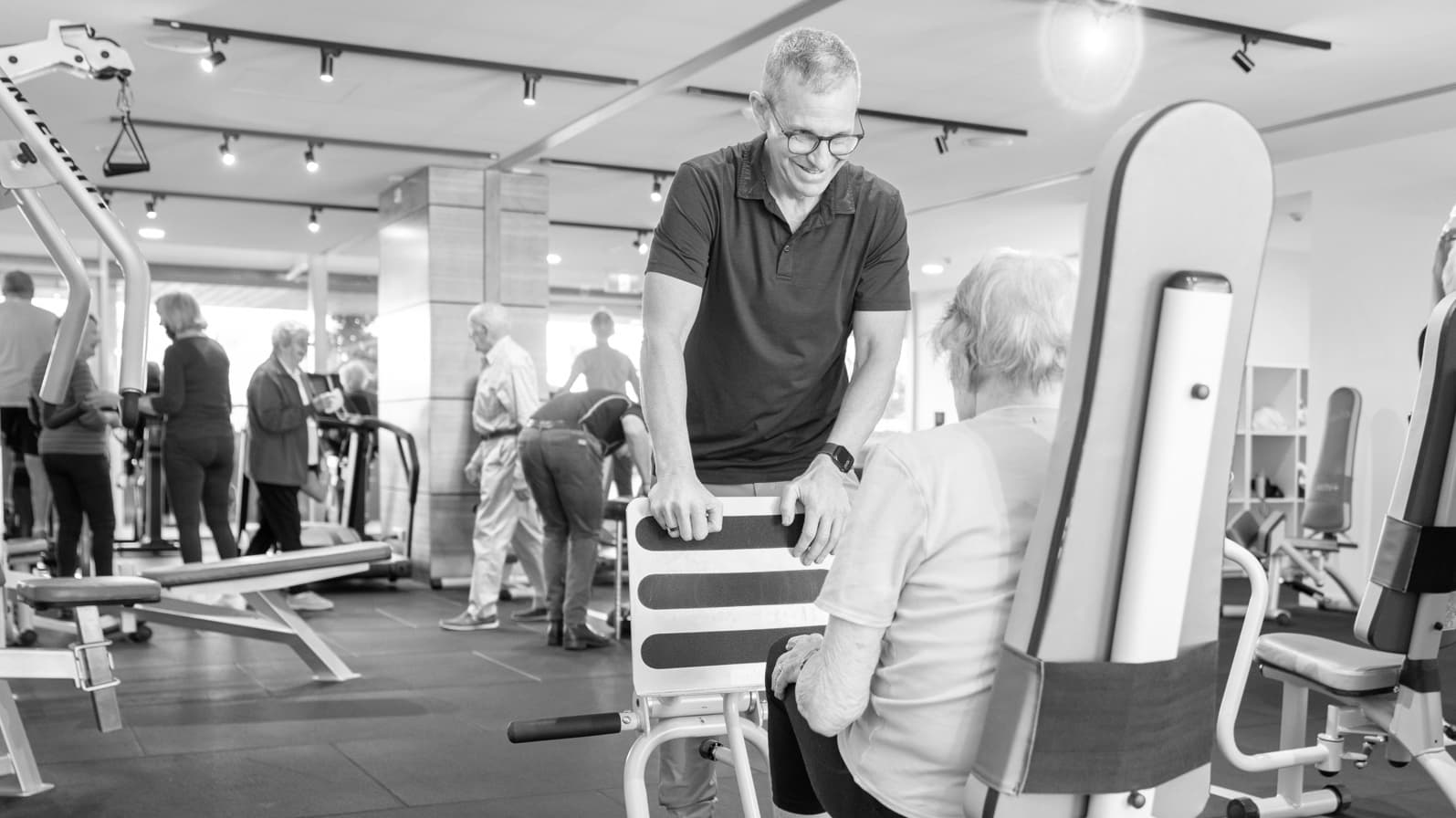
Therapeutic exercise session focused on strength and conditioning.
About this service

Exercise prescribed around function, not fitness trends

Therapeutic exercise links strength, conditioning and mobility work to the activities the person wants or needs to keep doing.

Clinical approach

Start at the right level. Exercise with a purpose. Progress according to function and confidence.

See our approach to care

Who it suits

When therapeutic exercise may help

  • Clients needing ongoing strength and conditioning support
  • People transitioning from assessment into a progression pathway
  • Older adults wanting supervised therapeutic exercise

How care is delivered

What an exercise pathway may include

  • Exercise prescribed around function, health needs and individual goals
  • Supervised clinic-based, home-based, or community-linked exercise support
  • Progression linked back to rehabilitation, falls, and mobility goals
Plan and access

Exercise support that can progress with the person

Programs may be delivered in clinic, at home or through community-linked pathways depending on supervision needs and goals.

Where care happens

Choose the setting that fits now

Continuity

Care can move between settings as mobility, confidence or support needs change.

Funding and access

Common ways to access care

  • Funding and rebates depend on the service, eligibility, referral or plan requirements, provider arrangements and current policy. Intake confirms the applicable pathway before care begins.

Reviewing progress

Progress is reviewed through capacity and carry-over

Exercise is progressed when strength, tolerance and everyday function are improving and the response remains manageable between sessions.

Common concerns

When generic exercise is not enough

People often start when strength, stamina or confidence has reduced and generic exercise no longer feels safe or useful.

  • Strength, mobility, balance, conditioning, and maintenance needs
  • Transition from assessment into structured exercise progression
  • Need for supervised exercise shaped around older-adult function

First appointment

Choosing a safe starting level

The first review establishes current ability, health considerations, goals and a safe starting level for progression.

Select a step to explore the detail.

  1. Understand your needs

    The clinician reviews current ability, goals, risk, and the safest starting level.

  2. Plan your care

    The plan links exercise to function, progression, and review rather than generic fitness alone.

Related services

You may also be interested in

Care service

Physiotherapy

Assessment-led physiotherapy for mobility, strength, balance, pain, recovery, and day-to-day function across clinic, home, and care settings.

View service

Care service

Rehabilitation

Rehabilitation for post-hospital recovery, post-surgical recovery, reconditioning, complex mobility decline, and return-to-function goals.

View service

Care service

Balance & Falls

Assessment and rehabilitation for balance changes, unsteadiness, falls and reduced walking confidence, shaped around everyday function and participation.

View service

Care pathway

Healthy Ageing

Education, prevention, wellness, confidence, participation, and long-term functional independence support for older adults.

View service
Evidence and clinical standards

Evidence informing our approach

Australian guidance recommends regular strength, balance, mobility and coordination activity for older adults. Therapeutic exercise should be individualised to assessment findings, health needs, goals and risk rather than presented as generic fitness or a guaranteed treatment result.

How to read this evidence

Evidence guides care but does not establish that a service is suitable for every person or guarantee an outcome. Assessment, goals, health conditions, functional capacity, consent and identified risks shape individual care.

Reviewed by: Clinics GRP Clinical Review Team, Clinical review and governance

Last reviewed: 2026-08-15

How Clinics GRP manages clinical evidence
Frequently asked questions

Common questions about therapeutic exercise

How is therapeutic exercise different from a normal class?

It is prescribed around assessment findings, goals, safety, and progression rather than a generic group format.

Can exercise be prescribed for home as well as clinic?

Yes. Some people train in clinic, some at home, and some move between both depending on what they need.

Is therapeutic exercise suitable after illness or surgery?

Yes. It is often used to rebuild strength, endurance, and day-to-day function after a period of decline.

Arrange care directly with our clinical team

Explore self-funded care in our clinics, at home and across appropriate care settings. You do not need a Support at Home plan. Clinical suitability, availability and any applicable rebate requirements are confirmed before care begins.

Explore Private Care →

Your next step

Talk with our team about the right care

If you want exercise shaped by assessment, goals, and progression rather than guesswork, start with an initial consultation.