
About Clinics GRP
Our model is built around function, continuity and the realities of ageing
Practical care around function, rehabilitation and day-to-day living, with pathways that adapt as needs and care settings change.
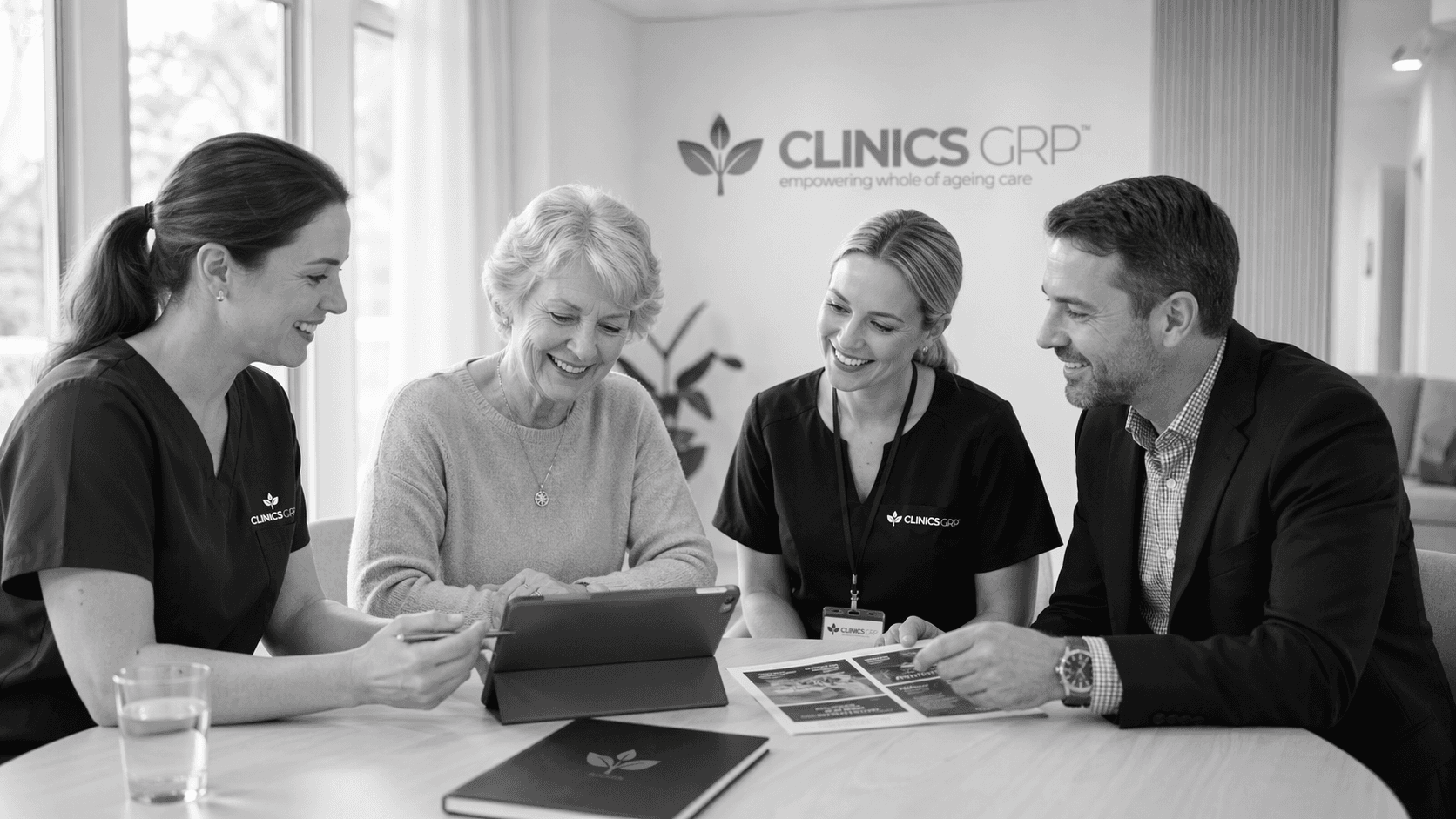
How the model works in practice
Clinics GRP is built around helping people maintain capability, recover after illness or injury, adapt to change, and stay as independent and engaged as possible for as long as possible.
That means looking beyond isolated appointments and focusing instead on what supports function over time. The model brings together healthy ageing, rehabilitation, practical care planning, and continuity across changing settings and needs.
Rather than adding another fragmented layer of care, the aim is to make care easier to understand, better connected, and more relevant to how people actually live.
What the approach centres on
- Healthy ageing and maintaining capability over time.
- Functional independence in day-to-day life.
- Rehabilitation after illness, injury, falls, or hospitalisation.
- Continuity across clinic, home, and broader care pathways.
- Practical care planning that fits real-world living situations.
- Support that can adapt as health needs change.
Healthy ageing is not only about adding years. It is about preserving function, choice, and participation
At Clinics GRP, healthy ageing means helping people stay mobile, capable, safe, and engaged in the parts of life that matter to them.
That may involve rehabilitation, movement support, home-based care, review pathways, or practical strategies that help a person adapt to new challenges without losing confidence or independence.
Care does not happen in only one setting
People may need support in clinic, at home, in the community, after hospital, or alongside aged care services. The Clinics GRP model is built so those settings make sense together rather than operating as separate silos.
That continuity is supported by shared clinical standards and consistent systems that help care, communication, and accountability move with the person rather than staying trapped in one setting.
Why the model matters
Older-adult care is often fragmented. Clinics GRP is being built to reduce that fragmentation by combining clear pathways, shared clinical reasoning, practical communication, and service delivery that matches the person's real context.
The broader direction also treats education, workforce development, and staged multidisciplinary growth as part of the model, so quality and continuity can strengthen as the group grows.
What this means in practical terms
- A model built around real function, not isolated appointments.
- Clearer links between clinic, home, community, post-hospital, and aged-care-connected pathways.
- Shared clinical logic that supports continuity as settings and needs change.
- Care planning that makes sense in the person's day-to-day environment.
- A structure that can strengthen as education, workforce capability, and systems mature over time.